
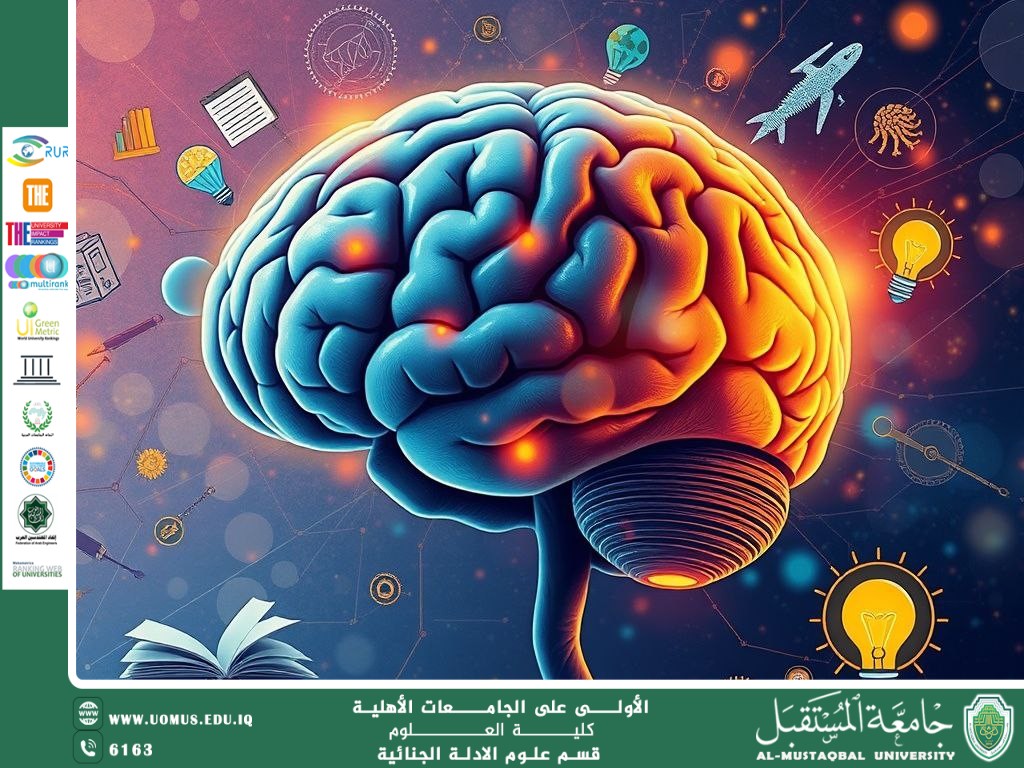
Cognitive Neuroscience and the Development of Intelligence (Asst. Lecturer Huwayda Nazzal Hussein)
Cognitive neuroscience is a scientific field that combines neuroscience and cognitive psychology to study how the brain supports mental processes such as thinking, memory, attention, and decision-making.
This discipline focuses on understanding the relationship between brain structures and cognitive functions. Researchers use advanced brain imaging techniques such as functional magnetic resonance imaging (fMRI) and electroencephalography (EEG) to observe neural activity during cognitive tasks.
Intelligence is a complex ability that includes logical reasoning, problem-solving, learning, and adaptation to new situations. Research suggests that intelligence does not depend on a single brain region but rather on multiple interconnected neural networks.
The prefrontal cortex plays a major role in higher cognitive processes such as planning, organization, and behavioral control. Other areas, including the parietal cortex, are involved in information processing and attention.
The development of intelligence is influenced by both genetic and environmental factors. Genetics contribute to certain cognitive abilities, while environmental influences such as education and life experiences help shape and enhance these abilities.
Additionally, neuroplasticity allows the brain to adapt and develop over time, meaning that cognitive abilities can improve through continuous learning and mental stimulation.
Cognitive neuroscience aims to deepen our understanding of how the brain functions, which may contribute to improved educational strategies and better treatments for neurological and cognitive disorders.
Al-Mustaqbal University – the first university in Iraq.