An Article Titled “Pottery: A Traditional Craft and a Creative Art” by Assistant Lecturer Saja Fadel.
Pottery is considered one of the oldest crafts known to humanity for thousands of years. Its origins were closely connected to basic human needs in daily life, such as storing water and food and producing household vessels. Over time, pottery was no longer merely a traditional craft; it became a creative art that reflects human taste as well as the culture and history of societies.
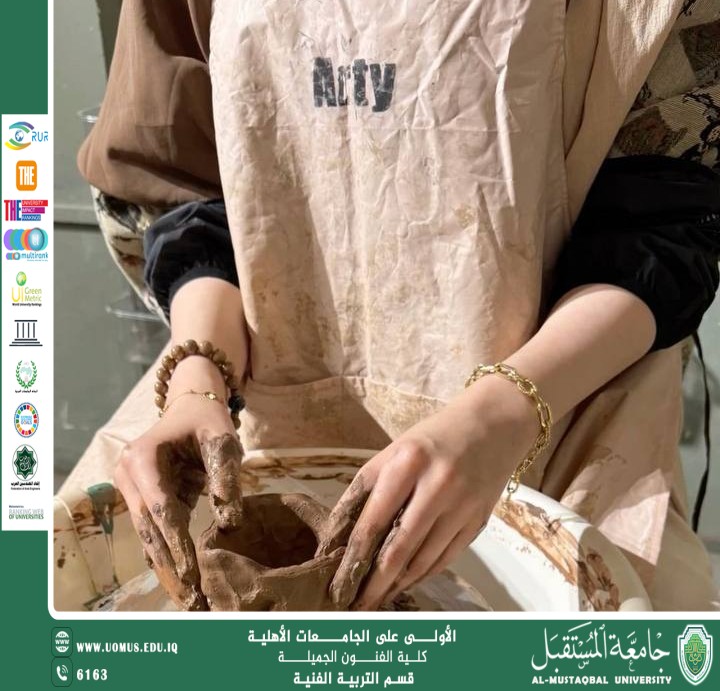
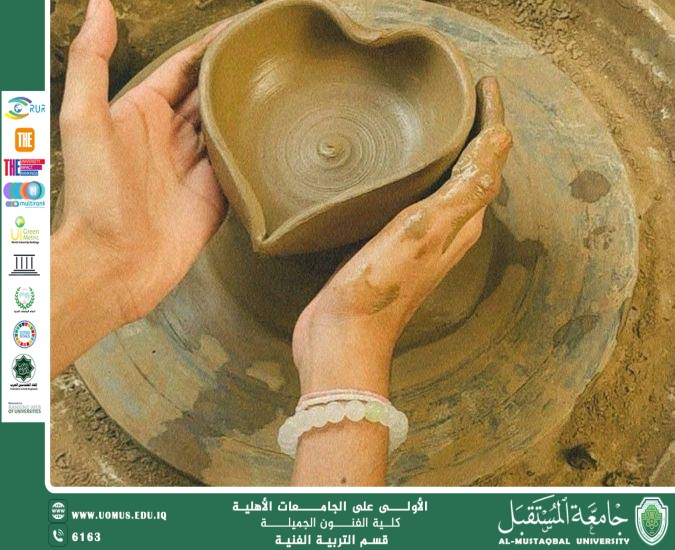
Pottery production relies mainly on clay, which is shaped in different ways, either by hand or by using special tools such as the potter’s wheel. After shaping the piece, it is left to dry and then fired in kilns at high temperatures to become solid and suitable for use. In later stages, the ceramic pieces are decorated with various colors and patterns, giving them a distinctive artistic and aesthetic character.
Pottery also played an important role in ancient civilizations, where it was used in making vessels, statues, and architectural decorations. Each civilization developed its own unique methods of decorating and designing pottery, making ceramic pieces a testament to the cultural and artistic development of peoples throughout history.
The importance of pottery is not limited to the artistic aspect only; it also has economic value. It is considered one of the handicrafts that provide employment opportunities for artisans and artists. Moreover, pottery is used in many modern applications such as tiles, sanitary ware, and some household tools.
In conclusion, pottery remains a traditional craft that carries within it the spirit of creativity and beauty. It combines practical benefit with artistic value and reflects humanity’s ability to transform a simple material like clay into distinctive works of art...Almustaqbal University, The First University in Iraq.