Applications of Artificial Intelligence in Smart Medical Systems to Improve Early Diagnosis (Programmer Huda Khudair Hani)
The healthcare sector has witnessed remarkable development in recent years due to the significant progress in artificial intelligence technologies, which have become an essential component of modern smart medical systems. These technologies have contributed to a qualitative shift in methods of disease diagnosis, particularly in the early detection of medical conditions before they worsen. Artificial intelligence relies on advanced algorithms capable of analyzing massive amounts of medical data and extracting patterns and indicators that may be difficult for humans to detect using traditional methods. This opens new horizons for improving diagnostic accuracy and accelerating medical decision-making.
Smart medical systems supported by artificial intelligence rely on collecting health data from multiple sources, including electronic health records, medical images, wearable devices, and laboratory test results. This data is then processed using machine learning and deep learning techniques that analyze the information and identify relationships between various biological indicators. Through this advanced analysis, the system can predict the likelihood of developing certain diseases in their early stages, such as heart disease, cancer, and diabetes. This provides physicians with greater opportunities for early medical intervention and improves treatment outcomes.
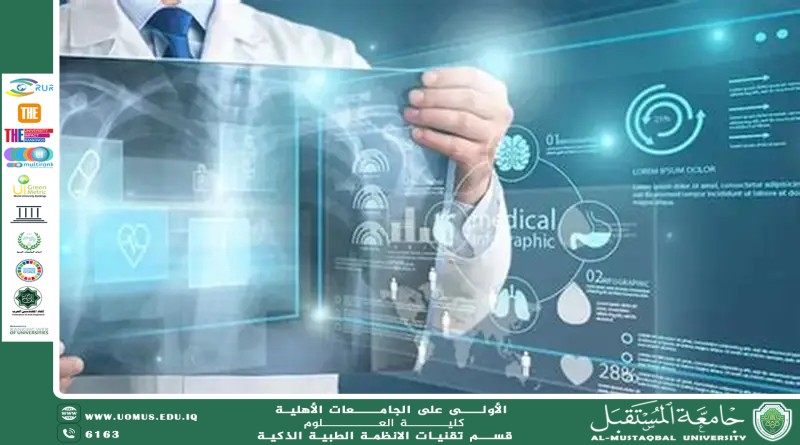
Artificial intelligence also plays an important role in analyzing medical images such as X-rays, magnetic resonance imaging (MRI), and computed tomography (CT) scans. Intelligent algorithms can identify subtle changes in tissues and cells that may indicate the early presence of a disease. This helps physicians detect medical conditions with greater accuracy and in less time, particularly in cases that require the examination of a large number of medical images. Such analytical capabilities contribute to reducing diagnostic errors and improving efficiency within healthcare institutions.
In addition, artificial intelligence applications have contributed to the development of continuous health monitoring systems that track patients’ vital signs in real time. Through internet-connected medical devices, data such as heart rate, blood pressure, and blood oxygen levels can be collected and analyzed instantly. When any abnormal change is detected, the system can send alerts to physicians or healthcare providers to take the necessary actions at the appropriate time, helping to prevent serious health complications.
Artificial intelligence applications also support medical decision-making by providing decision-support systems that analyze a patient’s medical history and compare it with extensive medical databases containing similar clinical cases. This allows the system to provide diagnostic or therapeutic recommendations based on evidence and data, enhancing physicians’ ability to choose the most appropriate treatment options for each patient. This type of system represents an important step toward achieving the concept of precision medicine, which relies on analyzing individual patient data.
Despite the significant capabilities that artificial intelligence offers in early diagnosis, implementing these technologies requires addressing several challenges, including ensuring the quality of medical data, protecting patient privacy, and providing advanced technological infrastructure capable of supporting these systems. Integrating artificial intelligence into medical practice also requires training healthcare professionals to use these technologies effectively in order to achieve the best outcomes.
In conclusion, applications of artificial intelligence in smart medical systems represent an important step toward improving early diagnostic capabilities and enhancing the quality of healthcare services. By enabling advanced analysis of medical data and providing intelligent tools to support medical decision-making, these technologies can help reduce the prevalence of serious diseases and improve treatment and recovery rates. With the continuous advancement of technology, the reliance on artificial intelligence in healthcare systems is expected to grow, contributing to the development of a more efficient, accurate, and responsive medical system.
Al-Mustaqbal University – The First University in Iraq.