An academic article titled "Artificial Intelligence in the Face of Infectious Diseases: From Mutation Tracking to Vaccine Design" by Lecturer Samar Hussein Hilal
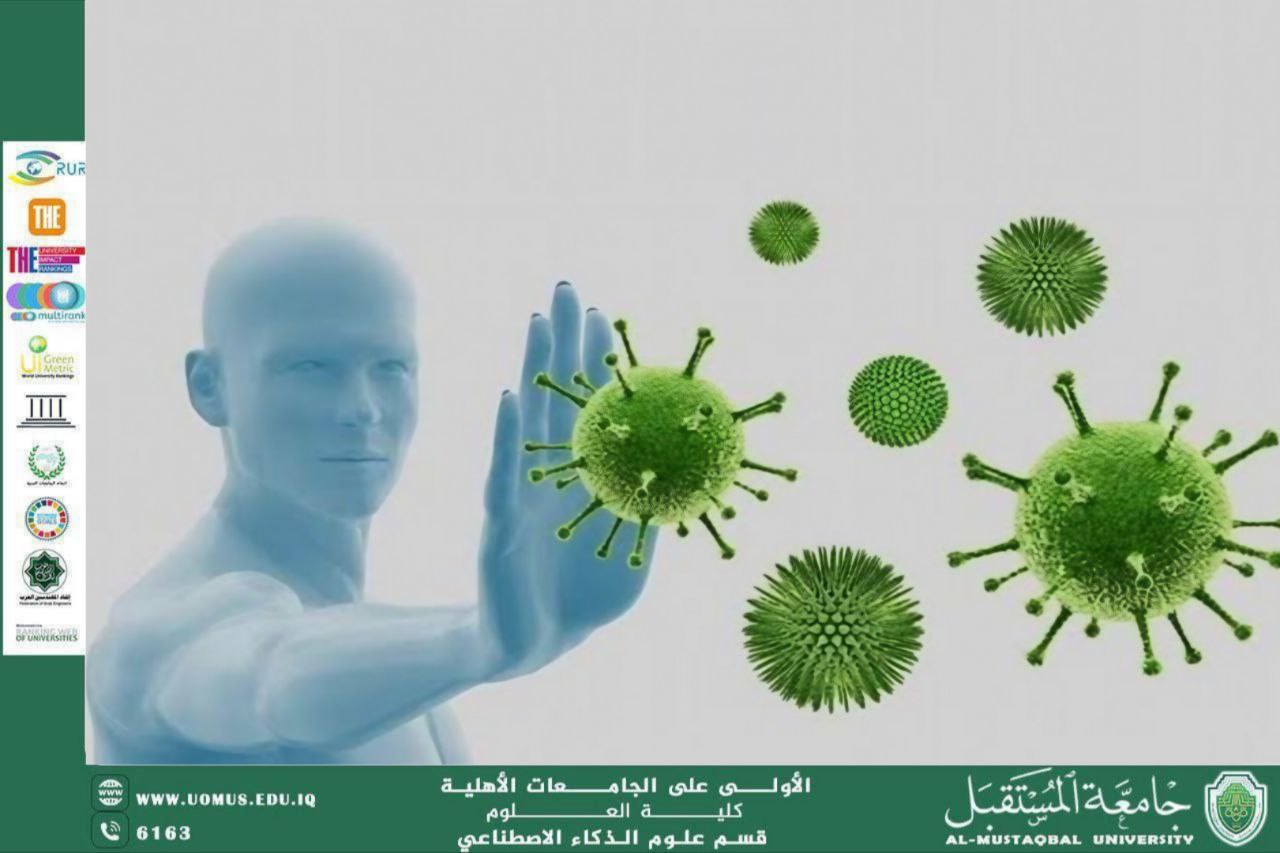
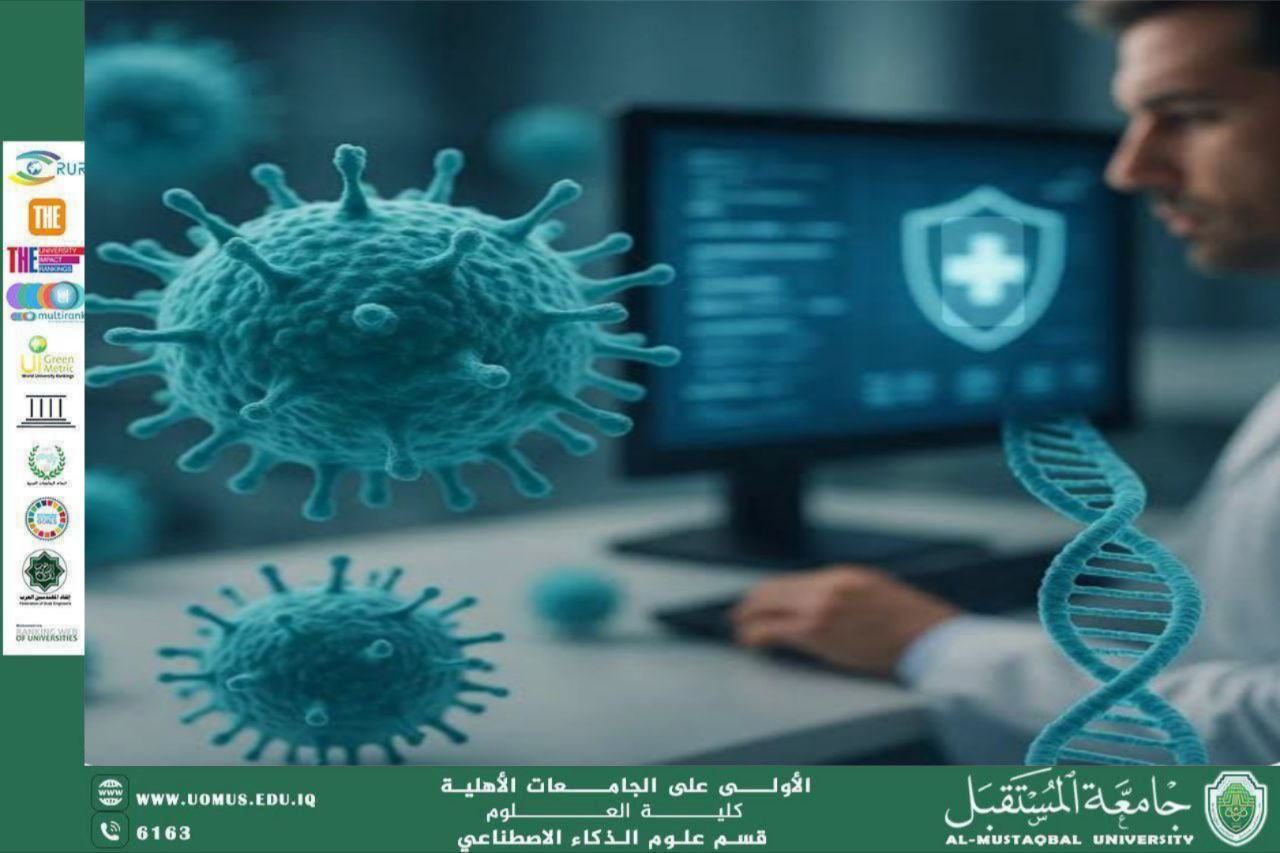
The race between viral evolution and humanity’s ability to control infectious diseases represents one of the most significant public health challenges of our time. RNA viruses, in particular, possess a remarkable capacity for rapid mutation and immune escape, which often reduces the effectiveness of vaccines designed for earlier strains. In this context, artificial intelligence has emerged as a powerful scientific tool that enables researchers to move from reactive responses toward predictive strategies. AI algorithms can analyze vast genetic datasets, identify mutation patterns, and forecast how viruses might evolve, allowing scientists to design vaccines capable of addressing potential variants even before they emerge.
In mutation tracking, the model CoVFit developed at University of Tokyo represents a significant advancement. This system analyzes the spike protein of coronaviruses and predicts the transmissibility and immune escape potential of variants based solely on amino-acid sequences. Similarly, researchers at Harvard University developed the model EVEscape, which uses evolutionary information to identify mutations that may enable viruses to evade antibodies.
For predicting viral evolutionary fitness, scientists introduced a deep learning framework called R-DELF, which integrates genetic, structural, and temporal data to forecast high-risk mutations before they occur. This approach represents a shift from retrospective epidemiology to proactive prediction that can improve pandemic preparedness. Another practical example is the tool VaxSeer developed by researchers at Massachusetts Institute of Technology, which predicts dominant influenza strains and recommends optimal vaccine candidates months before the flu season begins.
Artificial intelligence is also transforming vaccine design. The model EVE-Vax can generate multiple versions of the coronavirus spike protein containing different combinations of predicted mutations. These synthetic proteins allow scientists to evaluate vaccine responses against potential future variants before they actually appear in nature. Additionally, researchers are exploring the development of broad-spectrum vaccines capable of providing protection against multiple viruses from the same family, including the coronaviruses responsible for SARS, MERS, and COVID-19.
Despite these promising advances, several challenges remain. AI models require large volumes of high-quality biological data for accurate training, and the computational infrastructure needed to support such analyses can be expensive. Furthermore, effective progress depends on close collaboration between computer scientists, virologists, and immunologists to translate digital predictions into real-world medical solutions. Nevertheless, the integration of artificial intelligence into virology and vaccine development marks a transformative step toward predicting viral threats and preparing for them in advance, offering new hope for improving global preparedness against future pandemics.