Academic Article: The Impact of Social Media on Social Awareness Assistant Lecturer: M.M. Summer Hussein Hilal
Social media has brought about a profound transformation in the way social awareness is formed, as it has become the primary source of information for millions of people, surpassing traditional media outlets. These platforms have provided individuals with an unprecedented voice and enabled them to participate actively in public discussions concerning important societal issues. Through social media, many social movements have emerged and gained momentum, while attention has been drawn to previously marginalized issues such as domestic violence, discrimination, and online harassment. Moreover, these platforms have contributed significantly to the widespread dissemination of knowledge and educational content, creating new opportunities for learning and the exchange of ideas among different segments of society.
In addition, social media has enhanced civic engagement by allowing individuals to express their opinions and contribute to shaping public opinion quickly and easily. These platforms have created open spaces for dialogue and discussion on political, social, and cultural matters, which has increased the level of awareness among various groups in society, particularly among young people. Furthermore, social media has supported humanitarian and community initiatives, as it has become easier to organize awareness campaigns, volunteer activities, and charitable efforts while reaching a large audience within a short period of time.
Despite these positive contributions, social media also presents serious challenges. One of the most significant concerns is the rapid spread of misinformation and fake news, which undermines awareness based on accurate and reliable knowledge. The speed at which information circulates on these platforms can lead to the dissemination of unverified or misleading content, resulting in confusion among users. In addition, the algorithms used by social media platforms often prioritize content that aligns with users’ previous interests and views. This creates what is known as “information bubbles,” where individuals are primarily exposed to opinions similar to their own, which may intensify intellectual polarization and limit opportunities for balanced dialogue.
Moreover, several studies indicate that excessive use of social media can negatively affect individuals’ mental health by increasing feelings of anxiety, stress, and social isolation. Such effects may ultimately influence individuals’ ability to participate effectively in real-life social and community activities. Furthermore, heavy reliance on social media as a primary news source may weaken critical thinking skills if users do not actively verify and evaluate the information they encounter.
In this context, the importance of promoting digital literacy and media awareness becomes evident. Individuals need to develop the ability to distinguish between reliable and misleading information and to understand how digital platforms influence public opinion and knowledge formation. Educational institutions also play a vital role in strengthening students’ critical thinking skills and encouraging responsible and informed use of digital technologies in ways that contribute positively to society.
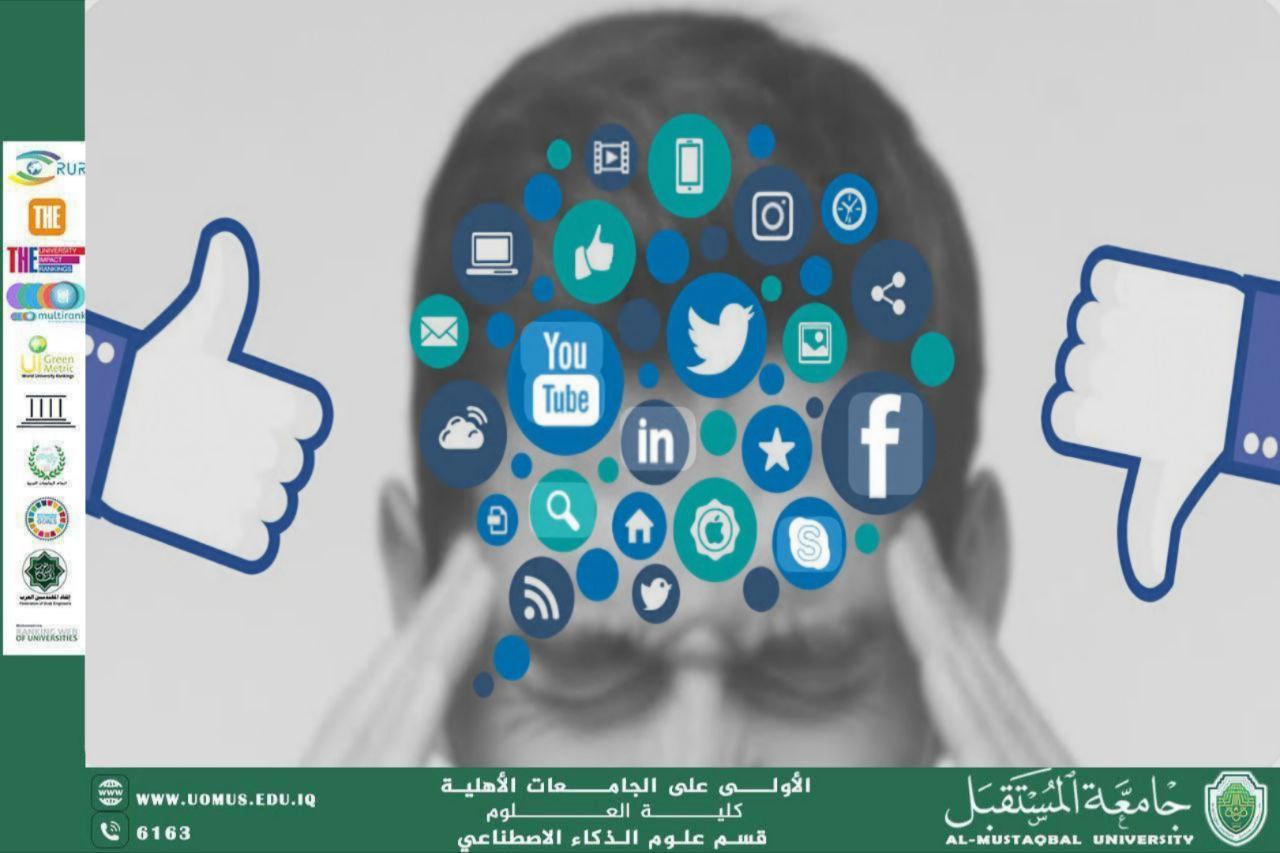
In conclusion, social media can be described as a double-edged sword in shaping social awareness. On the one hand, it opens vast opportunities for communication, knowledge sharing, and freedom of expression. On the other hand, it may contribute to the spread of misinformation and deepen social divisions if used irresponsibly. Therefore, maximizing the benefits of social media requires strengthening critical awareness among users and adopting educational and cultural strategies that promote the responsible and constructive use of digital technologies for the development of society.