
A research paper by Lecturer M.M. Zainab Nazim Aziz titled: The Role of Mineral Elements in Improving Plant Productivity
Mineral elements are among the essential factors for plant growth and health. They contribute to the formation of plant tissues and participate in all vital processes such as photosynthesis, protein synthesis, and the transport of nutrients. A deficiency of these elements leads to poor growth and reduced crop productivity, while their availability in adequate amounts improves yield and enhances the quality of agricultural products.
Definition of Mineral Elements
Mineral elements are inorganic substances that plants require in large or small quantities to perform their vital functions:
Macronutrients: Nitrogen (N), Phosphorus (P), Potassium (K), Calcium (Ca), Magnesium (Mg), Sulfur (S).
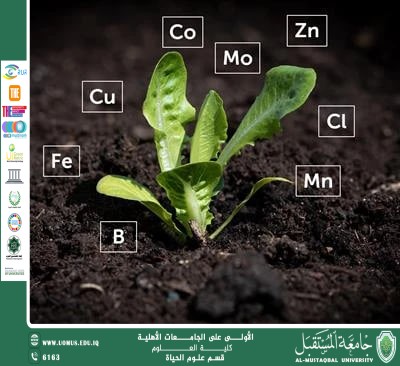
Micronutrients: Iron (Fe), Zinc (Zn), Manganese (Mn), Copper (Cu), Boron (B), Molybdenum (Mo), Chlorine (Cl).
Importance of Mineral Elements for Plants
Nitrogen (N)
Involved in the formation of proteins and nucleic acids.
Promotes the growth of leaves and stems and enhances photosynthesis.
Phosphorus (P)
Plays a role in the production of ATP, the main energy source for the cell.
Enhances root development, flowering, and fruit ripening.
Potassium (K)
Regulates the opening and closing of stomata, thus controlling transpiration and water balance.
Increases plant resistance to diseases and improves fruit quality.
Calcium and Magnesium
Calcium supports the strength and stability of the cell wall.
Magnesium is a key component of chlorophyll and plays an important role in photosynthesis.
Micronutrients (Fe, Zn, Mn, Cu, B, Mo)
Essential for enzyme formation and for stimulating biochemical reactions.
Improve chlorophyll production and enhance metabolic efficiency.
Effects of Mineral Element Deficiency
Nitrogen deficiency causes yellowing of leaves and weak plant growth.
Phosphorus deficiency reduces root development and delays flowering.
Potassium deficiency lowers plant resistance to diseases and drought.
Micronutrient deficiency leads to leaf deformities and weak enzyme formation.
Methods to Improve Plant Productivity Using Mineral Elements
Using organic and mineral fertilizers to supply plants with essential nutrients.
Conducting soil analysis to determine plant nutrient requirements and avoid excess or deficiency.
Balancing nutrients according to the different growth stages of the plant.
Conclusion
Mineral elements are among the most important factors affecting plant growth and productivity. The proper balance of these elements ensures healthy plant growth, higher yields, and improved quality of fruits and seeds. Therefore, proper plant nutrition through mineral elements is one of the most important strategies for achieving sustainable and efficient agricultural production.
الهدف الرابع : التعليم الجيد