
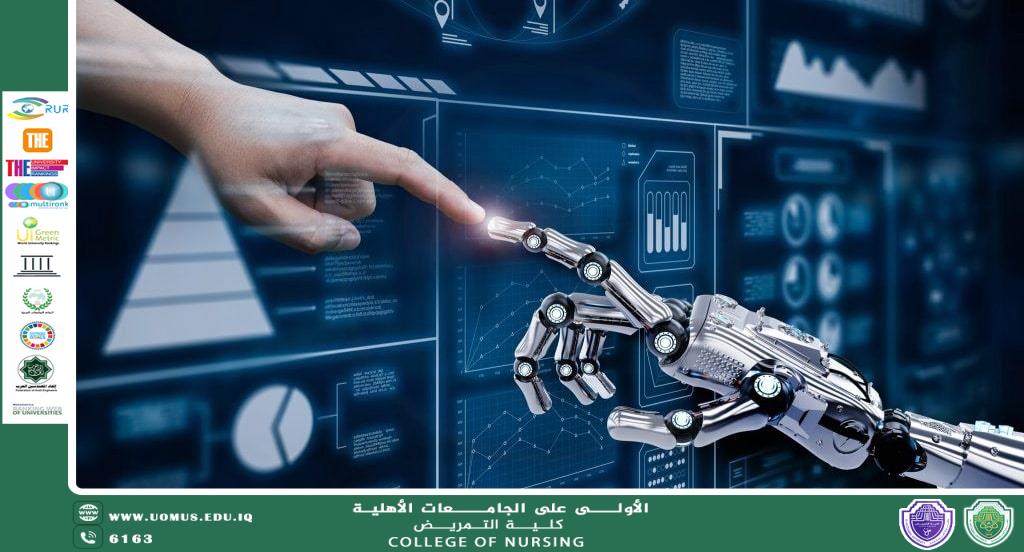
Horizons of Transformation: How Smart Education is Redefining the Intellectual Renaissance
The concept of education in our current era is no longer confined within four walls or static printed pages; rather, it has evolved into a living experience that breathes technology in every detail. Today, Smart Education represents the driving force reshaping our awareness of knowledge. It is a realm where digital tools and Artificial Intelligence converge with pedagogical goals to create a learning environment characterized by extreme flexibility and the ability to adapt to the rapid shifts dictated by the modern world.
The elevation of the educational process begins with this model's capacity to achieve "Personalized Learning," a goal that has long eluded traditional systems. Instead of delivering a unified curriculum to students with diverse abilities and interests, smart systems precisely analyze each student's learning patterns. They provide a tailored educational path that mimics individual speed and addresses weaknesses interactively, ensuring that no one is left behind and motivating everyone toward excellence.
The impact of this transformation extends beyond the constraints of geography and time. Smart education has played a pivotal role in breaking spatial barriers and providing equal opportunities for all. Obtaining a high-level education is no longer the exclusive privilege of those living in major metropolises. Any learner, anywhere in the world, can now connect with global research centers and universities at the click of a button. This cognitive openness has not only facilitated access to information but has also strengthened the concept of self-learning, making the student the pivot and primary driver of their educational journey, moving away from the passive recipient role that prevailed for decades.
Furthermore, this advancement is not limited to ease of access but extends to the quality of the experience itself. Virtual and Augmented Reality technologies have revolutionized methods of comprehension. Students can now undergo practical experiments and simulations of complex realities within their classrooms, transforming dry theories into visual and sensory experiences that stick in the memory and develop critical thinking and creativity skills. In this context, the teacher's role has evolved into that of a mentor and intellectual leader, freed from the administrative and routine burdens that smart systems now perform with higher efficiency. This allows educators to focus on building the student's personality and guiding their moral and scientific compass.
Investing in smart education is, at its core, an investment in the future. Despite the challenges that may face its implementation—such as infrastructure or training—the desired outcomes far outweigh the difficulties. The ultimate goal is to build a knowledge-based society capable of innovation and global competition through a smart educational system that does not merely transmit information but crafts the minds capable of producing and developing it, ensuring that the educational process remains in a state of constant elevation and progress that matches human ambitions.