The Use of Artificial Intelligence in Modern Medical Diagnosis (Assist. Prof. Maytham Nabil Maqdad)
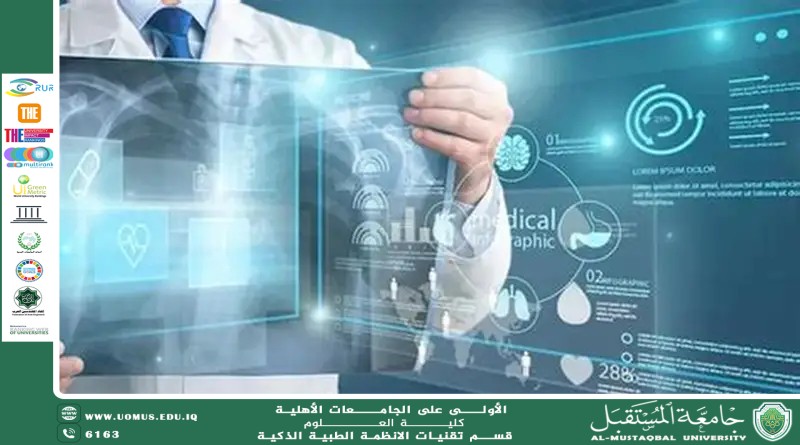
Artificial intelligence (AI) has become one of the essential tools in advancing modern healthcare, significantly contributing to improving the quality of medical diagnosis and accelerating clinical decision-making. AI relies on advanced algorithms, machine learning, and deep learning techniques to analyze vast amounts of diverse medical data, including radiographic images, blood tests, and electronic medical records, enabling physicians to obtain accurate and reliable results more quickly compared to traditional methods.
These technologies allow for early prediction of medical conditions, such as the detection of cancer in its early stages or the early diagnosis of cardiovascular diseases, by analyzing complex patterns in medical data that may be difficult for the human eye to identify. AI can also integrate information from multiple sources to provide a comprehensive assessment of a patient’s condition, enhancing the physician’s ability to develop precise and personalized treatment plans for each individual.
Moreover, AI contributes to reducing medical errors and improving operational efficiency in hospitals, as the system can analyze thousands of images and datasets in a short time, saving physicians’ time, reducing their workload, and enabling more effective patient care. AI also supports complex medical decision-making by providing evidence-based recommendations and quantitative analyses, thereby increasing confidence in both diagnosis and treatment.
Despite these significant benefits, the application of AI in medical diagnosis faces challenges related to privacy and data protection, as well as the need for continuous verification of system accuracy and result reliability. Addressing these challenges requires the development of strict security protocols and training medical and technical staff to use these systems effectively, while maintaining the human role as a key decision-maker in final medical judgments.
Overall, AI represents a revolution in modern medical diagnosis, combining advanced quantitative analysis with medical expertise to provide more precise and efficient care. It also enables future developments toward smarter and more personalized diagnostics. Research and development continue in this field to expand AI applications into more complex areas, such as robotic surgery and continuous monitoring of critical conditions, reflecting the growing role of this technology in improving healthcare globally.
Al-Mustaqbal University is the first one university in Iraq.