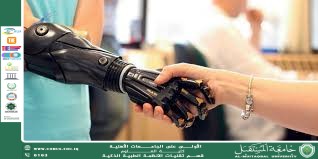
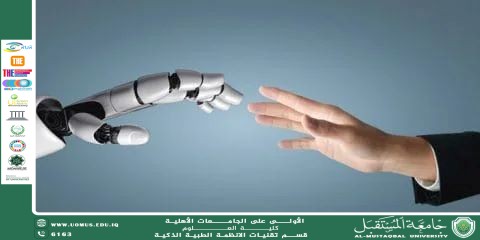
Smart Prosthetics: Integrating Artificial Intelligence and Biomedical Engineering
Smart prosthetics represent one of the most significant advancements in modern biomedical engineering, combining advanced engineering design with intelligent technologies to restore lost limb functions and enhance patients’ quality of life. These prosthetics rely on integrated electronic systems and precise sensors, enabling them to respond to body movements, nerve signals, and muscle activity, allowing for more natural and accurate control of motion.
The integration of artificial intelligence in these prosthetics allows them to learn from the user’s movements and daily usage patterns, improving the prosthetic’s responsiveness to different situations and providing smooth, flexible movements that closely resemble natural limb motion. Additionally, smart systems continuously analyze performance data and adapt to the individual needs of the patient, enhancing functional comfort and reducing fatigue from prolonged use.
The importance of smart prosthetics extends beyond mobility, impacting the psychological and social well-being of users by providing a sense of independence and self-confidence, enabling them to resume daily activities almost normally. Continuous development in this technology further enhances the integration between devices and biological systems, allowing for advanced capabilities such as thought-based control through brain-computer interfaces.
Despite these significant benefits, smart prosthetics face technical challenges related to size, power management, and data security, as well as the need for ongoing monitoring to ensure compatibility with the patient’s condition. Developing these prosthetics requires close collaboration between engineers, physicians, and neuroscience experts to design systems that meet medical needs while keeping pace with technological advancements.
Overall, smart prosthetics represent a revolution in biomedical engineering, combining artificial intelligence and biotechnologies to provide innovative solutions that restore natural movement and improve patients’ quality of life. Research continues to advance in this field, aiming to develop even smarter prosthetics that offer precise control, adaptability to environmental conditions, and customization to individual needs, reflecting the growing role of technology in transforming healthcare and achieving seamless human-machine integration.
Al-Mustaqbal University is the first one university in Iraq.