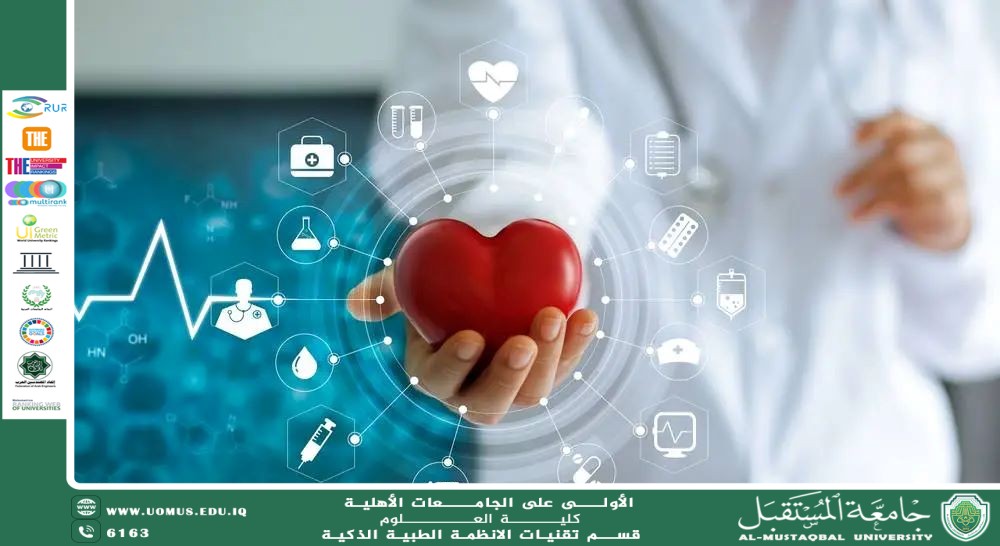
Artificial Intelligence Algorithms for Early Detection of Heart Diseases (Programmer Aya Jamal Heidy)
Heart diseases are among the leading causes of death worldwide, making their early detection one of the most critical challenges in medical science. Artificial intelligence (AI) algorithms have brought a significant transformation to the field of cardiac diagnosis and monitoring by analyzing medical data with a level of accuracy and speed that surpasses traditional methods. These algorithms process large datasets, including electrocardiogram (ECG) signals, X-ray and MRI cardiac images, and laboratory test results, to identify early indicators of heart conditions such as arterial stenosis, weakened heart muscles, or arrhythmias.
AI algorithms allow for the detection of subtle patterns and minor changes in data that may be overlooked by human observation, enabling physicians to predict critical conditions before they occur and take preventive measures. Machine learning and deep learning techniques also allow for the creation of personalized models for each patient, considering genetic, environmental, and lifestyle factors, thereby improving diagnostic accuracy and optimizing treatment plans tailored to individual needs.
Furthermore, these algorithms provide operational benefits for hospitals and medical clinics, reducing the time required to analyze large volumes of data and accelerating clinical decision-making. They also help minimize medical errors associated with traditional diagnostics, increasing confidence in the results and enhancing overall healthcare efficiency.
Despite their significant advantages, the application of AI in the early detection of heart diseases faces several challenges, particularly concerning privacy and the protection of sensitive medical data, as well as the accuracy of models in unusual cases or with incomplete data. Integrating these algorithms into clinical practice requires continuous performance verification, the development of robust security protocols, and training of medical staff to interpret results effectively and use them in informed decision-making.
Overall, AI algorithms for early detection of heart diseases represent a fundamental shift in cardiac care, providing precise tools for early diagnosis and complication prediction, thereby reducing mortality and improving patients’ quality of life. As research and development in this field continue, these algorithms are expected to become increasingly advanced, with integration into remote cardiac monitoring systems and predictive preventive care, highlighting the growing role of artificial intelligence in improving global healthcare.
Al-Mustaqbal University is the first one university in Iraq.