Intelligent Medical Image Analysis Using Deep Learning (Programmer Huda Khudair Hani)
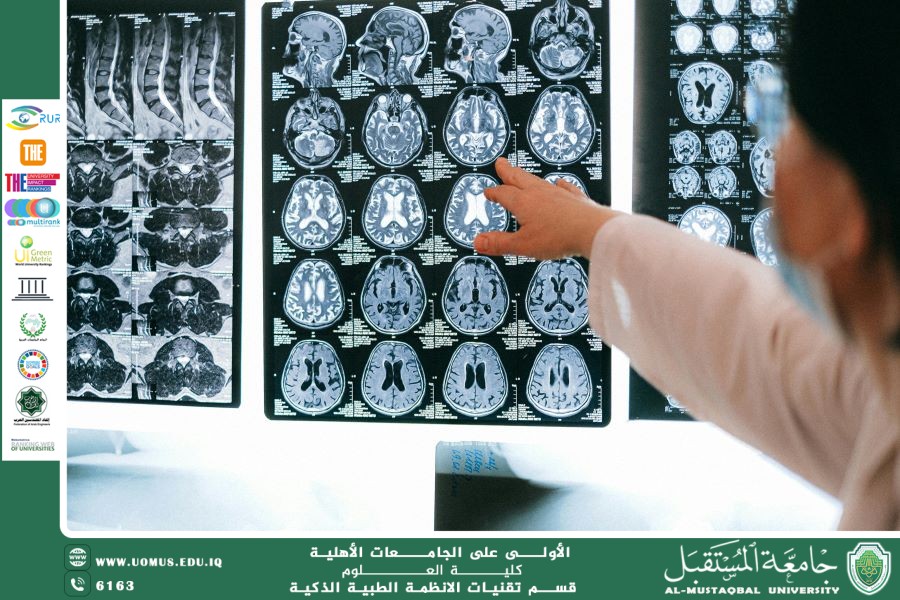
Intelligent medical image analysis using deep learning has emerged as one of the most significant innovations in modern healthcare, enabling physicians to diagnose medical conditions with unprecedented accuracy and speed. This analysis relies on advanced artificial intelligence techniques, including deep neural networks, which allow for the recognition of intricate patterns in medical images such as X-rays, MRI scans, and CT scans, without the need for extensive manual intervention.
These technologies contribute to the early diagnosis of diseases such as cancer, cardiovascular disorders, and neurological conditions by detecting subtle tissue changes that may be difficult for the human eye to identify. Deep learning also enables the prediction of disease progression based on historical and current imaging data, enhancing physicians’ ability to develop precise and personalized treatment plans for each patient.
In addition to diagnostic benefits, intelligent medical image analysis reduces the time required for data interpretation, improving operational efficiency in hospitals and clinics and allowing for the monitoring of a larger number of patients with greater effectiveness. It also enhances confidence in medical results and minimizes errors associated with traditional diagnostic methods, thereby improving healthcare quality and patient safety.
Despite these significant advantages, this field faces challenges related to privacy and the protection of sensitive medical data, necessitating advanced security systems to ensure the confidentiality of medical images and protect against potential breaches. Integrating these systems also requires specialized training for medical and technical staff to use the software and tools effectively, ensuring accurate results and maximizing the potential of the available technology.
Overall, intelligent medical image analysis using deep learning represents a transformative advancement in healthcare, combining artificial intelligence with medical expertise to deliver more accurate and effective diagnoses, improve treatment outcomes, and enhance the overall quality of healthcare services. Ongoing research in this field continues to develop smarter and more efficient algorithms, including predicting critical conditions and expanding deep learning applications across various medical specialties, reflecting the vital role of this technology in the future of modern medicine globally.
Al-Mustaqbal University is the first one university in Iraq.