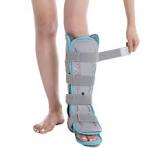
Clinical Criteria for Selecting and Fitting the Appropriate Ankle-Foot Orthosis (AFO)
An ankle-foot orthosis (AFO) is a medical device used to support the ankle and foot, improve walking ability, reduce pain, and provide stability for individuals with weakness or paralysis in the lower leg and foot muscles. Selecting and fitting the appropriate orthosis depends on a thorough clinical assessment to ensure optimal functional outcomes and minimize potential complications.
1. Clinical Assessment
Before selecting an AFO, the clinician should perform a comprehensive evaluation, including:
Medical Diagnosis: Identifying the cause of ankle weakness, such as cerebral palsy, stroke, spinal cord injury, or peripheral neuropathy.
Muscle Function Assessment: Evaluating the strength of the lower leg muscles, particularly the dorsiflexors and plantarflexors of the ankle.
Range of Motion Assessment: Measuring ankle and foot joint mobility to determine the required level of support.
Gait Analysis: Observing walking patterns, foot drop, or abnormal movements to identify the need for additional support.
Skin and Bone Condition: Examining the foot and ankle to ensure there are no ulcers, deformities, or bony prominences that could interfere with orthosis use.
2. Orthosis Selection Criteria
After assessment, the orthosis is selected based on the following:
Material Type: Using lightweight, flexible materials such as thermoplastics or carbon fiber for comfort and reduced weight.
Rigidity Level: Determining whether a rigid or semi-rigid orthosis is needed based on stability and support requirements.
Design:
Full posterior support for complete ankle stabilization.
Partial posterior support allowing limited mobility.
Adjustability: Ability to adjust angles or length to accommodate growth or changes in muscle strength.
Daily Wear and Comfort: Ensuring the orthosis allows natural movement without causing skin pressure or irritation.
3. Orthosis Fitting
Fitting the orthosis must be precise to prevent complications:
Accurate Foot and Ankle Measurement: Using specialized measuring tools for an optimal fit.
Proper Sizing: Ensuring coverage of support areas without causing discomfort.
Optimal Securing: Using straps or fasteners to secure the orthosis safely while allowing natural movement.
Patient Instructions: Educating on how to wear the orthosis, recommended daily usage, and monitoring the skin to prevent ulcers.
4. Follow-Up and Continuous Evaluation
Reassessing gait after a period of use to ensure the orthosis is effective.
Adjusting angles or padding as needed.
Monitoring growth in children or changes in muscle strength in adults to maintain proper support.
Conclusion
Selecting and fitting the appropriate ankle-foot orthosis is a multidimensional process requiring careful clinical evaluation while considering comfort, functional performance, and long-term sustainability. Adhering to clinical criteria improves the patient’s quality of life and reduces complications associated with improper orthosis use.