
Cellular Evidence in Crime Scene Investigation (Asst. Prof. Bushra Hussein Atiyah)
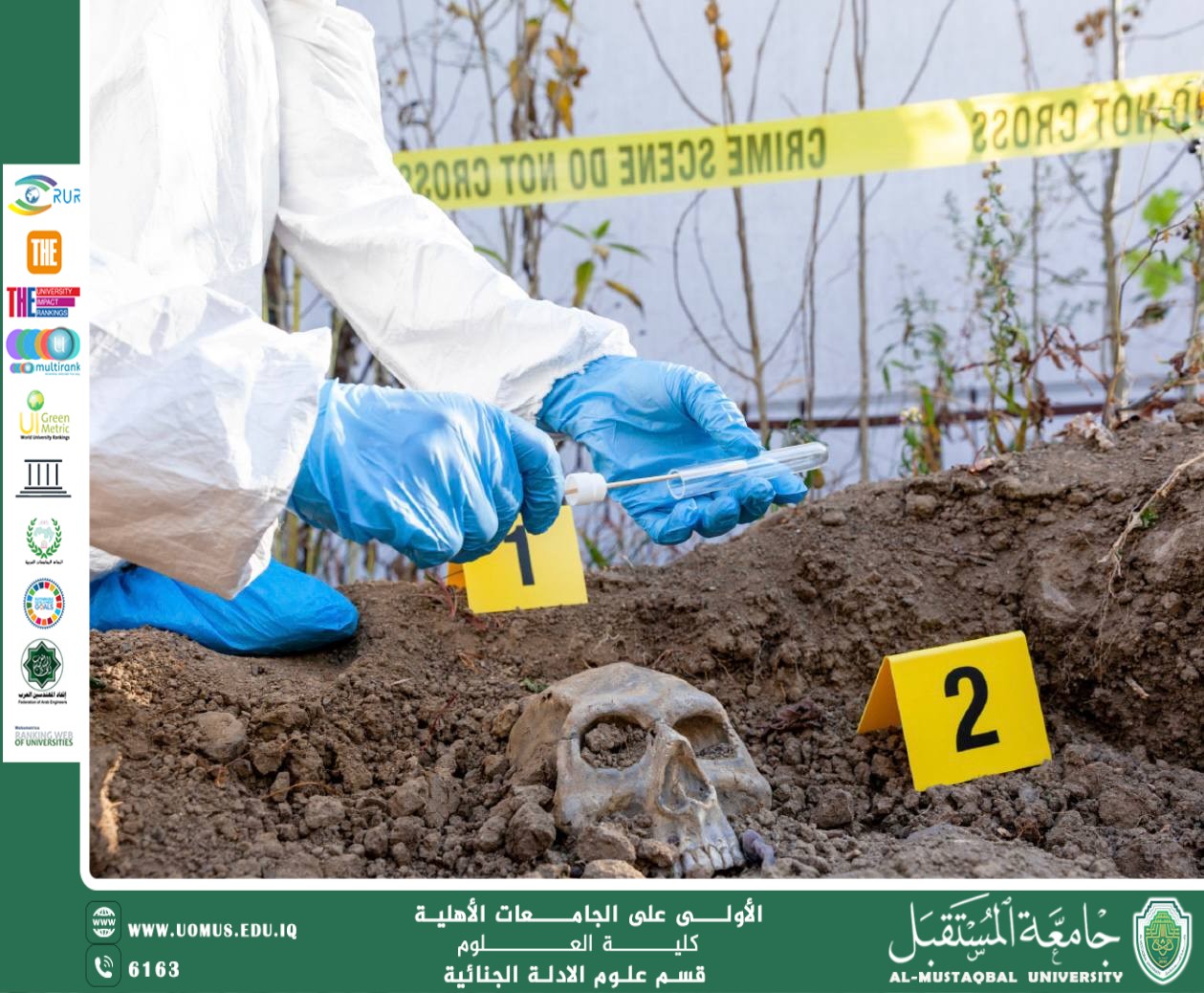
Cells are one of the most important sources of biological evidence at a crime scene. Cells can be found in materials such as blood, saliva, sweat, hair, or skin tissue. These cells contain DNA that can be used to identify individuals.
Forensic investigators carefully collect biological samples to prevent contamination. The cells are then analyzed in laboratories using microscopy and molecular techniques. Microscopic examination helps identify the type of cells, while DNA analysis helps determine the identity of the individual.
The study of cellular evidence also helps forensic scientists understand how biological materials are transferred between people or objects at a crime scene, assisting investigators in reconstructing the sequence of events.
Al-Mustaqbal University – the first university in Iraq.