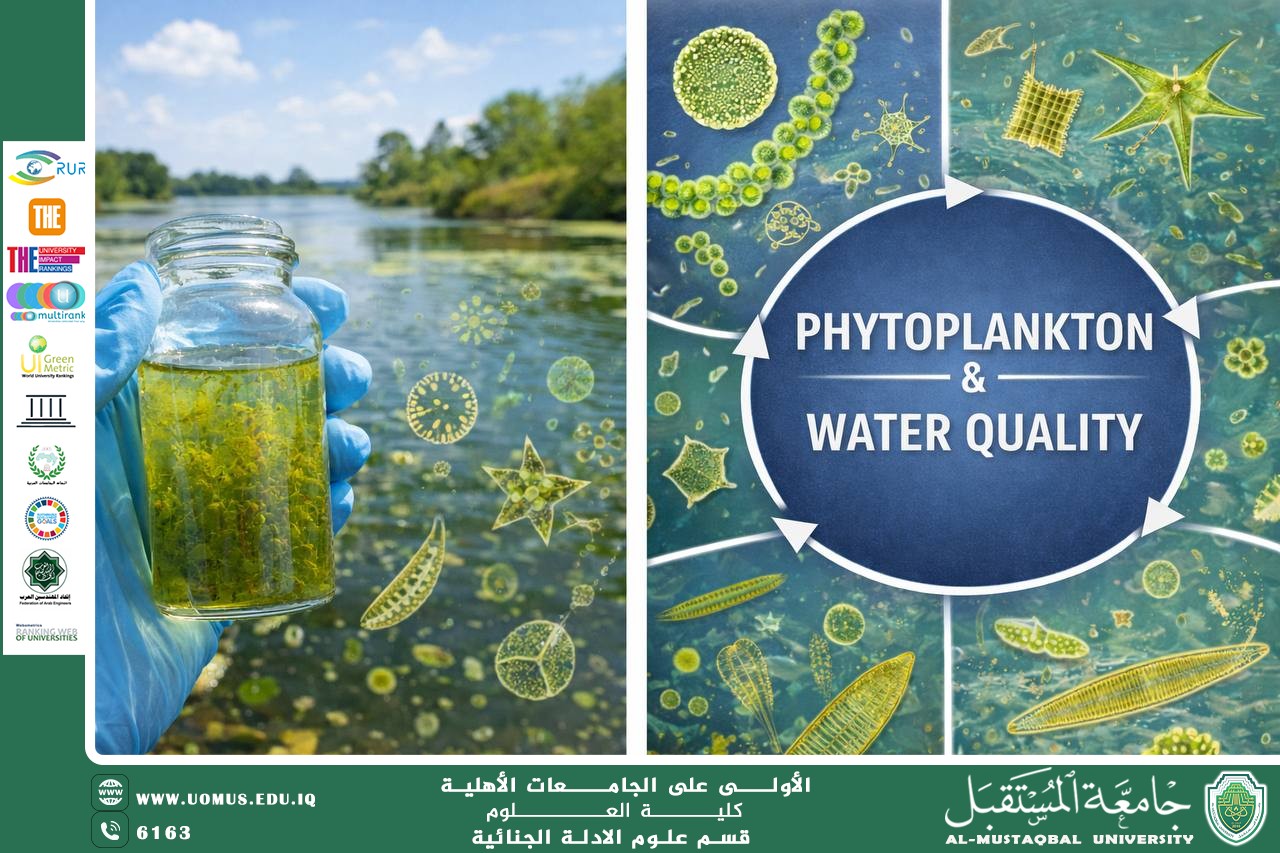

Phytoplankton and Their Role in Assessing Water Quality (Assistant Lecturer Mais Uday Mohammed)
Phytoplankton are among the fundamental components of aquatic ecosystems, serving as primary producers in many water environments. These microscopic autotrophic organisms perform photosynthesis and therefore represent a major source of energy within aquatic food chains. In addition, phytoplankton contribute significantly to the production of dissolved oxygen in water, which supports the stability of aquatic ecosystems.
Phytoplankton respond rapidly to environmental changes such as variations in nutrient concentrations, temperature, light intensity, and pH. For this reason, they are widely used as important bioindicators for evaluating water quality and detecting pollution levels. When nutrients such as nitrogen and phosphorus increase excessively, dense algal blooms may occur, a phenomenon known as eutrophication, which can reduce dissolved oxygen levels and disturb ecological balance.
Analyzing the structure and diversity of phytoplankton communities also helps in understanding environmental changes occurring within aquatic systems. In relatively clean environments, biodiversity is typically higher, whereas in polluted environments diversity often declines and certain tolerant species dominate.
Therefore, the study of phytoplankton represents an important scientific tool in environmental monitoring programs. It provides valuable information about the condition of aquatic ecosystems and supports the development of effective strategies for sustainable water resource management.
In conclusion, phytoplankton play a crucial role in understanding the dynamics of aquatic ecosystems and serve as indicators of environmental changes that may influence the sustainability of these systems.
Al-Mustaqbal University – the first university in Iraq.