The Effect of Nutrients on Algal Growth in Aquatic Ecosystems(Assistant Lecturer Mais Uday Mohammed)
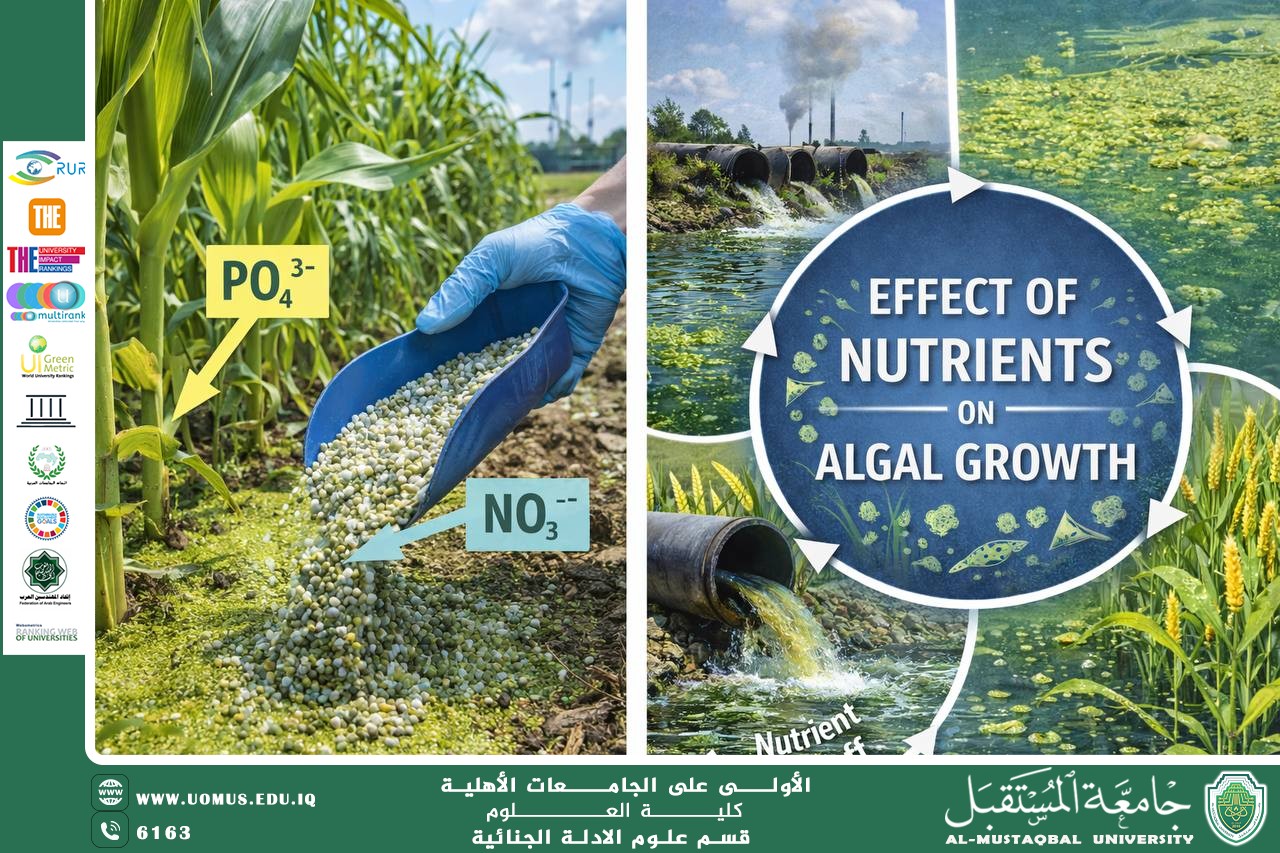
Nutrients are among the key environmental factors influencing the growth of living organisms in aquatic environments, particularly algae. The most important of these nutrients include nitrogen and phosphorus compounds, which are essential elements for cellular growth and division. However, excessive concentrations of these nutrients can disrupt ecological balance and lead to a phenomenon known as eutrophication.
Eutrophication occurs when nutrients accumulate in water bodies, often as a result of agricultural runoff carrying fertilizers, untreated wastewater discharge, or certain industrial activities. This nutrient enrichment stimulates excessive algal growth, resulting in what is commonly referred to as algal blooms.
Algal blooms may cause several negative environmental impacts, including reducing the amount of light reaching other aquatic organisms and decreasing dissolved oxygen levels due to the decomposition of large algal biomass. This process may lead to the death of aquatic organisms such as fish and invertebrates, thereby disturbing aquatic food chains.
Therefore, monitoring nutrient concentrations in water bodies is a crucial step in managing aquatic ecosystems. Environmental studies focusing on algae also contribute to understanding the relationship between nutrient availability and algal community growth, which supports the development of effective strategies for maintaining water quality.
In conclusion, maintaining a balanced concentration of nutrients is essential for the stability of aquatic ecosystems, highlighting the importance of sustainable water resource management to minimize the effects of nutrient pollution.
Al-Mustaqbal University – the first university in Iraq.