Water Quality and Its Importance in Maintaining Aquatic Ecosystems(Assistant Lecturer Mais Uday Mohammed)
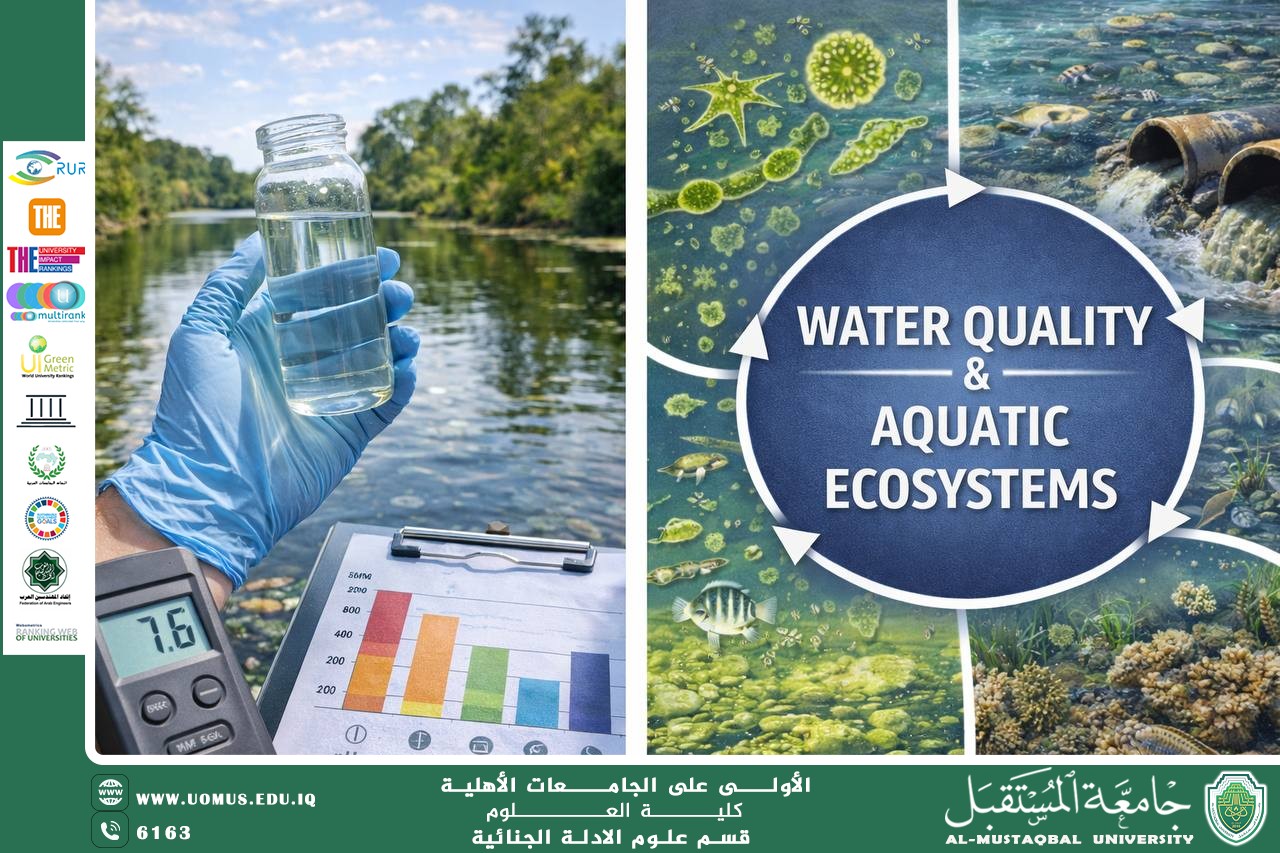
Water is one of the most essential natural resources for sustaining life on Earth, as all living organisms depend on it either directly or indirectly. Water quality is a fundamental factor in maintaining ecological balance within aquatic ecosystems, since the physical, chemical, and biological characteristics of water influence the survival and growth of aquatic organisms.
Water quality parameters include several factors such as temperature, pH, dissolved oxygen concentration, nutrient levels, and the presence of chemical and organic pollutants. Variations in these parameters can directly affect the composition of biological communities inhabiting aquatic environments, including algae, phytoplankton, zooplankton, and fish.
The deterioration of water quality is often associated with various human activities such as wastewater discharge, industrial operations, and agricultural runoff carrying fertilizers and pesticides. These activities may lead to negative environmental changes, including reduced biodiversity and the dominance of pollution-tolerant organisms.
Therefore, monitoring water quality is a crucial step in protecting water resources and ensuring their sustainability. Environmental monitoring programs rely on both chemical analyses and biological studies to understand the nature of changes occurring within aquatic ecosystems and to implement appropriate management strategies.
In conclusion, maintaining water quality is essential for protecting the environment and ensuring the sustainability of natural resources, which requires informed environmental management based on scientific research and proper planning.
Al-Mustaqbal University – the first university in Iraq.