Poverty and Unemployment and Their Impact on Social Stability (Asst. Prof. Sarab Abbas Jasim)
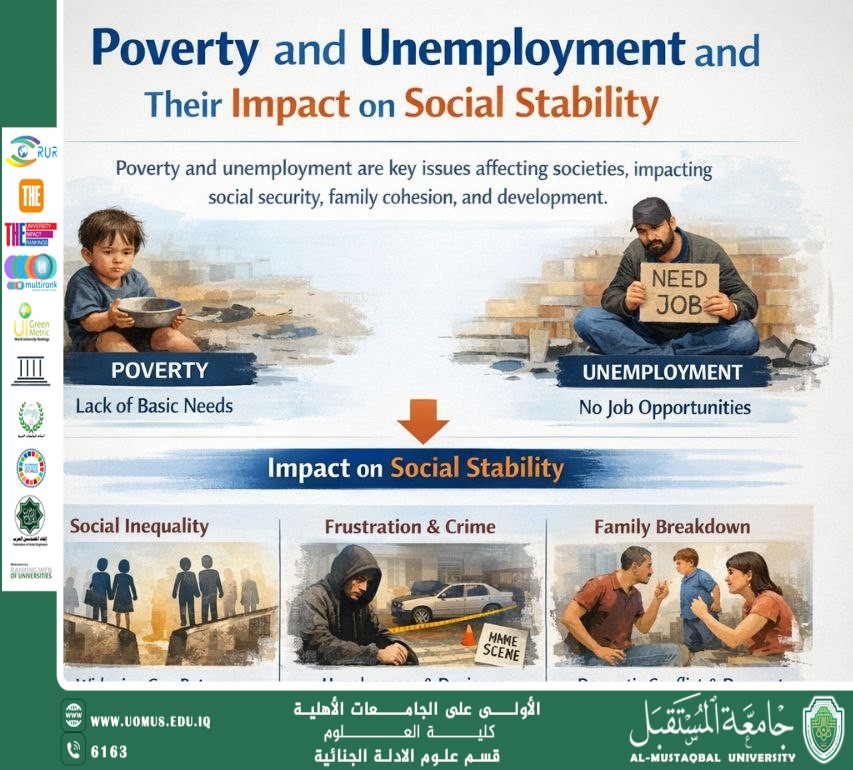
Poverty and unemployment are among the most prominent social and economic issues facing contemporary societies, as they have a direct impact on individuals’ lives and the stability of nations. Their effects are not limited to material conditions alone but also influence social security, family cohesion, development levels, and the prevalence of behavioral and psychological problems. Therefore, studying the relationship between poverty and unemployment on one hand, and social stability on the other, is essential, as this relationship directly affects both the present and future of society.
Poverty is defined as a state of inability to meet basic human needs such as food, housing, education, and healthcare. Unemployment, on the other hand, refers to the lack of suitable work opportunities for capable and willing individuals. Unemployment is often closely linked to poverty because losing a job leads to reduced income and a lower standard of living, making families more vulnerable to deprivation and social disruption. Thus, unemployment is one of the main causes of poverty, while poverty itself can perpetuate unemployment due to limited education, lack of skills, and scarce opportunities.
Poverty and unemployment affect social stability in multiple ways. They widen the gap between social classes and increase feelings of frustration and hopelessness, especially among youth. When individuals feel incapable of meeting their basic needs or building a future, they may lose trust in society and its institutions, negatively impacting social cohesion. Persistent youth unemployment may also lead some individuals toward deviance, crime, migration, or disengagement from active societal participation, threatening both security and stability.
Other social effects of poverty and unemployment include weakened family bonds and an increase in domestic problems. Limited financial resources may cause tension among family members, increasing the likelihood of domestic violence, family breakdown, or school dropout. Poverty also deprives children of quality education and adequate healthcare, perpetuating the cycle of deprivation across generations. Hence, the issue extends beyond individuals to affect the structure of society as a whole.
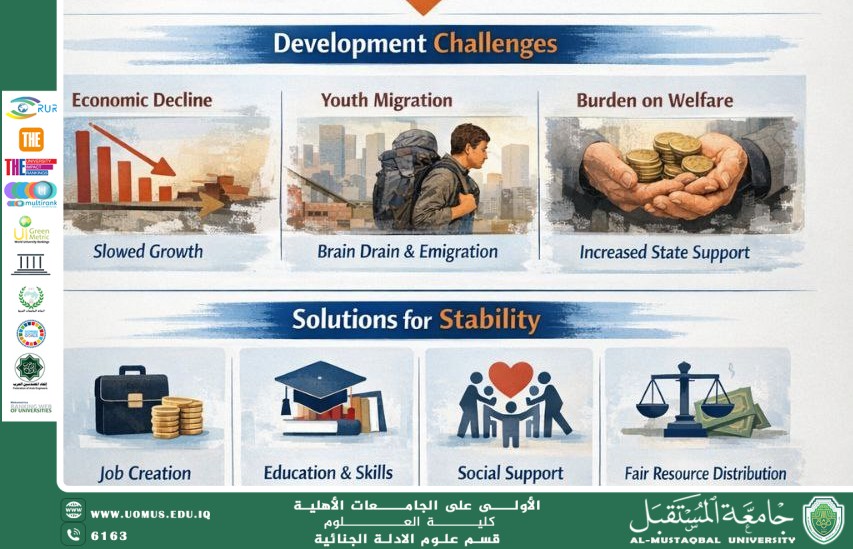
Moreover, poverty and unemployment negatively impact overall development, as societies with high rates of poverty and unemployment struggle to utilize the potential and productivity of their population. The unemployed represent idle human capital, while poverty restricts creativity and participation in economic and social activities. Consequently, economic growth slows, and the state bears heavier burdens in welfare and support, rather than directing resources toward development and progress.
True social stability can only be achieved by addressing the root causes of poverty and unemployment through comprehensive, scientific measures. This requires creating real job opportunities, linking education to labor market needs, supporting small businesses, ensuring equitable resource distribution, and expanding social safety nets for vulnerable groups. Additionally, fostering values of social solidarity and sound economic planning contributes to mitigating the effects of these issues and strengthens individuals’ sense of security and belonging.
In conclusion, poverty and unemployment are not merely economic problems but fundamental factors that can destabilize society if not effectively addressed. Higher rates of poverty and unemployment increase the risk of social fragmentation and hinder development opportunities. Therefore, building a stable and secure society requires serious policies that invest in human capital, preserve dignity, and provide opportunities for decent living and productive work.
Al-Mustaqbal University – the first university in Iraq.