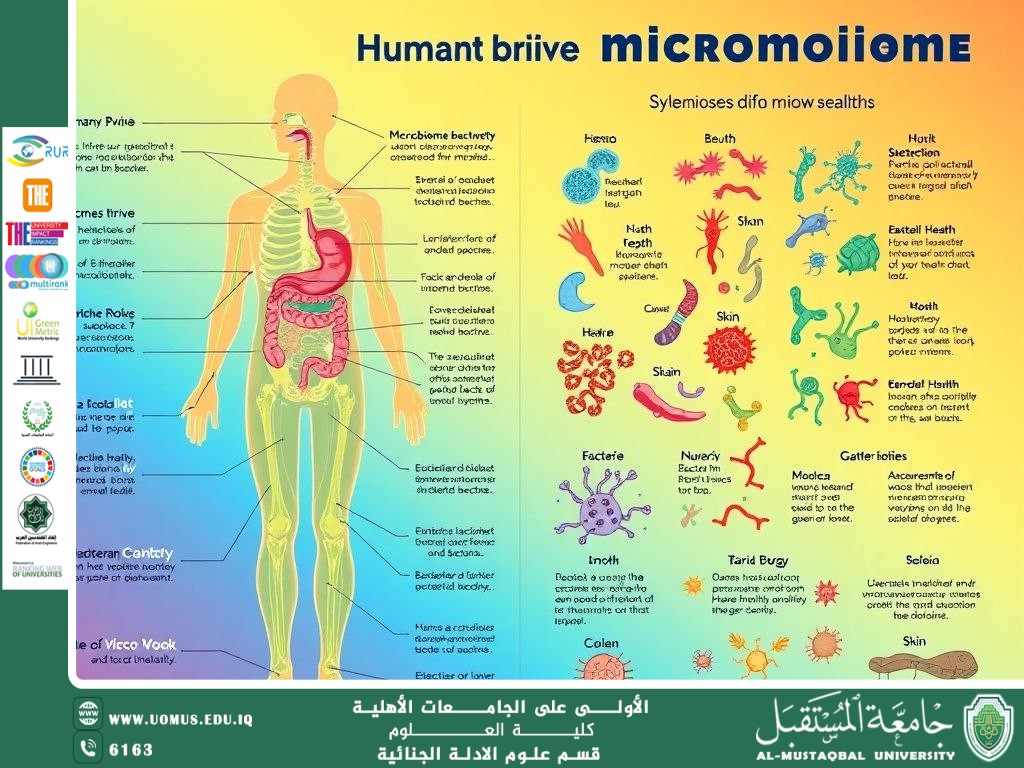
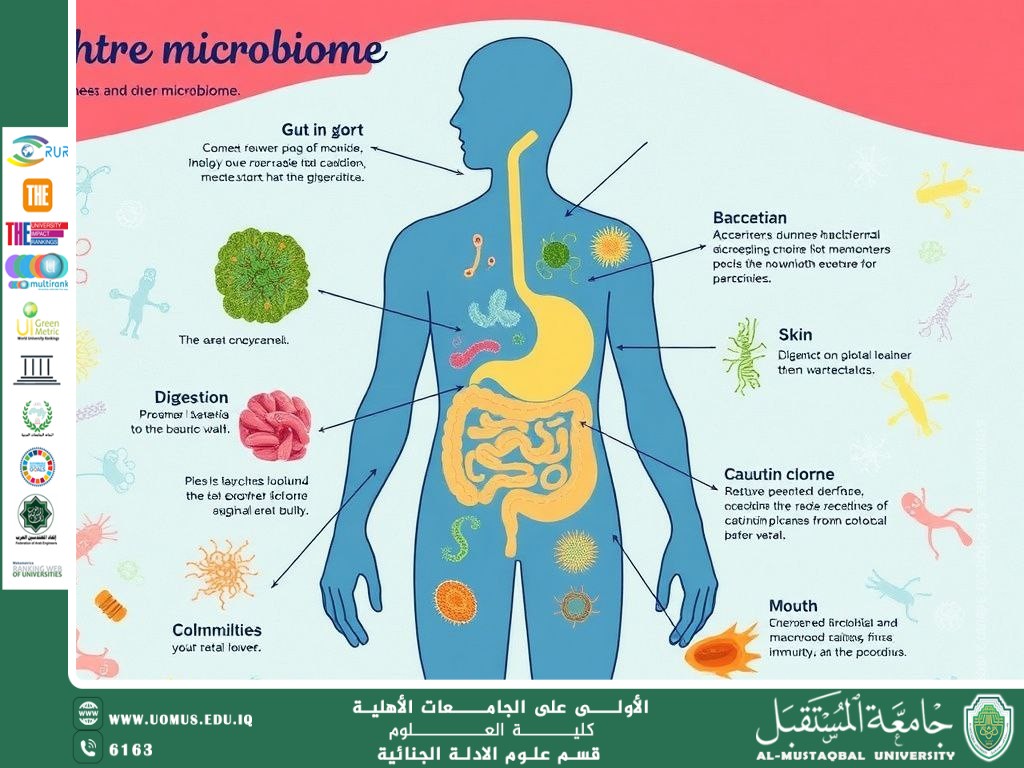
The coexistence between humans and the microbiome(Asst. Lecturer Huwayda Nazzal Hussein)
The microbiome refers to the vast community of microorganisms that live in and on the human body. This community includes bacteria, fungi, viruses, and other microbes inhabiting areas such as the gut, skin, and mouth.
Although some microbes can cause disease, most microorganisms in the microbiome play essential roles in maintaining human health. For example, gut bacteria help digest food and produce important vitamins such as vitamin K and certain B vitamins.
The microbiome also helps train the immune system to distinguish between harmful and harmless organisms. When the balance of this microbial community is disrupted, a condition known as dysbiosis may occur, potentially leading to health problems such as obesity or inflammatory bowel diseases.
Recent research shows that diet, antibiotic use, and lifestyle factors strongly influence the composition of the human microbiome.
Al-Mustaqbal University – the first university in Iraq.