Emerging viruses and scientific response strategies(Asst. Lecturer Huwayda Nazzal Hussein)
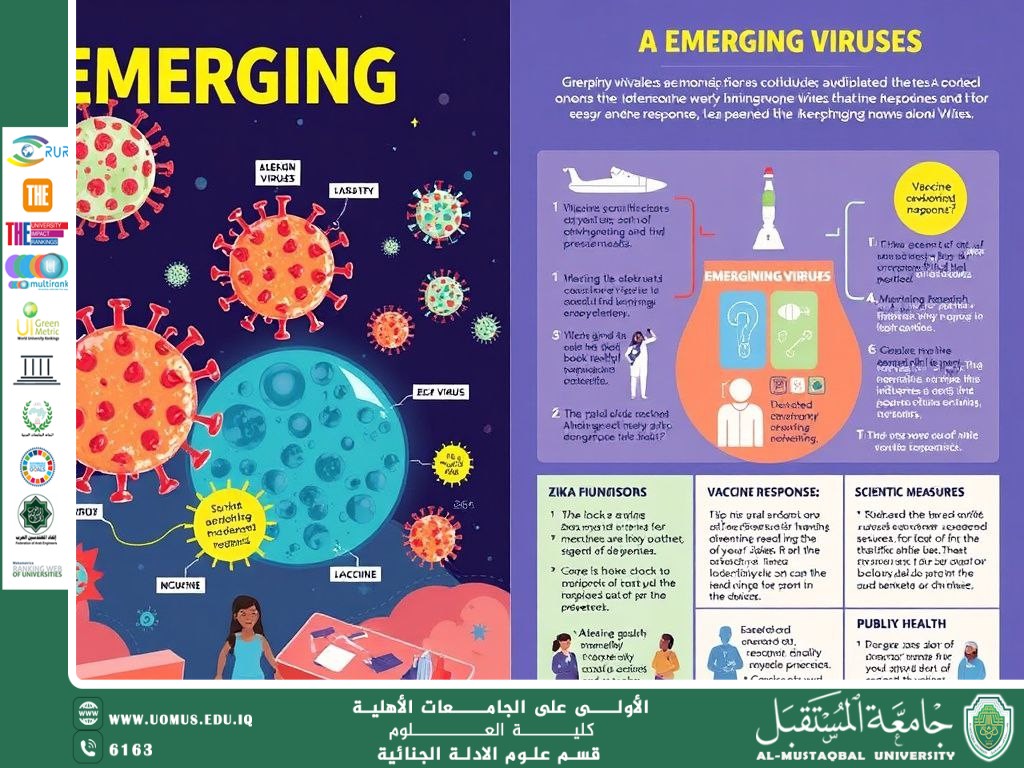
Emerging viruses represent one of the most significant public health challenges in the modern world. Emerging viruses are defined as viruses that have newly appeared in human populations or those that have existed previously but are rapidly increasing in incidence or expanding into new geographic regions.
One of the primary causes of emerging viral diseases is zoonotic transmission, which refers to the transmission of viruses from animals to humans. Many major viral outbreaks in recent decades originated in animal reservoirs such as bats, birds, or rodents. This transmission often occurs when humans come into closer contact with wildlife through environmental changes, agricultural activities, or wildlife trade.
Another important factor contributing to viral emergence is genetic mutation. Viruses, particularly RNA viruses, have very high mutation rates. These mutations may alter viral proteins and enable viruses to infect human cells more efficiently or spread more easily among human populations.
Globalization has also played a major role in the rapid spread of emerging viruses. Increased international travel, trade, and urbanization allow infectious agents to spread quickly across countries and continents. As a result, an outbreak in one region can become a global health threat within a short period.
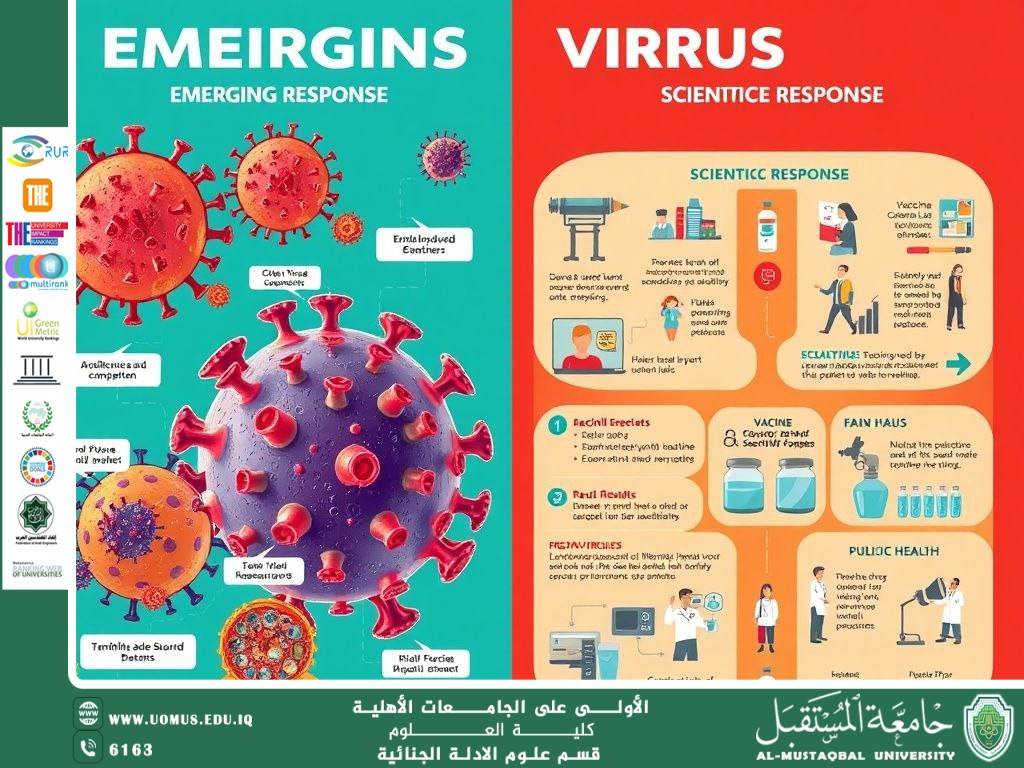
To address these challenges, scientists and public health organizations have developed several scientific response strategies.
One of the most important approaches is epidemiological surveillance. This involves monitoring disease patterns and collecting health data from different regions. Early detection of unusual disease patterns allows health authorities to respond quickly before outbreaks become widespread.
Another critical tool is rapid molecular diagnostics. Modern laboratory techniques such as polymerase chain reaction (PCR) and genomic sequencing allow scientists to identify viruses quickly and accurately. These technologies are essential for diagnosing infections and tracking viral evolution.
Vaccine development is also a key component of the scientific response to emerging viruses. Advances in biotechnology have enabled the rapid development of vaccines using platforms such as mRNA technology and viral vectors. These technologies significantly reduce the time required to produce effective vaccines.
In addition, international collaboration plays a crucial role in combating emerging viral diseases. Organizations such as global health institutions coordinate research efforts, share epidemiological data, and support public health responses worldwide.
In the future, technologies such as artificial intelligence, genomic surveillance, and big data analysis are expected to improve our ability to predict and prevent viral outbreaks before they escalate into global pandemics.
Al-Mustaqbal University – the first university in Iraq.