Smart Sensors for Continuous Blood Glucose Monitoring (Assist. Lecturer Ali Salim Halim).
Smart sensors for continuous blood glucose monitoring represent one of the most significant innovations in modern healthcare, particularly in the management of diabetes. These technologies provide an accurate and advanced method for tracking glucose levels in the body without the need for frequent traditional measurements. They rely on advanced techniques that combine biosensors with intelligent electronic systems, enabling real-time and continuous monitoring of blood glucose levels and transmitting data to smart devices or medical applications for analysis and follow-up.
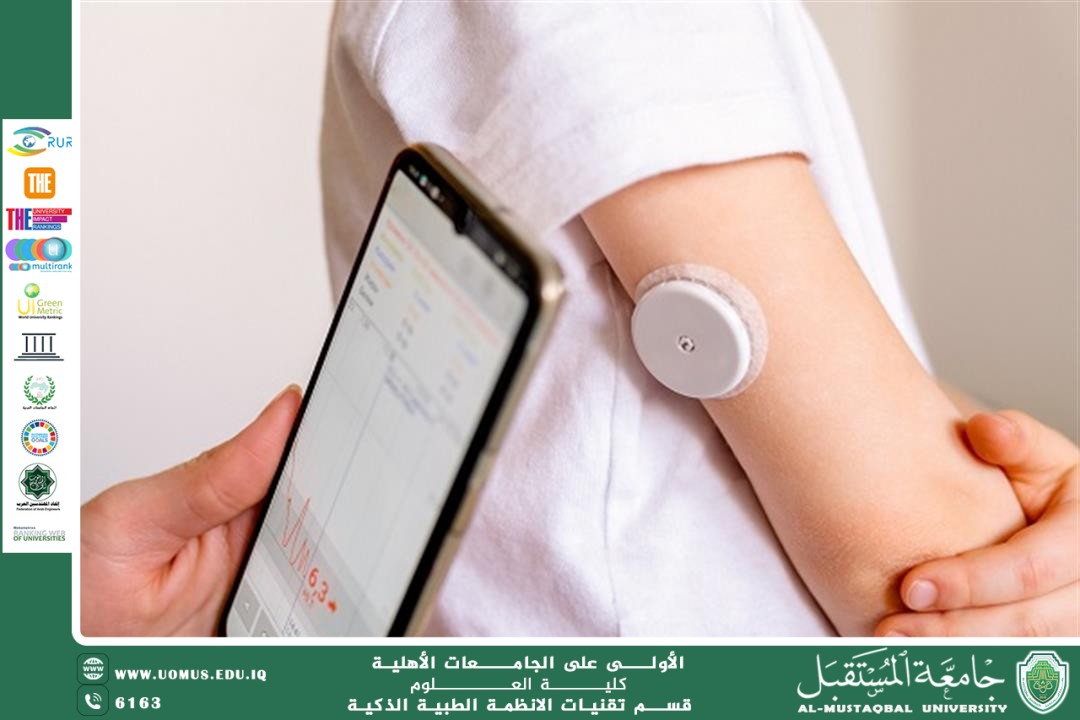
These systems typically operate through highly sensitive sensors placed under the skin, which measure glucose concentration in the interstitial fluid at regular intervals. The collected data is then converted into digital signals and processed using advanced algorithms, providing accurate real-time readings. This allows both patients and healthcare providers to understand fluctuations in glucose levels and make timely and effective treatment decisions. Additionally, these devices can generate automatic alerts when glucose levels rise or fall to dangerous levels, helping to prevent acute complications.
The use of smart sensors significantly improves the quality of life for diabetic patients by reducing the need for frequent finger-prick testing and enabling continuous health monitoring. This enhances adherence to treatment plans and reduces anxiety associated with glucose variability. Furthermore, these devices can be integrated with artificial intelligence technologies to analyze daily patterns and predict future changes, supporting personalized treatment and improving long-term health outcomes.
From a clinical perspective, these sensors enhance diagnostic accuracy and patient monitoring, assisting physicians in evaluating the effectiveness of various treatment strategies. They can also be integrated with other medical systems, such as smart insulin pumps, paving the way for semi-automated therapeutic systems capable of regulating glucose levels more efficiently.
Despite their significant benefits, these technologies face challenges related to measurement accuracy in certain conditions, battery life, and concerns regarding privacy and the protection of sensitive health data. Therefore, continuous advancements in sensing technologies and security systems are required, along with proper user training to ensure accurate and reliable results.
Overall, smart sensors for continuous blood glucose monitoring represent a major advancement in diabetes management, offering precise and effective tools for monitoring and control. They contribute to reducing complications and improving patients’ quality of life. As research and development continue, these systems are expected to become more intelligent and better integrated with broader healthcare infrastructures, highlighting the growing role of technology in delivering advanced and sustainable healthcare solutions.
Al-Mustaqbal University is the first one university in Iraq.