An academic article titled "Specialization and Artificial Intelligence" by Lecturer M.M. Samar Hussein Hilal
The brain and artificial intelligence: Can brain-computer interfaces restore sight or move prosthetic limbs with thought? The world is witnessing rapid advancements in artificial intelligence and neuroscience, leading to the emergence of brain-computer interfaces (BCIs).
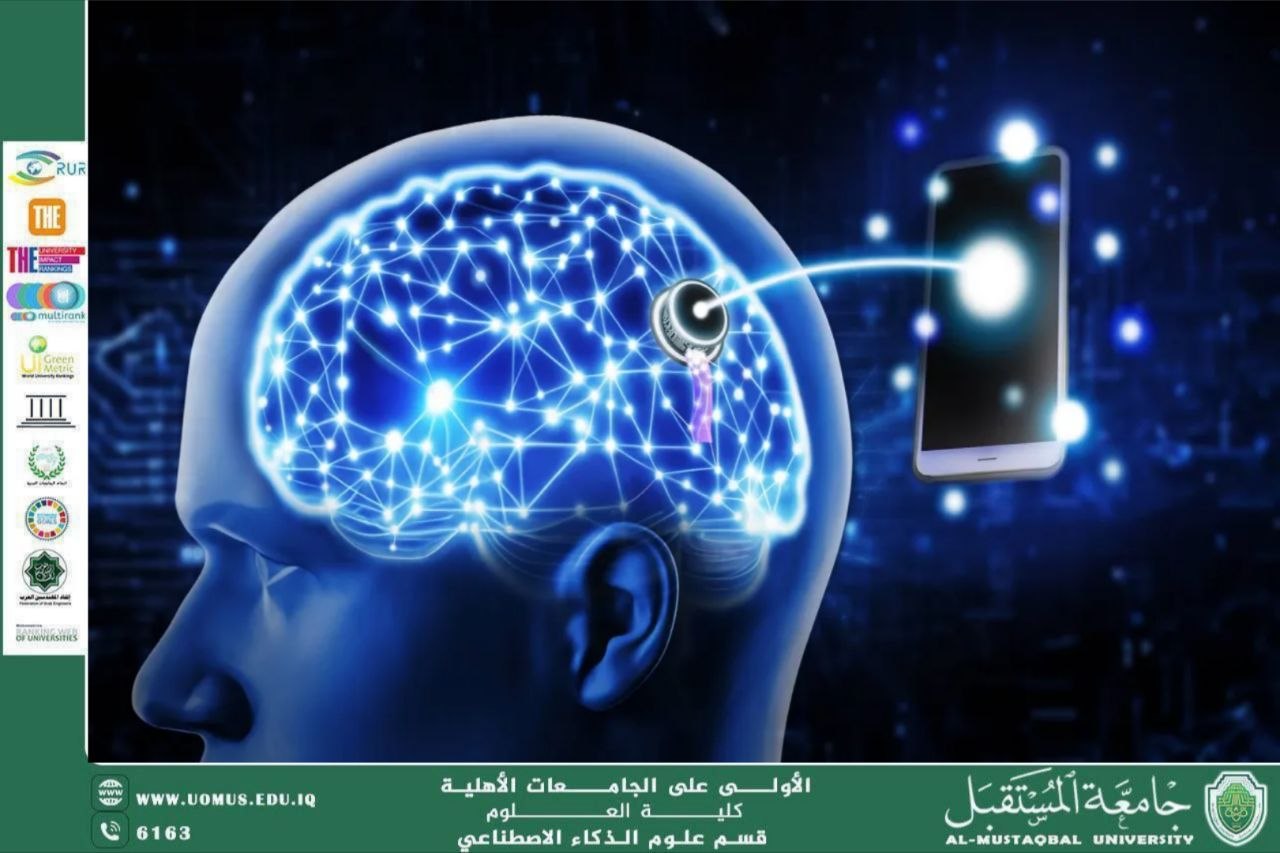
These interfaces act as a bridge between the human brain and electronic devices, opening new possibilities in medicine and rehabilitation.
This technology relies on reading neural signals from the brain and translating them into commands that computers can understand.
As a result, it is now possible to control external devices without physical movement.
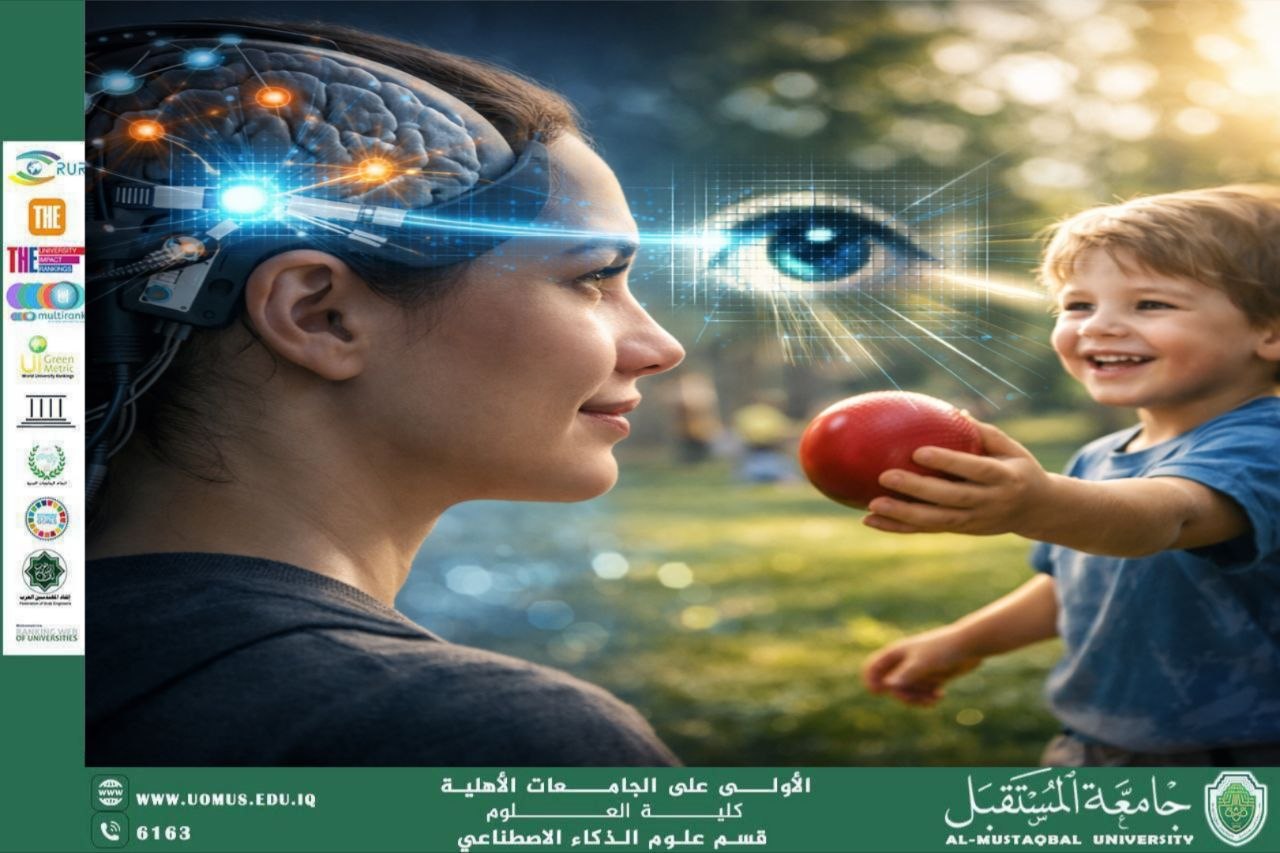
One of the most promising applications of BCIs is restoring vision in individuals who have lost it.
Some systems stimulate specific areas of the brain responsible for vision, creating a form of artificial visual perception.
Although this vision is still limited, it offers significant hope for blind patients.
In another field, BCIs are used to control prosthetic limbs.
Patients who have lost limbs can move artificial ones using only their thoughts.
This is achieved by converting neural signals into precise mechanical movements.
Studies have shown that users improve their control over time through learning and adaptation.
Additionally, this technology enhances the quality of life for paralyzed patients.
Individuals with severe paralysis can communicate or control devices using only their thoughts.
This represents a major breakthrough in neurorehabilitation.
However, several technical and ethical challenges remain.
Among them are the accuracy and stability of neural signal interpretation over time.
There are also concerns about privacy and the potential misuse of brain data.
Moreover, the high cost of these technologies limits their widespread adoption.
Further research is needed to ensure their safety and long-term effectiveness.
Despite these challenges, the future of brain-computer interfaces is highly promising.
They may help treat conditions once considered permanent disabilities.
They could also enable deeper integration between humans and machines.
In conclusion, the intersection of the brain and artificial intelligence marks a historic turning point.
These technologies may redefine human capabilities in unprecedented ways.
With continued progress, controlling the digital world through thought may soon become a reality.