An academic article titled "The Human Microbiome: A Scientific Revolution in Understanding Chronic Diseases and Nutritional Therapy" by Lecturer M.M. Samar Hussein Hilal
The human microbiome: a scientific revolution in understanding chronic diseases and nutritional therapy
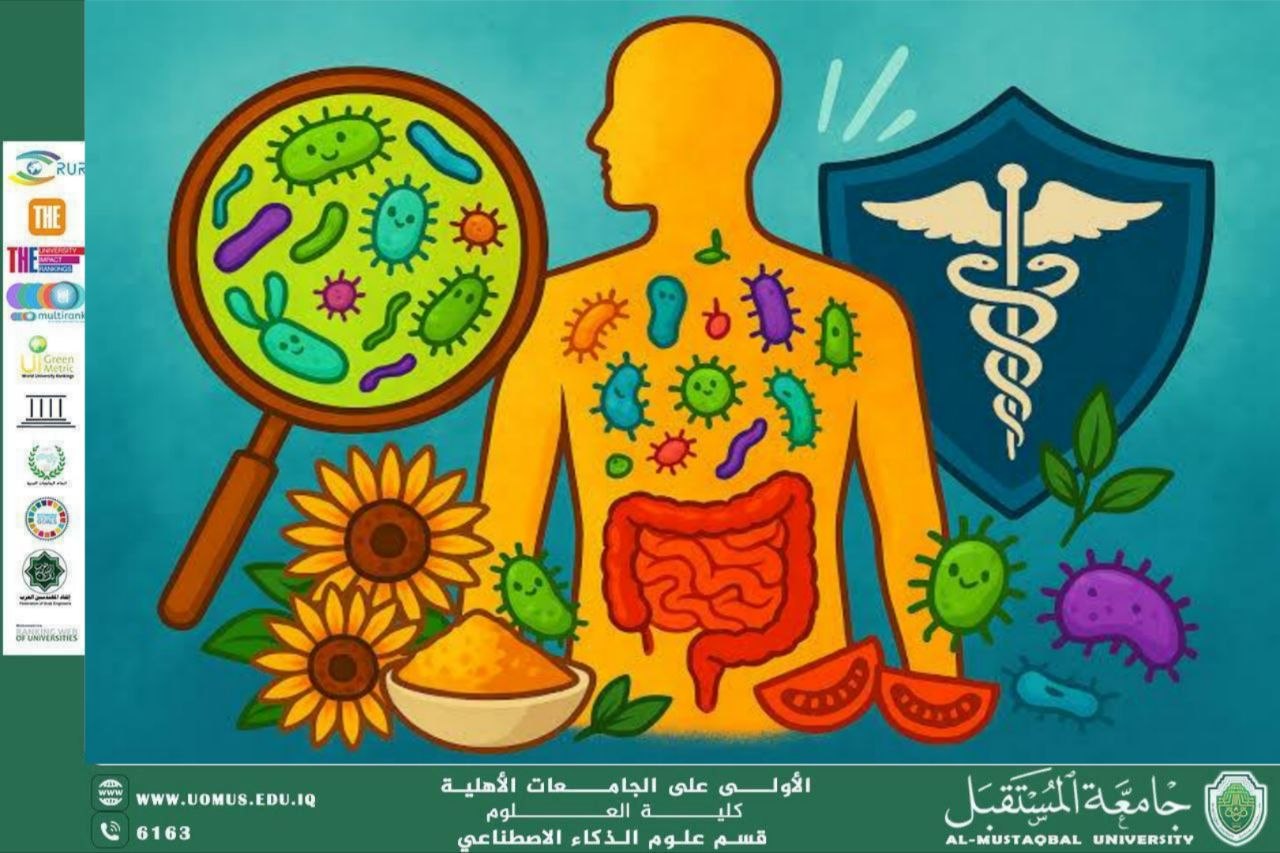
For a long time, we viewed ourselves as autonomous beings, but science over the past two decades has unveiled an astonishing truth: the human body is not a single entity but a complex ecosystem hosting trillions of microorganisms that together form the "microbiome"—an invisible organ weighing up to two kilograms with functions that extend to influence virtually every aspect of our health. This discovery has sparked a true revolution in understanding chronic diseases, as conditions such as obesity, type 2 diabetes, inflammatory bowel diseases, and even certain neurological and psychiatric disorders like depression and Parkinson's disease are no longer viewed solely through the lens of genetics or lifestyle; instead, scientists now examine them through the concept of microbial imbalance (dysbiosis). It has become clear that the composition of gut bacteria can regulate inflammation, affect nutrient absorption, and even communicate with the brain via the gut-brain axis, opening new horizons for therapies aimed at modulating the microbiome rather than merely treating symptoms. In the realm of nutritional therapy, this revolution has upended conventional thinking, shifting us from a simplistic focus on calories and macronutrients to a more nuanced concept: personalized nutrition. The question is no longer "is this food healthy?" but rather "is this food healthy for this particular individual's microbiome?" Research has shown that individuals' responses to the same foods vary dramatically based on their unique microbial composition, explaining why one-size-fits-all diets often fail and paving the way for precisely tailored dietary interventions designed to restore balance. Furthermore, therapeutic strategies have evolved from simply using probiotics to more advanced concepts like fecal microbiota transplantation (FMT), which has demonstrated remarkable efficacy in treating Clostridioides difficile infections and holds promising potential for other chronic diseases. Yet this revolution also brings significant challenges: the sheer complexity of this ecosystem, which encompasses hundreds of species interacting with each other and with their human host in ways still poorly understood, and the ethical and regulatory concerns associated with commodifying or manipulating the microbiome without fully grasping the long-term consequences. What we are witnessing is nothing less than a redefinition of "health" itself—health is no longer merely the absence of disease but a state of harmonious coexistence with our internal microbial world. As advanced sequencing technologies and artificial intelligence enable us to analyze vast microbial datasets, we are approaching a future where microbiome-based interventions become a cornerstone of both preventive and therapeutic medicine. In this context, diet transforms from a mere source of energy into a precise therapeutic tool, and perhaps the key to controlling the epidemic of chronic diseases that has burdened global healthcare systems lies hidden within this microscopic universe that inhabits us. Indeed, the ancient adage "you are what you eat" now carries a much deeper meaning: you are what your gut hosts, and the balance of that microbiome is what ultimately determines your health destiny.