A scientific article by teaching assistant Banin Nazem Sarhan entitled "Water Recycling: A Step Towards Sustainability"
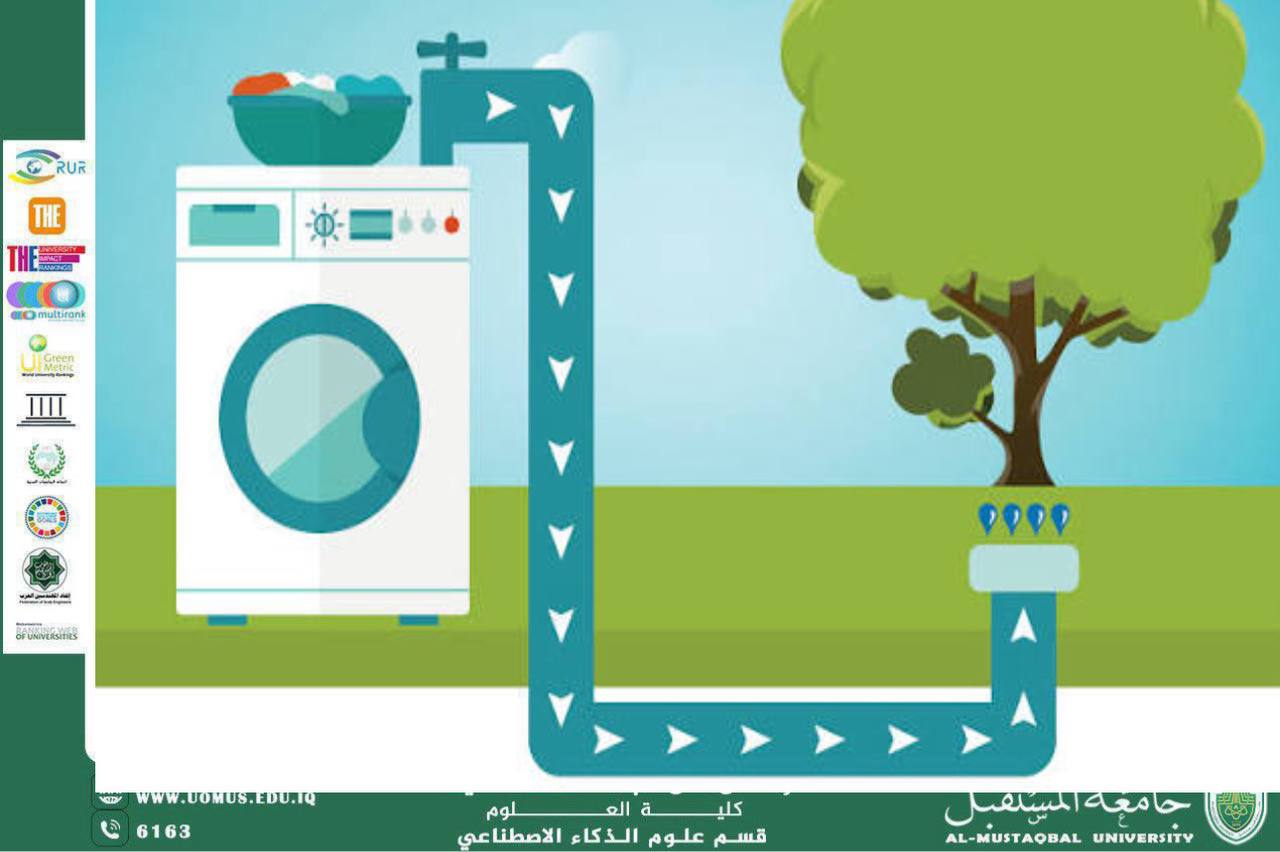
Water recycling is one of the most significant modern solutions aimed at achieving sustainability in water resource management, especially with the increasing global demand and scarcity of water. This process involves treating wastewater and converting it into reusable water for agriculture, industry, and even domestic use after proper purification.
Water recycling reduces pressure on natural water resources such as rivers and groundwater, helping preserve them for future generations. It also minimizes water waste and reduces environmental pollution caused by untreated wastewater discharge.
The process includes physical, chemical, and biological treatment stages to remove contaminants. Technological advancements have significantly improved water quality and recycling efficiency.
Water recycling supports economic sectors, particularly in water-scarce regions, by providing an alternative and reliable water source. It also reduces dependence on costly solutions like desalination.
Despite its benefits, challenges such as high infrastructure costs and the need for public awareness remain. Therefore, cooperation between governments, institutions, and individuals is essential.
In conclusion, water recycling is a vital step toward environmental sustainability and an effective solution to global water challenges.