A scientific article by teaching assistant Banin Nazim entitled "The Role of Student Activities in Building the Student's Personality"
Student activities are considered a fundamental component of the educational process, as the role of universities extends beyond academic learning to include the development of students’ personalities and life skills. These activities provide an interactive environment that allows students to discover and develop their abilities in a practical way.
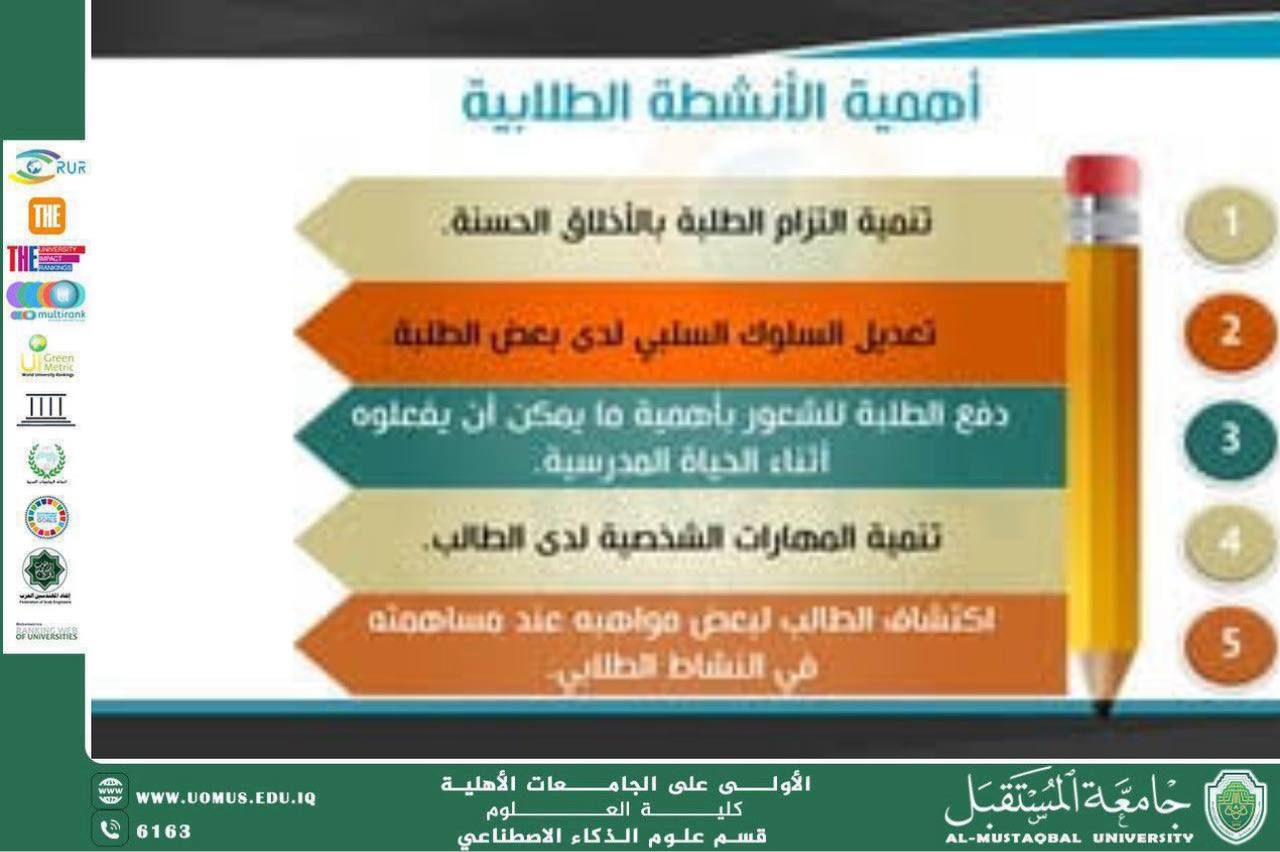
Student activities enhance self-confidence by giving students opportunities to express their opinions and participate in various events, which fosters a sense of achievement and belonging. They also help students overcome shyness and fear of public speaking.
Moreover, these activities play an important role in developing communication and teamwork skills. Students learn how to cooperate with others, respect different opinions, and work collaboratively toward shared goals—skills that are highly valued in today’s job market.
Student activities also contribute to developing leadership skills by involving students in organizing events and managing teams, which strengthens their decision-making abilities and sense of responsibility.
Additionally, these activities help students use their free time productively and keep them away from negative behaviors, positively impacting their mental and social well-being.
Cultural and artistic activities enhance intellectual awareness and creativity, encouraging students to think outside the box and develop innovative solutions.
Sports activities are equally important, as they promote physical health, reduce stress, and improve overall well-being.
Furthermore, student activities strengthen students’ sense of belonging to their institution, increasing their motivation to learn and participate.
They also help in discovering students’ talents in various fields such as arts, sports, and science, providing opportunities for proper development.
Universities play a key role in supporting these activities by providing the necessary environment and resources and encouraging active participation.