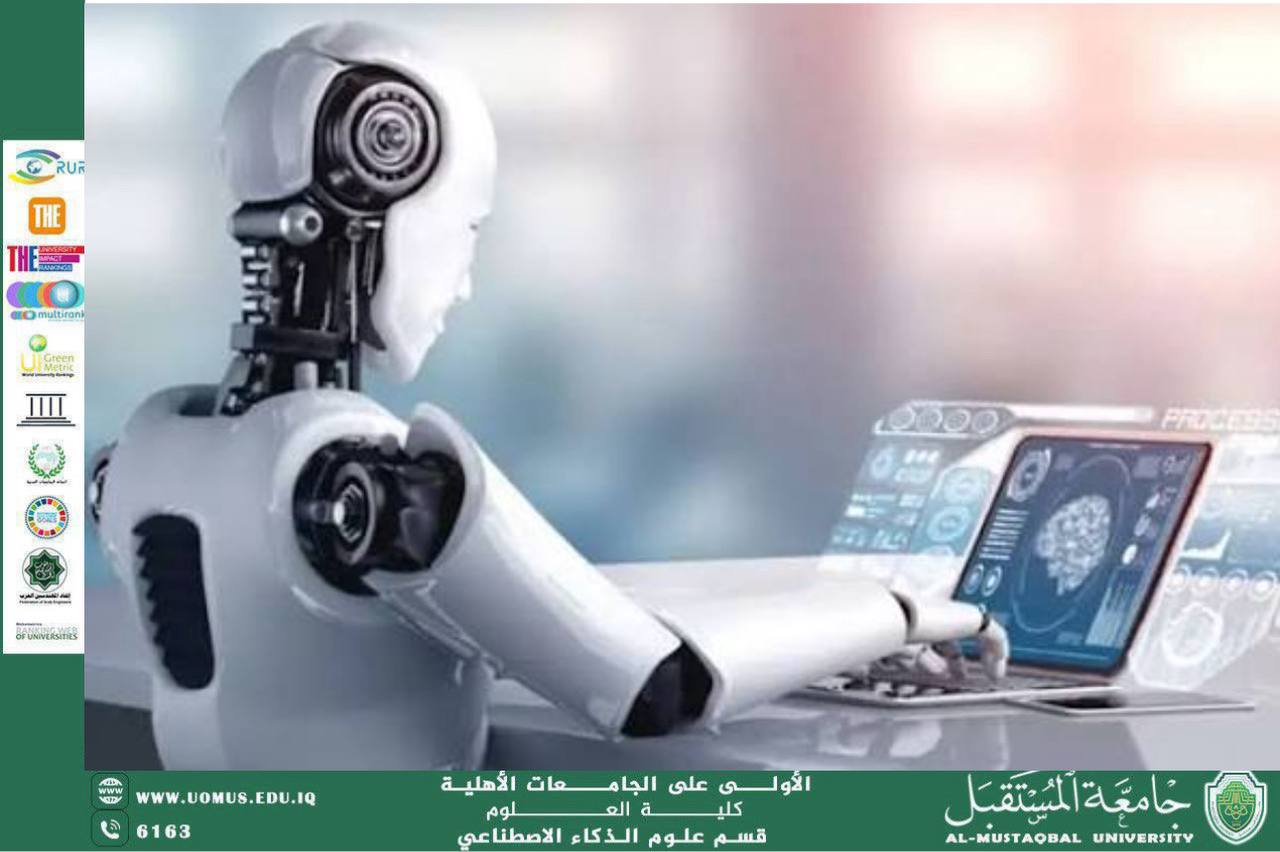
A scientific article by teaching assistant Banin Nazim entitled Artificial Intelligence: A Revolution in the World of Technology
Artificial intelligence (AI) is one of the most important technological innovations of the modern era, having transformed various aspects of life, from industry and education to healthcare, business, and everyday services.
AI refers to the ability of machines and software to simulate human intelligence, including learning, reasoning, decision-making, and problem-solving independently.
AI has become an integral part of daily life through smart applications such as virtual assistants, e-commerce recommendation systems, autonomous driving technologies, and big data analysis.
In the medical field, AI has improved diagnostic accuracy, monitored patient conditions, and detected diseases faster than traditional methods. It is also used to develop new drugs and analyze laboratory results efficiently.
In the industrial sector, AI enhances productivity through automation, quality control, and predictive maintenance, reducing costs and improving overall performance.
In education, AI systems help personalize learning content according to each student’s abilities, analyze performance, and provide guidance to enhance individual and group learning.
However, AI raises important challenges, such as privacy concerns, digital security, and the impact on jobs due to automation of certain roles.
Therefore, developing regulatory policies and ethical frameworks for AI use is essential to maximize benefits while minimizing potential risks.
Advanced AI technologies include machine learning, artificial neural networks, natural language processing, and computer vision, which are used to solve complex problems and analyze data with speed and precision.
Investment in scientific research and AI development is key to advancing technology, fostering economic growth, and improving quality of life in the future.
In conclusion, AI represents a major opportunity to drive innovation, enhance efficiency, and solve problems faster and more accurately, while balancing technological progress with human values and ethics.