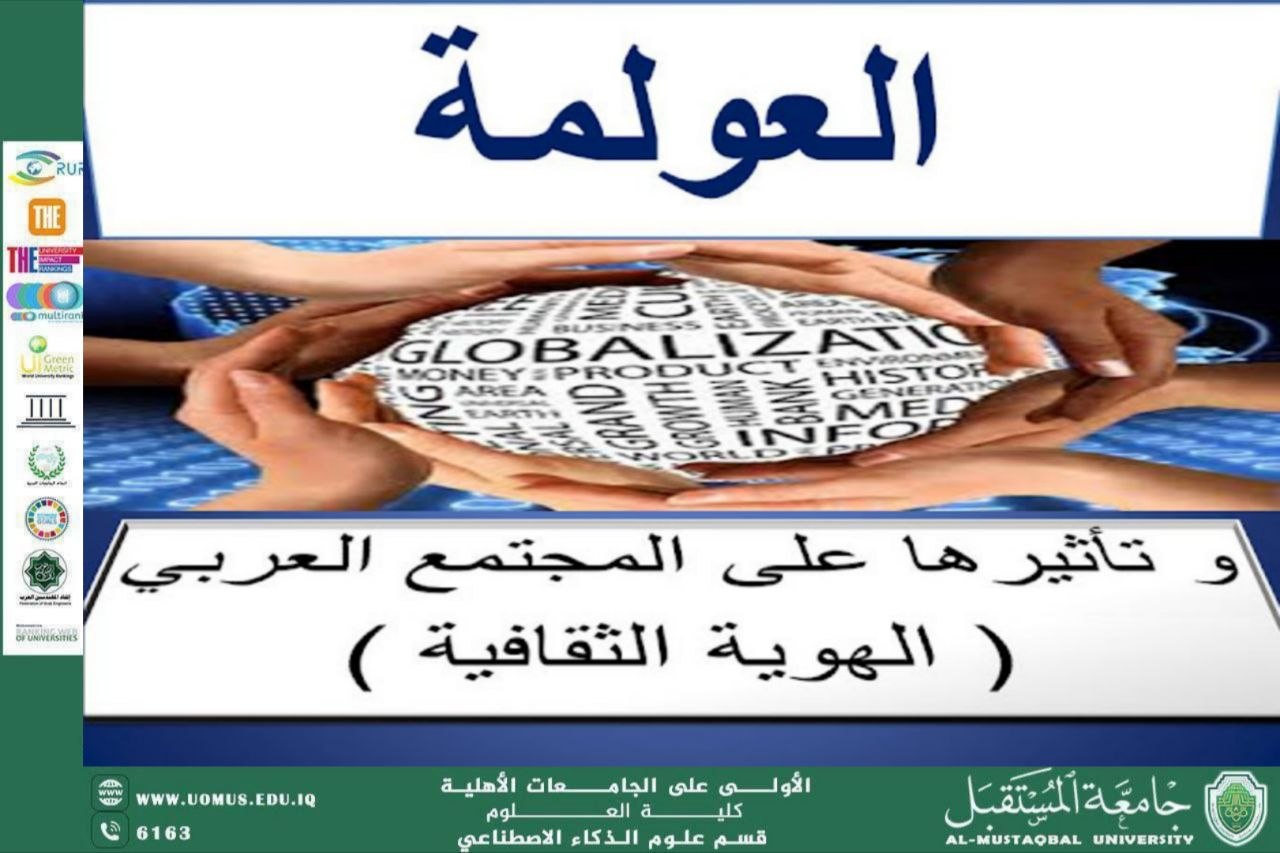
An academic article titled "Globalization and its Impact on Cultural Identity" by Lecturer M.M. Samar Hussein Hilal
Globalization and its impact on cultural identity
Globalization is one of the most prominent phenomena shaping the modern world, as it has significantly contributed to bringing societies closer together and creating an unprecedented level of cultural interaction due to rapid advancements in communication and technology, turning the world into a global village where information, ideas, and values flow at remarkable speed, with this openness, important questions have emerged regarding the impact of globalization on cultural identity, which represents the defining framework of a society including its traditions, customs, language, and values, and plays a crucial role in shaping individual identity and sense of belonging, however, globalization can sometimes lead to the weakening of this cultural uniqueness due to the dominance of global cultures, particularly Western culture, which spreads through media, digital platforms, films, and music, influencing lifestyles and behaviors that may not align with local values, furthermore, the widespread use of global languages such as English may contribute to the decline of native languages and reduce their presence in everyday life, posing a serious threat to intangible cultural heritage, despite these concerns, globalization is not solely negative, as it also brings numerous benefits, including opportunities for cultural exchange, exposure to diverse traditions, and the acquisition of new knowledge and experiences, it also plays a vital role in advancing education, promoting scientific research, and facilitating the transfer of technology across nations, in addition to encouraging values such as tolerance, openness, and human rights, therefore, the impact of globalization on cultural identity is complex and dual in nature, involving both challenges and opportunities, and largely depends on the awareness and adaptability of societies, those with strong cultural awareness can benefit from globalization while preserving their identity by maintaining their language, traditions, and values, while engaging thoughtfully with other cultures, educational and media institutions also play a key role in strengthening cultural identity among younger generations by incorporating cultural heritage into curricula and supporting local arts and literature, moreover, technology itself can be used as a tool to promote and preserve national culture rather than diminish it, in this context, cultural policies that support diversity and protect cultural uniqueness are essential in the era of global integration, ultimately, globalization should not be seen as an inevitable threat to cultural identity, but rather as a challenge that requires conscious management to achieve a balance between preserving authenticity and embracing modernity, ensuring that cultural identity remains vibrant, dynamic, and capable of interacting with the world without losing its essence.