
The Role of Government in Rainwater Management and Utilization for Sustainable Development
Rainwater is one of the most valuable natural resources available for supporting sustainable development; however, its effective utilization does not occur spontaneously. Rather, it requires deliberate management led by an authority capable of planning and implementation. Here, the government assumes a central and decisive role, as it is primarily responsible for organizing resources and directing them toward the public good. Regardless of how abundant rainfall may be, it can easily become a wasted resource—or even a source of harm—if clear policies and effective mechanisms for its utilization are not in place .
At the forefront of governmental responsibility is strategic planning. The effective use of rainwater demands a comprehensive national vision grounded in an accurate understanding of climatic conditions, rainfall patterns, and their spatial and temporal distribution. Governments possess the institutional capacity to collect and analyze data, enabling them to identify priority areas for rainwater harvesting projects and to select appropriate technologies for each region. Without such planning, efforts remain fragmented and incapable of producing sustainable outcomes .
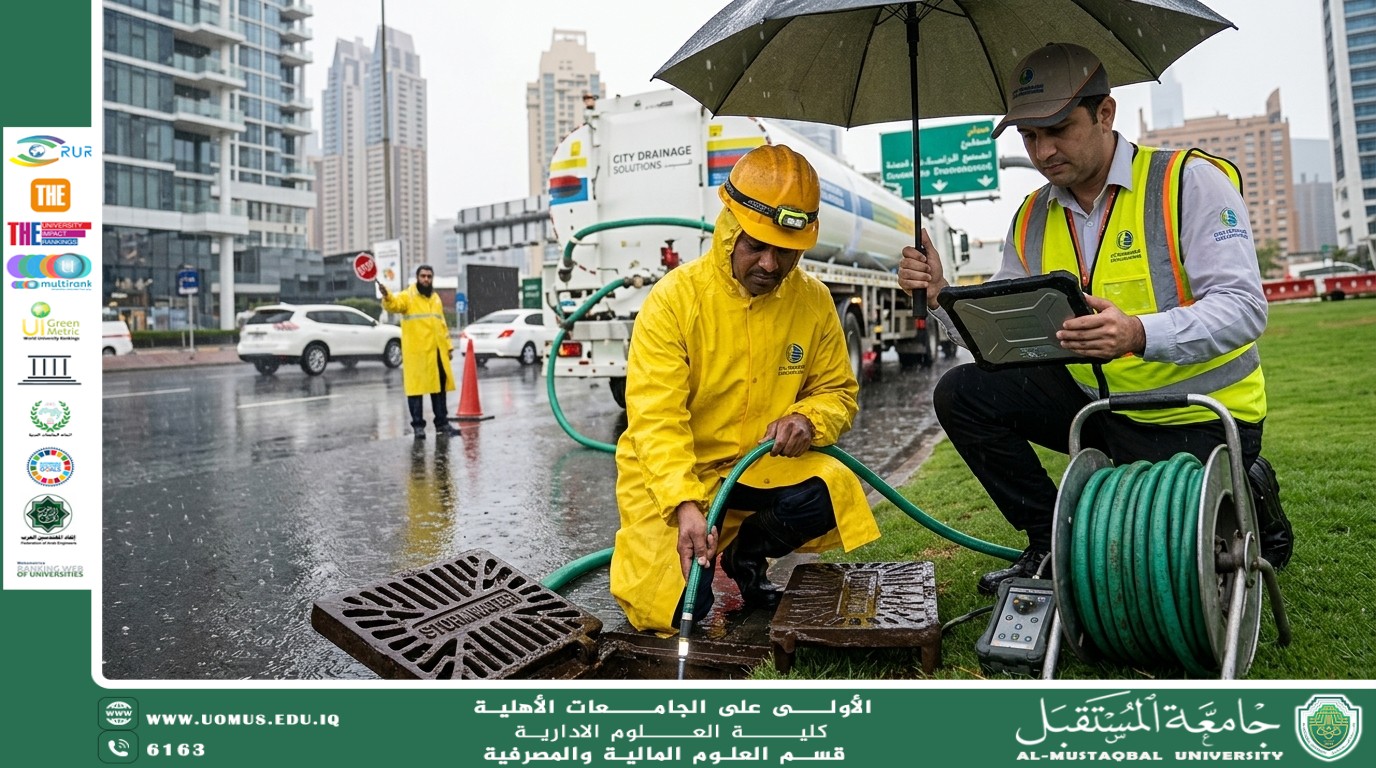
Equally important is the development of infrastructure, which forms the practical foundation for rainwater utilization. Governments are uniquely positioned to implement large-scale projects such as dams, reservoirs, and drainage networks. These projects not only facilitate water storage but also play a crucial role in mitigating flood risks that may threaten urban and rural areas alike. By managing water flow and redirecting it toward storage facilities or agricultural lands, governments can achieve a dual benefit: protection and resource optimization .
Another fundamental responsibility lies in the enactment of laws and regulations that govern the use of rainwater. Without a clear legal framework, it is difficult to ensure compliance with sustainable practices. Governments can, for instance, enforce building codes that require new constructions to include rainwater harvesting systems or provide incentives to farmers who adopt water-efficient techniques. Such regulations are not intended to impose constraints but rather to guide behavior toward optimal resource use .
In addition, the government plays a critical economic and investment role. Supporting rainwater utilization projects often requires initial capital that individuals or local communities may not be able to provide. In this context, the state can offer financial support through subsidized loans or by incorporating such projects into national development plans. Investment in rainwater management is inherently long-term, as it reduces future costs associated with water scarcity and enhances overall resource security .
The awareness-raising role of the government is equally essential. Even with advanced infrastructure and robust regulations, public awareness remains a decisive factor in achieving meaningful outcomes. Through media campaigns, educational curricula, and training programs, governments can foster a culture that recognizes the value of rainwater and promotes its conservation. Sustainable resource management begins with awareness and evolves into responsible behavior and collective practice .
Furthermore, technology and scientific research constitute a vital dimension of governmental involvement. By supporting research initiatives, governments can contribute to the development of innovative techniques for rainwater harvesting and efficient utilization. Advances in technology now allow for the use of smart systems to monitor rainfall, predict weather patterns, and optimize water storage and distribution. Such data-driven approaches enhance the precision and effectiveness of decision-making processes.
In the context of global climate change, which has led to increasingly irregular rainfall patterns, the importance of crisis management has become more pronounced. Heavy rainfall can result in destructive floods if not properly managed, while prolonged dry periods can lead to severe water shortages. Governments must therefore adopt proactive measures, including early warning systems, emergency response plans, and the strategic storage of water during periods of abundance. These measures are essential for safeguarding communities and ensuring the continuity of water resources .
A comparative look at different countries reveals that the disparity between those suffering from water scarcity and those achieving water stability does not lie solely in the quantity of rainfall, but rather in the efficiency of governmental management of this resource. Nations that have implemented clear policies, invested in infrastructure, and raised public awareness have successfully transformed rainwater into a cornerstone of their water management systems.
In conclusion, the role of government in rainwater utilization is not supplementary but fundamentally decisive. Rain may fall universally, but its benefits are realized only through conscious and effective management. A government’s success in harnessing rainwater ultimately reflects the competence of its institutions and their ability to plan, implement, and act with foresight and responsibility