
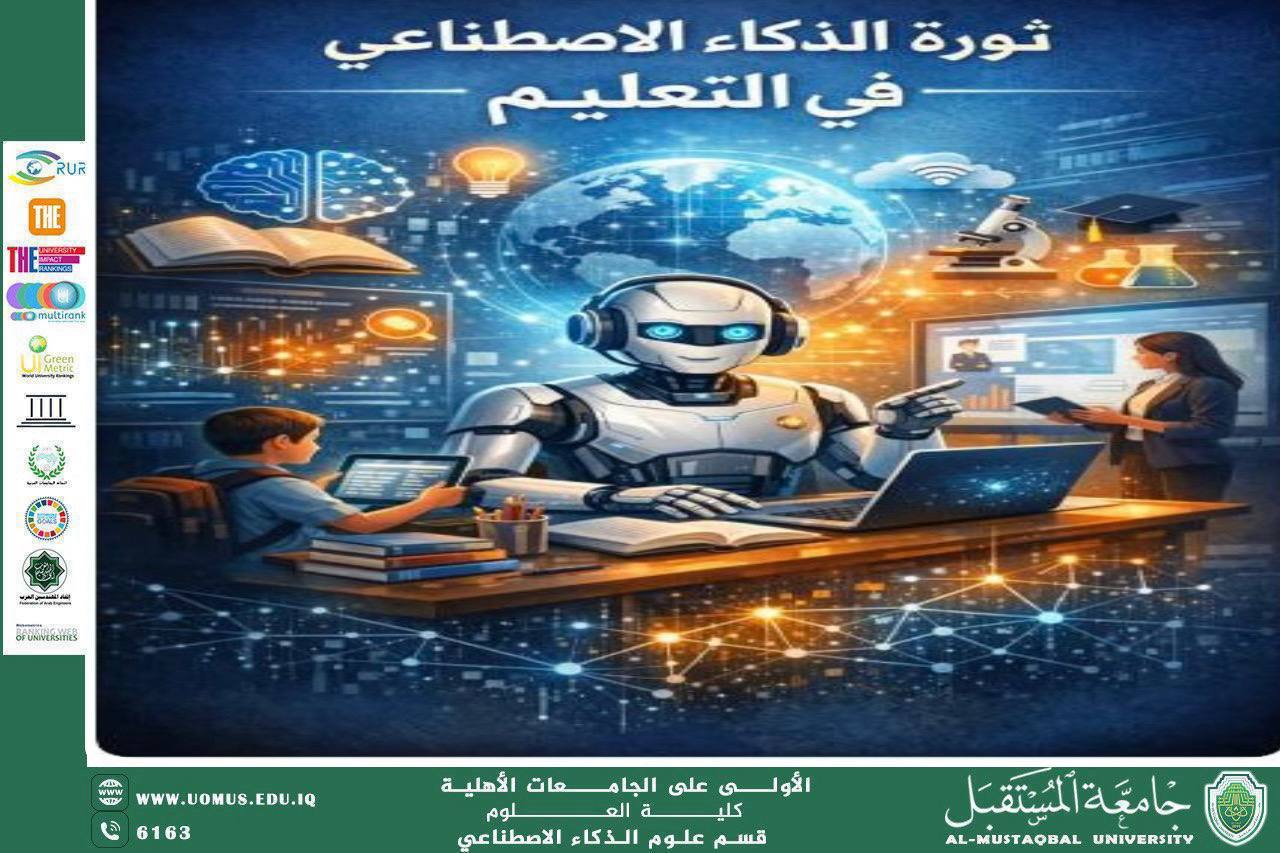

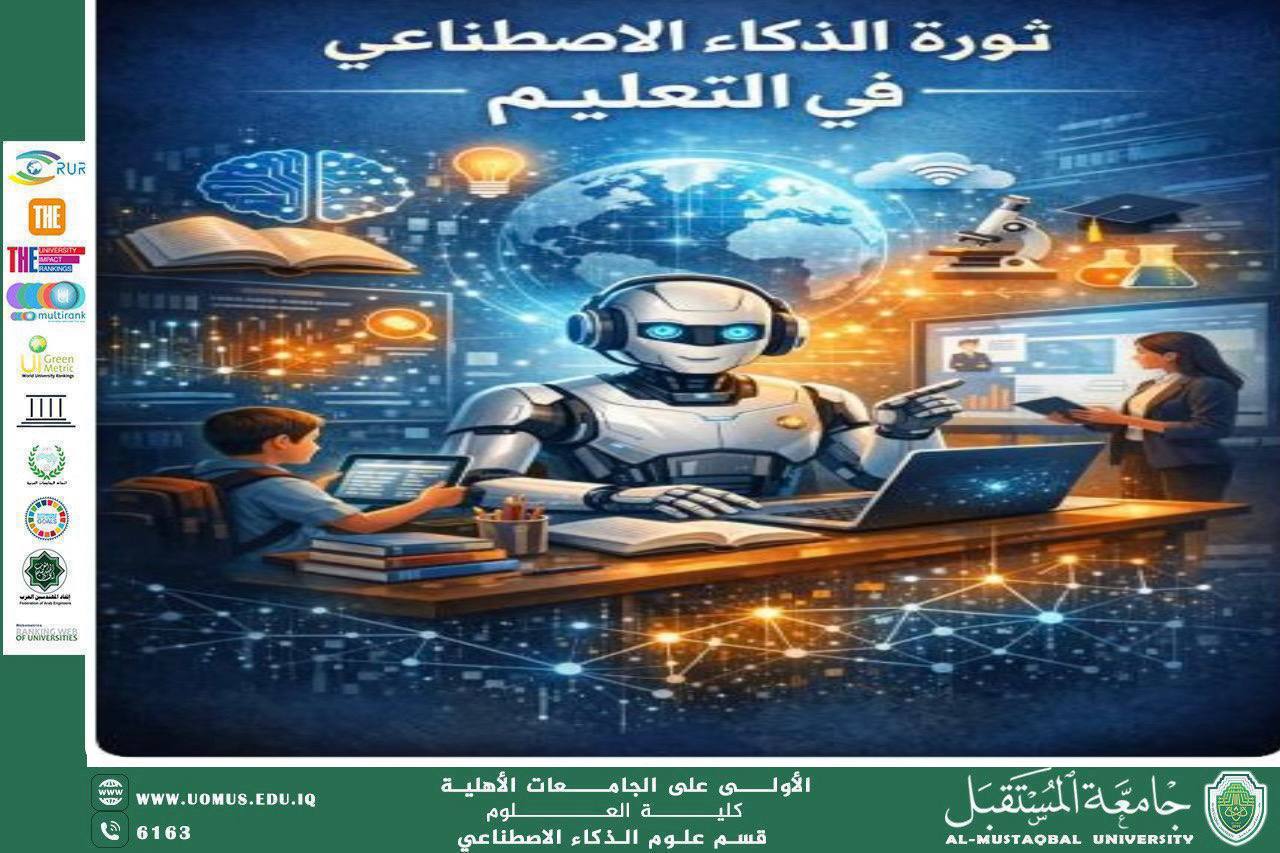
A scientific article by M. Rafal Qusay entitled "The Artificial Intelligence Revolution in Education"
In the modern era, the world is witnessing rapid technological development in various fields. Artificial Intelligence (AI) has played a prominent role in this major progress, as it has become one of the most important innovations that have changed daily life, work methods, and productivity. Among the sectors most influenced by this development, education stands out as one of the fields that has undergone a significant transformation due to AI applications. As a result, methods of teaching and learning have changed noticeably, becoming more flexible, interactive, and effective.
In the past, education relied mainly on traditional methods such as printed books, direct classroom instruction, handwritten assignments, and paper-based examinations. The teacher was considered the primary source of knowledge, while the student was mainly a receiver of information within a specific time and place. Today, however, the educational process has developed remarkably, and learning has become more open and diverse thanks to modern technologies, especially Artificial Intelligence. AI has contributed to reshaping the relationship between students and knowledge, as well as between teachers and teaching methods.
One of the most important advantages of Artificial Intelligence in education is its ability to provide personalized learning for each student according to individual needs. Intelligent systems can analyze a student’s level, monitor performance, and accurately identify strengths and weaknesses. Based on this data, suitable educational content can be provided for each learner in terms of difficulty level, type of exercises, and pace of information delivery. This type of personalized learning helps students improve more quickly and makes the educational process more efficient compared to traditional methods, which often present the same content to all students without considering individual differences.
In addition, Artificial Intelligence has contributed to facilitating access to knowledge, as students can now learn anytime and from anywhere through smart educational platforms, interactive applications, and digital assistants. This has made education more inclusive and accessible, especially for students who face difficulties attending regularly or who live in remote areas far from educational institutions. Thus, learning is no longer confined to the walls of the classroom, but has become available on a much broader scale in line with the demands of the digital age.
Another important aspect is that Artificial Intelligence has made learning more interactive and engaging through the use of multimedia, such as educational videos, digital simulations, educational games, virtual reality, and interactive activities. These tools are considered effective means of enhancing students’ understanding of the subject matter, increasing their motivation to learn, and encouraging active participation rather than passive reception. The more interactive learning becomes, the more effective and lasting its impact will be on learners.
Another major benefit of Artificial Intelligence in education is immediate and accurate assessment of students’ performance. Intelligent systems can quickly grade tests and assignments and provide students with direct feedback on their mistakes and weaknesses, helping them correct them at the right time. Teachers can also benefit from this data by continuously monitoring students’ progress and designing appropriate remedial plans for struggling learners. This, in turn, improves the quality of the educational process and makes assessment more objective, faster, and more effective.