
An article titled "Basic Evaluation of Teaching Assistant Samar Hussein"
Traditional university assessment: Does it measure students' true abilities or promote a culture of memorization and rote learning?
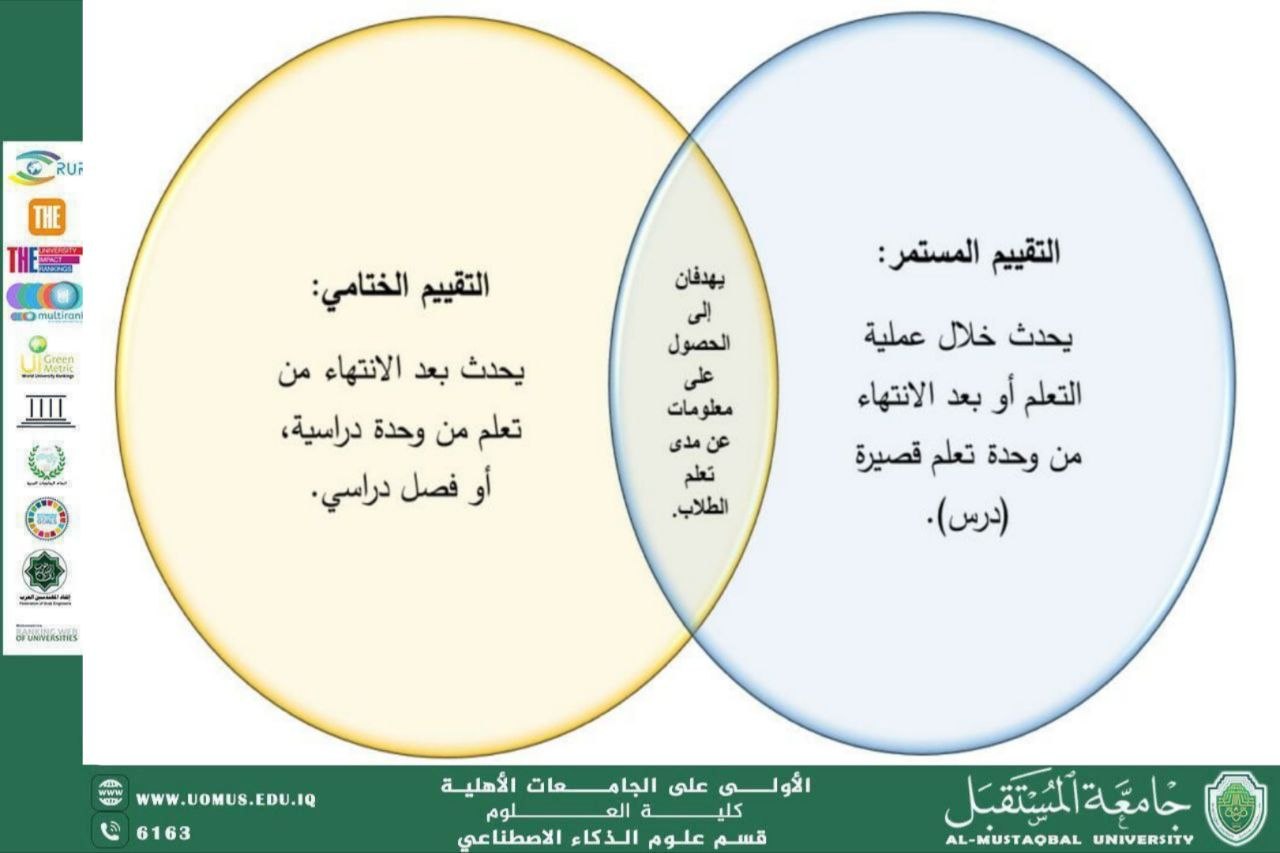
Traditional university assessment is considered one of the most debated issues in higher education, as it relies on final written exams that focus more on students’ ability to recall information rather than their deep understanding or practical skills. This type of assessment reflects only a limited aspect of a student’s abilities, rewarding memorization and rote learning at the expense of critical thinking and creativity. In many cases, students resort to short-term memorization strategies simply to pass exams, which leads to forgetting information shortly afterward and reduces the long-term benefits of the learning process. Moreover, traditional assessment often fails to consider individual differences among students; some may possess strong analytical or practical skills but struggle to express them in time-restricted written exams. Additionally, this system can create an unhealthy competitive environment where success is measured solely by numerical grades, without considering personal growth or life skills. However, it is important to acknowledge that traditional assessment has certain advantages, such as its ease of implementation and its ability to evaluate large numbers of students in a standardized way. Nevertheless, with the advancement of modern educational approaches, it has become necessary to reconsider this model and adopt alternative assessment methods such as projects, presentations, and continuous evaluation, which emphasize higher-order thinking skills and promote genuine understanding. Achieving a balance between traditional and modern assessment methods may represent the most effective solution for ensuring a comprehensive and fair evaluation of students’ abilities, ultimately contributing to the preparation of more competent graduates capable of meeting the challenges of the modern workforce