An article by programmer Nour Hassan: The impact of artificial intelligence on the job market
An article by programmer Nour Hassan Obeid
Titled: The Impact of Artificial Intelligence on the Labor Market
Artificial intelligence is sparking a new industrial revolution that promises to radically change the nature of work and jobs worldwide.
Expectations regarding its impact vary, ranging from optimistic visions of creating new jobs to pessimistic ones about replacing existing ones.
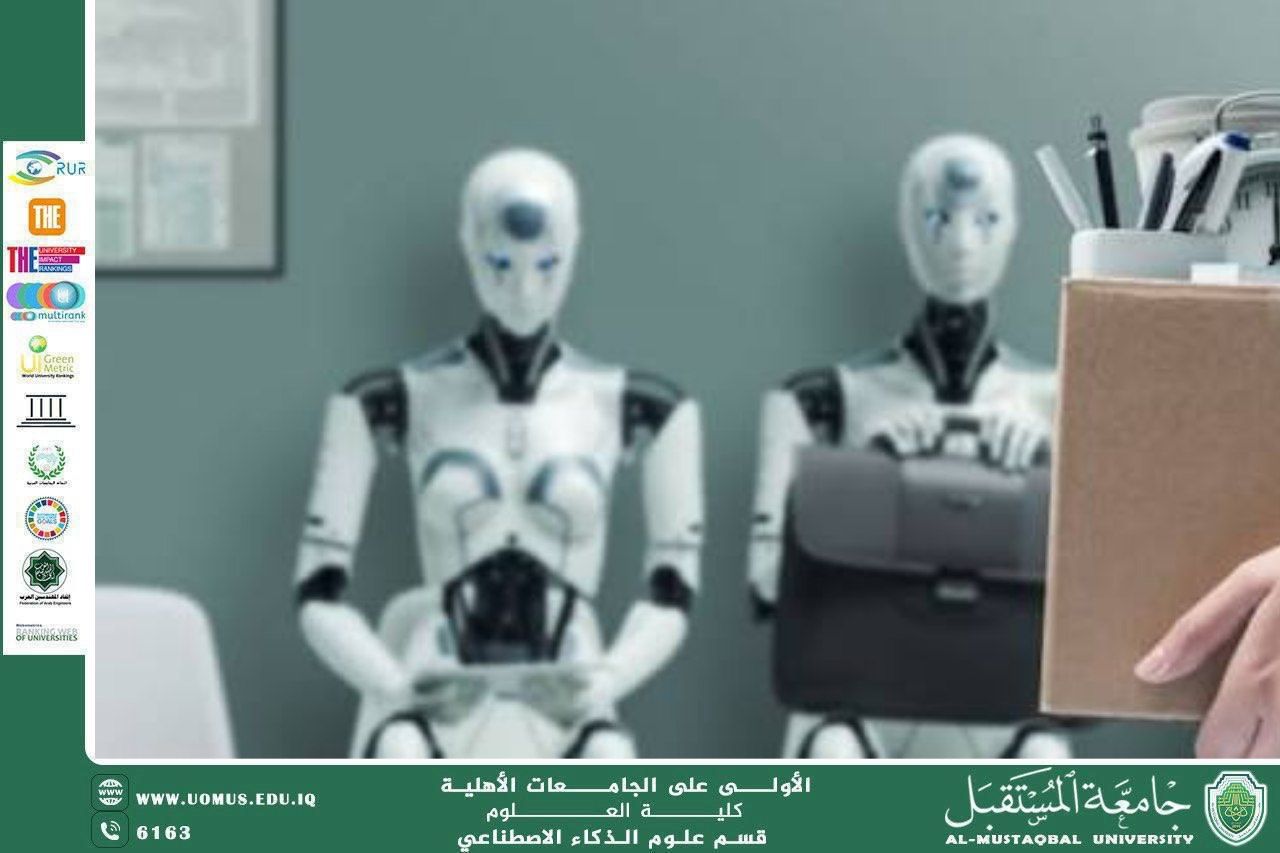
One of the most prominent effects of artificial intelligence is the automation of routine and repetitive tasks across various sectors.
Jobs such as data entry, basic accounting, and customer service may be the most susceptible to automation by robots and intelligent software.
This automation aims to increase efficiency and reduce operational costs for companies, thus driving them to adopt new technologies.
However, the impact of artificial intelligence is not limited to job losses; it extends to creating entirely new jobs.
The need will emerge for experts in AI development, machine learning engineers, data analysts, and intelligent model trainers.
The importance of jobs requiring unique human skills such as creativity, critical thinking, and emotional intelligence will also increase.
The nature of many existing jobs is changing, as humans and artificial intelligence work together in what is known as "human-machine collaboration." For example, doctors can use artificial intelligence (AI) to diagnose diseases more accurately, thus enhancing their role rather than replacing them.
This transformation poses a significant challenge to the education and vocational training system to keep pace with the new demands of the labor market.
The focus should be on developing digital, analytical, and creative skills in the younger generations and the current workforce.
Reskilling and upskilling programs will become essential to enable workers to adapt.
The gap between highly skilled and low-skilled workers may widen if investment in education is not maintained.
Government policies are urgently needed to support workers affected by automation and provide them with social safety nets.
AI can also improve working conditions by taking over hazardous or physically demanding tasks.
For example, robots can perform strenuous construction work or operate in polluted and dangerous environments.
This will contribute to improving workers' quality of life and increasing their workplace safety.
Companies must adopt socially responsible strategies when integrating AI to ensure a fair transition. Dialogue between governments, businesses, trade unions, and educational institutions is essential to charting a sound course for this transformation.
The impact of artificial intelligence (AI) will not be uniform across all countries and sectors, requiring tailored responses for each situation.
The challenge lies in how to harness the potential of AI to boost economic growth and the well-being of society as a whole.
We must view AI as a partner that can free humans from mundane tasks, allowing them to focus on creativity and innovation.
This requires a shift in how we think about work and the value each individual adds to the economic community.
Investing in digital infrastructure and fostering a culture of innovation are key to success in this new era.
The problem does not lie with AI itself, but rather with how we, as societies, are prepared to embrace and manage it.
We must adopt a proactive approach to address the challenges and seize the opportunities presented by this massive technological transformation.
The ultimate goal is to build a more flexible, equitable, and inclusive labor market for all, under the dominance of smart technologies.
This process requires long-term strategic planning and continuous investment in human capital. In conclusion, the future of work is being shaped now, and artificial intelligence is the driving force behind this massive transformation.
Future University is ranked first among Iraqi private universities.