A Scientific Article by Miss Noor Al-Huda Azmi Hassan Title: The Iris Flower
The iris is one of the most beautiful natural flowers. It belongs to the Iridaceae family and is scientifically known as Iris. Its name comes from a Greek word meaning “rainbow,” referring to its wide variety of colors.
Appearance:
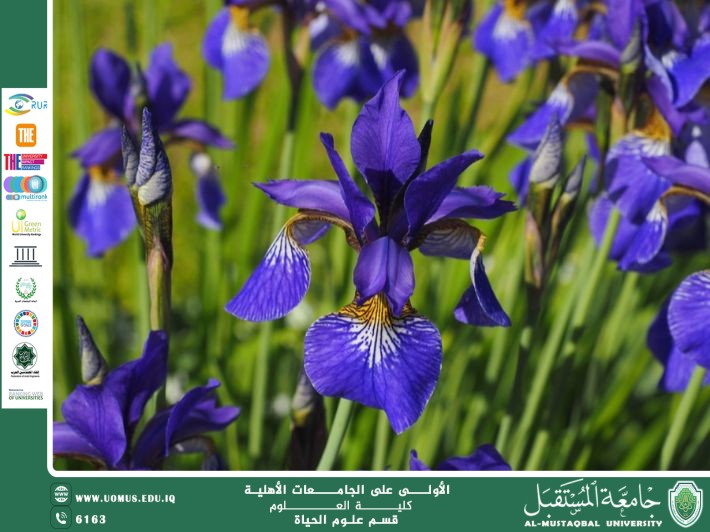
The iris has long, slender leaves and large, distinctive flowers that resemble a crown or wings. It typically consists of three outer petals and three inner ones, giving it a unique and attractive look.
Colors:
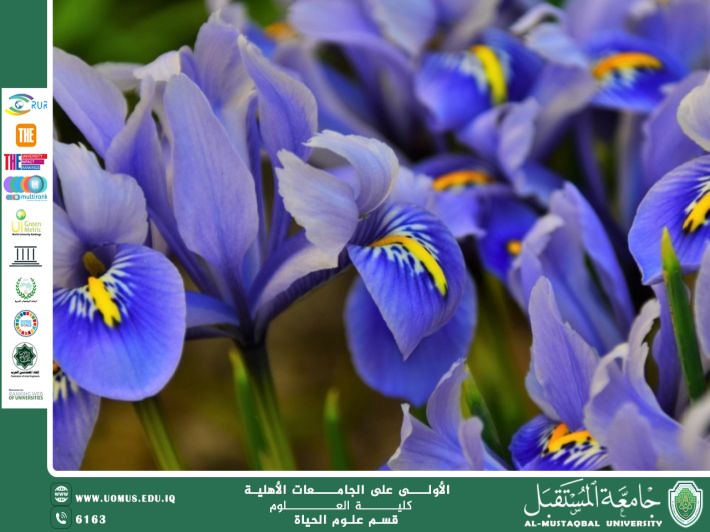
It comes in many colors such as purple, blue, white, yellow, pink, and even mixed shades, making it a favorite for garden decoration.
Geographical Distribution:
The iris grows in many regions around the world, especially in Europe, Asia, and North America, and is widely found in the Levant.
Preferred Environment:
It prefers sunny areas but can also adapt to partial shade, making it a flexible plant for cultivation.
Growth Method:
It grows from bulbs or rhizomes (underground stems) and spreads quickly in soil.
Blooming Period:
It blooms for a relatively short time (a few days), but as a perennial plant, it flowers annually.
Aesthetic Importance:
It is widely used in landscaping due to its vibrant colors and elegant appearance.
Medicinal Uses:
Some types are used in traditional medicine, especially the roots, which are used in perfumes and certain remedies.
Industrial Uses:
It is used in the production of luxury perfumes because of its soft, distinctive scent.
Symbolism:
The iris symbolizes hope, purity, wisdom, and strength, and in some cultures, it represents royalty.
Ease of Cultivation:
It is easy to grow and requires less care compared to many other flowers.
Plant Care:
It needs well-drained soil and moderate watering, avoiding overwatering.
Environmental Tolerance:
It can withstand various environmental conditions, including temperature changes.
Ecological Importance:
It attracts beneficial insects like bees, aiding pollination.
Types:
There are hundreds of iris species, varying in size, color, and flower shape.
Role in Art:
It has inspired many artists, most notably Vincent van Gogh, who painted famous works featuring irises.
Fragrance:
It has a light, pleasant, and aromatic scent.
Cultivation Locations:
It is grown in gardens, home gardens, and sometimes in indoor pots.
Propagation:
It reproduces easily by dividing roots or planting bulbs.
Economic Value:
It has value in the flower and perfume markets.
Drought Tolerance:
It is relatively drought-tolerant but thrives with regular watering.
Life Cycle:
It follows an annual growth cycle, typically blooming in spring.
Leaf Shape:
Its leaves are long and pointed, resembling swords.
Fertilization:
It requires light fertilization to enhance growth and flowering.
Pests:
It may be affected by some insects but is generally low-maintenance.
Home Gardening:
It is very suitable for home gardens and small spaces.
Cultural Value:
It holds a special place in many cultures around the world.
Reason for Popularity:
Its beauty, ease of cultivation, and variety of colors make it widely admired.
الهدف الرابع : التعليم الجيد