
CRISPR Technology – A Revolution in Genetic Engineering
Introduction
Molecular biology has witnessed tremendous progress over the past decades, with CRISPR technology emerging as one of the most significant breakthroughs. This powerful tool enables scientists to edit the DNA of living organisms with remarkable precision, opening new horizons in medicine, agriculture, and scientific research.
What is CRISPR Technology?
CRISPR stands for "Clustered Regularly Interspaced Short Palindromic Repeats." It was originally discovered as a natural defense mechanism in bacteria, which use it to fight off viruses by identifying and cutting foreign DNA.
Mechanism of Action
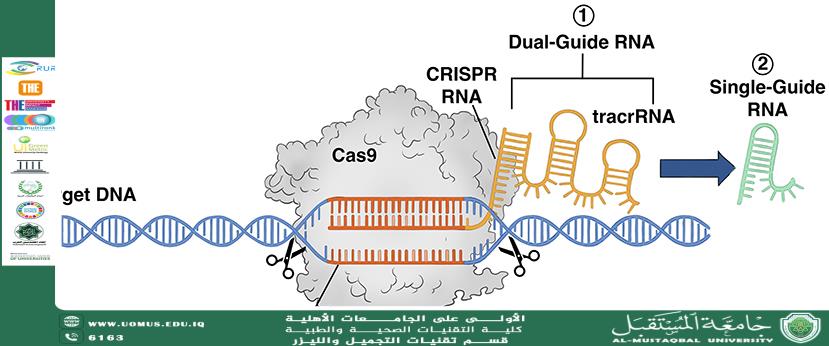
CRISPR technology relies on an enzyme known as Cas9, which functions as molecular scissors capable of cutting DNA at a specific location. This enzyme is guided by a specially designed RNA molecule that matches a target genetic sequence. Once the target is located, Cas9 cuts the DNA, allowing scientists to remove, add, or modify specific gene segments.
Medical Applications
CRISPR is being used to develop treatments for genetic disorders such as sickle cell anemia and cystic fibrosis. It is also under investigation for cancer therapy by modifying immune cells to better target and destroy cancer cells. Additionally, researchers are exploring its potential in treating viral infections such as HIV.
Agricultural Applications
In agriculture, CRISPR helps create crops that are more resistant to diseases and harsh environmental conditions like drought and salinity. It can also improve the nutritional value of crops and increase productivity, contributing to global food security.
Ethical Challenges
Despite its enormous potential, CRISPR raises important ethical concerns, especially regarding human gene editing. There are fears about its misuse in creating "designer babies" or altering genetic traits in ways that could lead to complex social and moral issues.
Future Prospects
Scientists expect CRISPR technology to continue evolving, with improvements in accuracy and reductions in unintended effects. New variants such as CRISPR-Cas12 and CRISPR-Cas13 are also being developed, expanding its range of applications.
Conclusion
CRISPR technology represents a transformative advancement in genetic engineering, providing unprecedented capabilities to modify genes. While ethical and technical challenges remain, it holds great promise for improving human health and addressing global challenges in the future.
Prepared by: Huda Rafed Abdulkhaliq
AL_mustaqbal University is the first university in Iraq