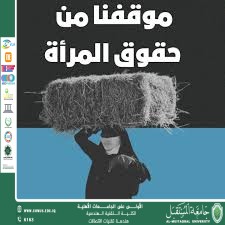
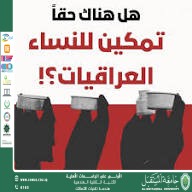
Iraqi women's rights: between reality and aspiration
The current reality for Iraqi women is a complex one, influenced by intertwined factors: Positives: • Significant political representation of 25% in Parliament (quota system) • High rates of education among women, especially in cities • Presence of activists and civil society organizations advocating for rights • Increasing participation in the labor market and entrepreneurial projects. Challenges: • Discriminatory laws, particularly in the Personal Status Law and Nationality Laws • High rates of domestic and gender-based violence • The influence of restrictive customs and traditions in some areas • Limited economic opportunities and high unemployment rates among women • The effects of wars and displacement on women's conditions • Contradictions between constitutional texts and their practical application. Aspirations and Required Reforms: Legally: • Amending discriminatory laws to align with the Constitution and international conventions • Enforcing laws that criminalize violence against women • Guaranteeing equality in civil and economic rights. Economically: • Increasing job opportunities and vocational training • Supporting small and entrepreneurial projects for women • Improving working conditions and ensuring equal pay. Socially: • Changing stereotypes through education and media • Empowering women in rural and marginalized areas • Enhancing women's participation in decision-making at all levels. Conclusion: Despite the significant challenges, Iraqi women possess enormous potential. To contribute to building Iraq. Achieving this ambition requires a comprehensive legislative, economic, and cultural effort, while respecting the cultural and religious specificities of Iraqi society. Success depends on genuine political will, community support, and solidarity with women's organizations working in this field.Prepared by: Heba Ali Khazal