The Role of the Second International Conference of the College of Administrative Sciences in Achieving Sustainable Development Goals
Prof. Dr. Haider Ali Al-Dulaimi
Dean, College of Administrative Sciences
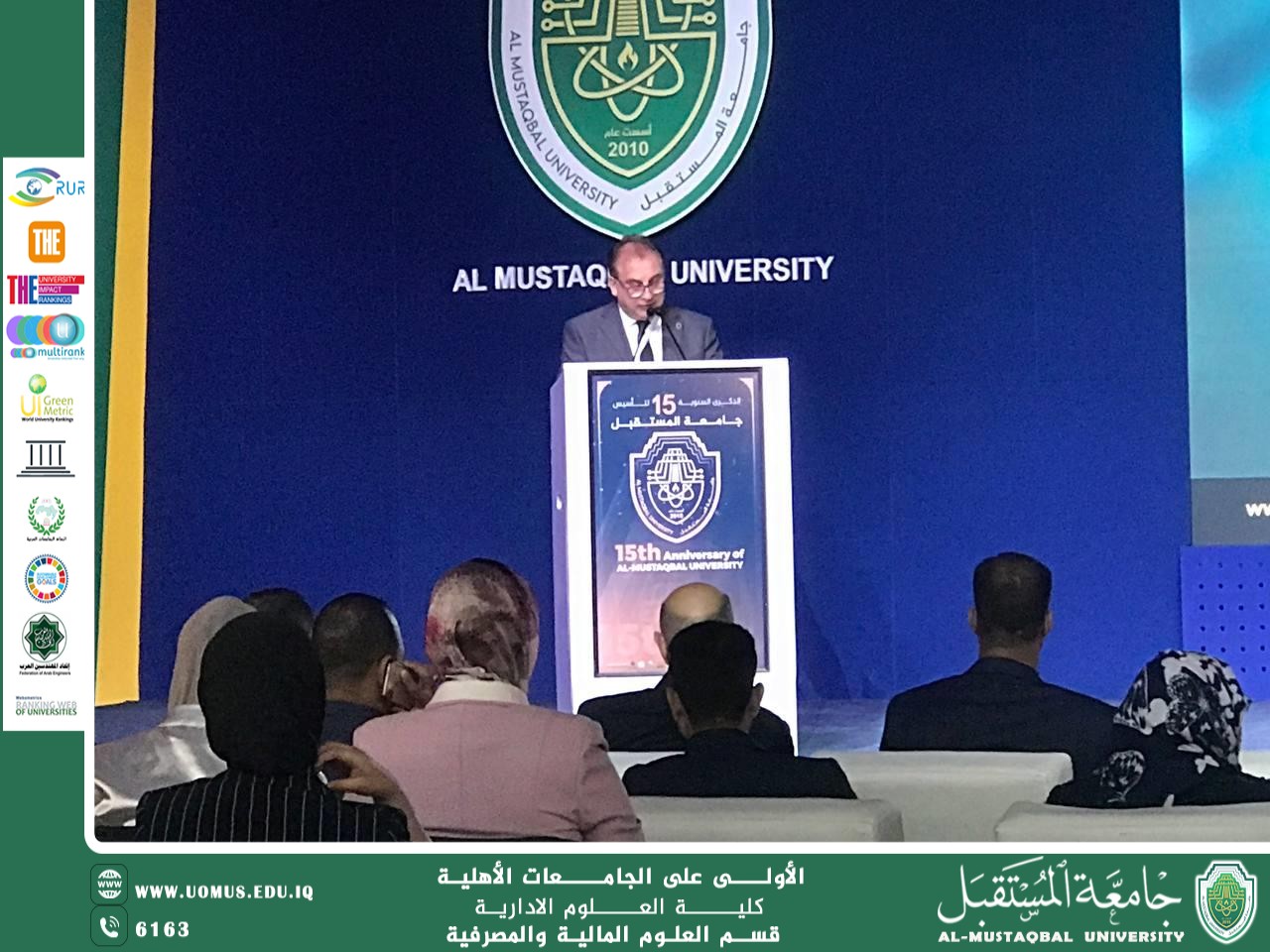
Iraq faces numerous economic and social challenges that hinder the achievement of sustainable development, with poverty being one of the most prominent. Despite the efforts made across various sectors, Iraq still faces significant difficulty in overcoming the impacts of poverty at both the individual and community levels, which negatively affects sustainable development efforts. In this context, the Second International Conference of the College of Administrative Sciences, titled “Poverty and Sustainable Development in Iraq: Cost of Impact and Response Policy,” serves as a dialogue platform that contributes to discussing the challenges and opportunities in the field of poverty and sustainable development. It also represents an important step toward achieving sustainable development goals in Iraq.
Major Challenges in Poverty and Sustainable Development in Iraq
Iraq is experiencing multiple challenges that directly affect the achievement of sustainable development, including:
High Poverty Rates:
According to recent data, many Iraqi citizens suffer from extreme poverty. A large proportion of the population lives below the poverty line and struggles to meet their basic needs such as food, education, and healthcare.
Imbalance in Wealth Distribution:
Iraq suffers from an unequal distribution of resources, where most wealth is concentrated in certain areas, while many other regions face severe shortages in services and economic opportunities.
Impact of Armed Conflicts and Ongoing Instability:
Continuous conflicts in Iraq have cast a heavy shadow over sustainable development. They have led to the destruction of infrastructure, loss of lives, and displacement of many families, all of which hinder economic and social development.
Environmental Challenges:
Iraq faces major environmental problems such as desertification, land degradation, and water scarcity. These issues directly affect the agricultural and trade sectors, further exacerbating poverty.
Weak Local Governance and Administration:
The country faces challenges in implementing necessary administrative and financial reforms. Lack of transparency and administrative corruption hinder the effective implementation of development policies.
The Role of the College of Administrative Sciences Conference in Achieving Sustainable Development Goals
The Second International Conference of the College of Administrative Sciences represents a valuable opportunity to contribute to addressing these challenges and providing practical and realistic solutions. The key roles of the conference include:
1. Promoting Dialogue Between Academics and Policymakers
The conference will bring together a wide range of academic experts and policymakers, providing an opportunity for constructive discussions on the most effective policies to achieve sustainable development in Iraq. This dialogue will serve as a catalyst for institutional change and guide economic and social decisions toward achieving sustainable development goals.
2. Assessing the Cost of Impact and Current Challenges
The conference will focus on analyzing the cost of impact of the current crises facing Iraq—whether economic, social, or environmental. Through such analysis, development priorities can be identified scientifically and realistically, contributing to more efficient strategies for addressing poverty and related challenges.
3. Presenting Innovative Solutions
The conference aims to offer innovative solutions to address issues of poverty and sustainable development in Iraq. By exchanging experiences between international and local speakers, successful models from other countries can be presented and adapted. These solutions may include improving natural resource management, developing non-oil sectors, increasing investment in education and healthcare, and enhancing the efficiency of government institutions.
4. Encouraging Public–Private Sector Collaboration
Cooperation between the public and private sectors is crucial for advancing sustainable development. The conference will highlight ways to strengthen this cooperation through strategic partnerships among government entities, the private sector, and non-governmental organizations, thereby creating a supportive environment for investment and sustainable economic growth.
5. Enhancing Community Awareness and Local Participation
Community awareness is a fundamental component of achieving sustainable development goals. Through the conference activities, local communities will be engaged in discussions on how to activate the role of citizens in the development process. It will also contribute to raising awareness about sustainability, environmental protection, and the importance of equitable resource distribution to achieve social justice.
Conclusion
The Second International Conference of the College of Administrative Sciences represents a vital starting point toward developing scientific and practical solutions to the challenges Iraq faces in poverty and sustainable development. By examining the cost of impact and proposing effective response policies, the conference will significantly contribute to strengthening both local and international efforts to achieve sustainable development goals. The integration of academic, political, and social efforts will be the key to building a better Al-Mustaqbal for Iraq and ensuring a decent standard of living for all citizens.