Clean Water: The Foundation of Life and a Sustainable Future Scientific Article by Dr. Karim Hindoul
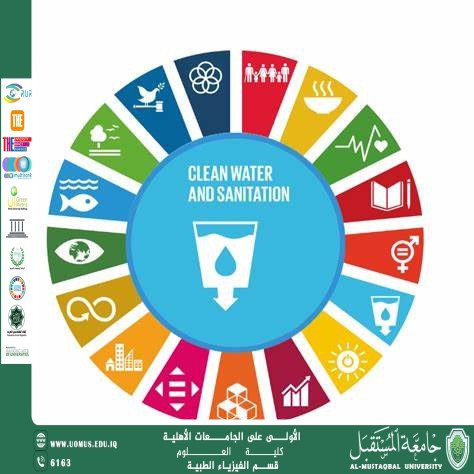
Clean water is no longer just a service issue. It has become one of the central questions linked to human health, social stability, and long-term development. The United Nations states that Sustainable Development Goal 6 is about ensuring the availability and sustainable management of water and sanitation for all, which shows that water is not simply a natural resource, but a foundation for life, dignity, and economic and social progress.
The scale of the global gap makes this issue even more urgent. According to UN and UN-Water data, 2.2 billion people still live without safely managed drinking water, while billions more remain without safely managed sanitation services. These figures show that the water crisis is not a narrow local concern, but a global challenge affecting public health, education, economic growth, and social stability.
From a health perspective, clean water is directly tied to disease prevention. The World Health Organization explains that safe drinking water, sanitation, and hygiene are essential to protecting people from many infectious diseases, and that unsafe water harms health by increasing exposure to water-related illness and by contaminating surface water and groundwater used for drinking and daily activities. Investing in safe water therefore improves not only services, but also survival and public-health resilience.
The importance of water also reaches far beyond health. UNICEF notes that lack of access to safe water negatively affects children’s health, nutrition, and education, while reliable water and sanitation services help communities become safer and more resilient. When water is available in a regular and safe way, schools, homes, and health facilities function better, and families gain more stability in everyday life.
The challenge is becoming more serious under climate pressure and rising demand. The 2024 United Nations World Water Development Report states that roughly half of the world’s population experiences severe water scarcity for at least part of the year. This means the future of water depends not only on daily conservation habits, but also on long-term policy, protection of rivers and groundwater, upgraded infrastructure, and planning that can adapt to climate risks.
In this context, water sustainability becomes a shared responsibility between individuals, institutions, and governments. Individuals contribute by using water wisely, repairing leaks, and avoiding unnecessary waste, while institutions are responsible for improving water systems, treating wastewater, and protecting sources from pollution. UNICEF and WHO both emphasize that true access to safe water depends not only on infrastructure, but also on quality, reliability, safety, and sustainability.
In educational environments, especially universities, water should also be seen as a learning and innovation issue. Academic institutions can play a major role in spreading awareness about responsible consumption, linking water to scientific research, and encouraging students to create practical solutions in treatment, reuse, and environmental monitoring. This fits the broader UN view of water as a pillar of health, development, and resilience.
In Iraq and the wider region, the issue carries added importance because of the need for more sustainable and climate-resilient water services. UNICEF Iraq highlights equitable access to safely managed, sustainable, and climate-resilient WASH services as a key focus area, alongside reforms in governance, financing, and water-resource management. This shows that protecting water is not only an environmental slogan, but a real development pathway that requires ongoing institutional work.
A sustainable future begins with understanding the value of water, not only as a natural resource, but as a condition for life, health, education, productivity, and stability. The more individuals and institutions recognize its importance, the more capable societies become of protecting both people and the environment and moving toward a safer, more balanced, and more sustainable future.
AL_mustaqbal University is the first university in Iraq