الدكتورة اثمار رضاLeukaemia
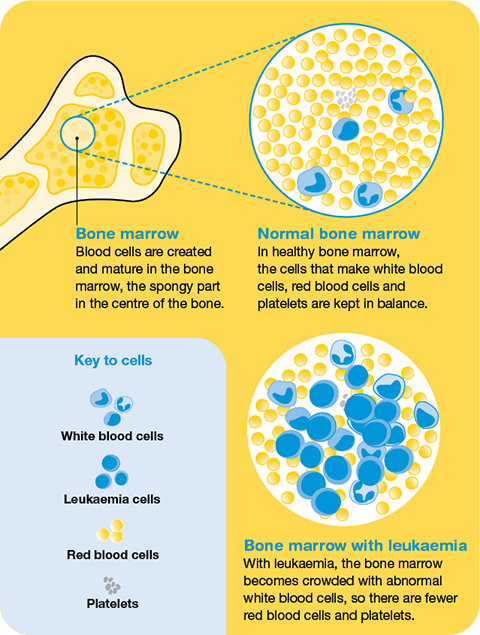
Leukaemias are cancers of the white blood cells, which begin in the bone marrow. <br />Leukaemias are grouped in two ways: the type of white blood cell affected - lymphoid or myeloid; and how quickly the disease develops and gets worse. Acute leukaemia appears suddenly and grows quickly while chronic leukaemia appears gradually and develops slowly over months to years. <br />This information refers to four types of leukaemia; acute lymphoblastic leukaemia (ALL), chronic lymphocytic leukaemia (CLL), acute myeloid leukaemia (AML) and chronic myeloid leukaemia (CML).<br />The chance of surviving at least five years is 63%<br /><br />.Leukaemia symptoms<br />Many people with leukaemia have no symptoms. The symptoms tend to be mild at first and worsen slowly. <br />The main symptoms include: <br />• tiredness and/or anaemia (pale complexion, weakness and breathlessness) <br />• repeated infections (mouth sores, sore throat, fevers, sweats, coughing, frequent passing of urine with irritation, infected cuts and scratches, and boils) <br />• increased bruising and bleeding.<br />Other less common symptoms include: <br />• bone pain <br />• swollen, tender gums <br />• skin rashes <br />• headaches <br />• vision problems <br />• vomiting <br />• enlarged lymph glands <br />• enlarged spleen that may cause pain or discomfort <br />• chest pains.<br /><br /><br />Causes of leukaemia<br />The cause of acute leukaemia is unknown, but factors that put some people at higher risk are: <br />• exposure to intense radiation<br />• exposure to certain chemicals, such as benzene<br />• viruses like the Human T-Cell leukaemia virus.<br />Most people diagnosed with chronic myeloid leukaemia have an abnormal chromosome called the Philadelphia chromosome. It has also been linked to exposure to high levels of radiation<br />Diagnosis of leukaemia<br />If your doctor suspects you may have a form of leukaemia, you will have one or more of the following tests to help diagnose, and determine the type of leukaemia: <br />Blood tests<br />An initial blood test will show if leukaemia cells are present in the blood or if the levels of blood cells are different to what would be expected in a healthy person. <br />Bone marrow biopsy<br />A small amount of bone marrow is removed from the hip bone (pelvic bone) using a long needle. As the procedure can be uncomfortable and even painful, a local anaesthetic will be used to numb the area and you may be given some pain-killers. It is common for children to have a general anaesthetic. <br />Chest x-ray<br />A chest x-ray is taken to check the heart and lungs, and to see whether there are enlarged lymph nodes in the chest. <br />Lumbar puncture<br />This test shows if any leukaemia cells have travelled to the fluid around your spine. <br />Fluid is removed with a thin needle from a space between the bones in the lower back. This takes a few minutes, but as it can be uncomfortable, your doctor will use a local anaesthetic to numb the area. <br />After a diagnosis of leukaemia <br />After a diagnosis of leukaemia it is normal to experience a range of emotions such as anxiety, distress, uncertainty, sadness and confusion. At the same time treatment decisions will need to be made. <br />Your doctor should discuss the different treatment options with you including the likely outcomes, timeframes, potential side effects and risks and benefits. It is up to you how involved you want to be in decisions about your treatment so get as much information as you need. <br />