Solar cells
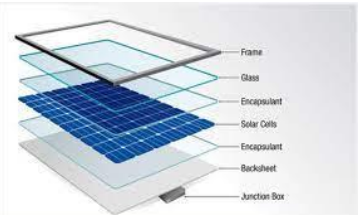
prepared by Zahraa Emad<br />Solar cells, photovoltaics, or photovoltaic cells are a device and tool in the form of stacked cells next to each other that convert sunlight into electricity by exploiting the photovoltaic effect. It supplies the International Space Station (Ass) with electric current, and currently there is in Spain the largest solar-powered power plant with a capacity of about 23 megawatts, and it is also planned to build the largest power plant in Spain that operates on solar cells with a capacity of about 154MW.<br /><br />Solar cell working principle:<br /><br />In the beginning, the solar cells, which are placed directly under the sun’s rays, absorb these rays and convert these rays into electrical energy that people benefit from in many purposes and fields. Very, here the solar panels polarize this energy, as these panels contain many solar cells lined up next to each other, and these solar cells consist of semi-conducting materials (mostly silicon), and these cells receive solar energy and begin to move in the system of expulsion and form an electric field and start Electrons from the semiconductor material or silicon to collect in the form of electrical energy, resulting in DC electricity (DC) as electricity produced <br />chemically in batteries, and then this chemical electricity is converted from DC electricity (DC) to AC electricity, which is Electricity circulates in our lives today, through a transformer called an "inverter".<br /><br />Types of solar cells:<br /><br />And the field of manufacturing solar cells has developed, and different types of <br />them have been manufactured that differ from each other in their efficiency, use <br />and shelf life. We mention them: <br />Monocrystalline cells made of silicon (mono crystalline): They are characterized <br />by their high efficiency by absorbing solar energy from radiation coming from the <br />sun.<br />Polycrystalline cells: They are flakes that are scraped from cylindrical crystals of <br />silicon, then chemically treated in furnaces to increase their electrical properties, <br />and the efficiency of this type is good.<br />Amorphous cells: This technique is characterized by its ease of manufacture, in <br />which the silicon is in the form of thin layers on a plastic or glass surface.<br /><br />Disadvantages of using solar cells:<br /><br />It is not enough to clarify the answer to the question: "What are solar cells?" By <br />listing their advantages only because these cells have drawbacks in their use as <br />well, and despite the expansion in the use of solar cells in recent years, this does <br />not mean that they are free from defects and drawbacks, and many scientific <br />attempts are now being made to overcome these shortcomings, and some of the <br />defects of solar cells can be clarified as Come:<br />Cost: The initial cost of purchasing a solar panel is fairly high, and this includes <br />paying for the solar panels, inverter, batteries, wiring, and installation.<br />Climate conditions: Although solar energy can still be collected during cloudy and <br />rainy days, the efficiency of the solar system under similar climate conditions <br />decreases, as solar panels depend on sunlight to collect solar energy effectively, so <br />there can be a noticeable impact on Solar cell system on days when the sun doesn't <br />shine. storage<br />Solar energy: Solar energy must be used immediately or else it can be stored in <br />large batteries. These batteries used in off-grid solar systems can be charged during <br />the day so that the energy can be used at night. This is a good solution for using <br />solar energy throughout the day, but the disadvantage is that it is expensive and <br />expensive Too pricey<br /><br /><br /><br /><br />