
Scientific article for teaching M. Iman Wahab Kazem entitled: -Cancer And Immune System Programming
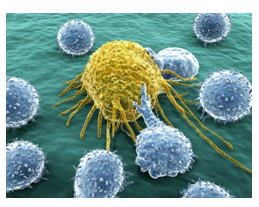
Cancer And Immune System Programming<br />It is a group of diseases whose cells are characterized by aggressive (namely, infinite cellular growth and division), these dividing cells have the ability to invasion and destroy adjacent tissues, or move into distant tissues in a process we call metastasis. These abilities are the characteristics of a malignant tumor unlike adenoma, which is characterized by specific growth and inability to invade and has no ability to move. Adenoma can also develop into malignant cancer at times.<br />Cancer is the uncontrolled growth and spread of cells. This disease can affect almost all parts of the body. Growing cells often invade the tissue that surrounds them and can cause metastases that appear elsewhere in the site.<br />Cancer can affect all age groups in humans, even embryos, but the risk of developing it increases as people age. Cancer accounts for 13% of all deaths. The American cancer community ACS points to the deaths of 7.6 million people with cancer worldwide. As cancer affects humans, it affects both animals and plants.<br />The transformation of healthy cells into cancer cells is due to changes in the genetic material. These changes can be caused by carcinogenic factors such as smoking, radiation, chemicals or infectious diseases (such as viruses). There are also encouraging factors for cancer, such as a random error or mutation in the DNA copy when the cell divides, or because it is inherited from the mother cell.<br />Programming begins with taking T-type lymphocytes (which are the attacking power of the immune system) from patients' blood with leukemia of type B. lymphocytes. That arise from them.<br />The patient is injected with modified T cells, so all CD19-carrying cells, whether carcinogenic or not, can be destroyed. Finally, the patient's immune system is supported by antibody therapy, to compensate for the B cells responsible for manufacturing antibodies needed to fight infection.<br />Immunotherapy has been used in recent years, which has proven effective and is different from Targeted Therapy as it is designed to stimulate the patient's immune system to eliminate cancer cells. Current methods induce an immune response against cancer, including the use of Bacillus Calmette-Guérin BCG within the bladder to prevent bladder cancer or the use of interferon or cytokine to stimulate the immune system against Renal Cell Carcinoma or melanoma.<br />Also, vaccines such as the Sipuleucel-T vaccine are used by taking Dendritic cells in immune system-stimulating cells from the patient's body and loading them with Prostate Acid Phosphatase and returning them back to the body. It stimulates the specific immune system against prostate cancer cells.<br />Lebanese researcher Dr. Michelle Obeid and his colleagues have discovered a substance containing the Anthracycline group (an anti-cancer group). The slaves gave the substance to mice with cancer, forcing the cancer cells to produce a substance called calreticulin and placing it on the cell membrane of cancer cells only. The presence of this substance on the surface of the cell, enables the immune system to distinguish between cancer cells that secrete calcitoline and healthy cells that do not secrete it. This leads to the mobilization of the immune system, which cells eat up cancer cells and push cancer to death is called the process Immunogenic Cell Death This drug has not been tried on humans.<br />Bone marrow transplantation is another donor of immunotherapy, so that the immune cells produced from the transplanted marrow will attack the cancer cells and call this graft-versus-tumor effect. Severe side effects may occur in this treatment.<br />