
A Scientific Article By Prof. Dr. Hasanain.Khaleel.Ibrahim Entitled: Biological Safety Levels (BSL)
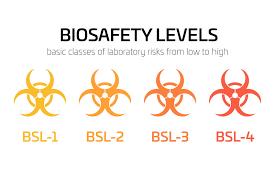
Biological Safety Levels (BSL):<br />BSLs are a set of safety measures designed to lessen the possibility of laboratory workers coming into contact with biohazardous substances that could be infectious.<br />The Centers for Disease Control and Prevention (CDC) have established and implemented four levels of biosafety. Specific containment controls, such as microbiological procedures, safety gear, and facility safeguards, are in place for each biosafety level to protect the environment, the general public, and laboratory personnel from exposure to infectious biohazards used in the lab.<br />As the risk level rises, these containment measures build, in a pyramid-like fashion, upon the previous level of safety. The kind of work practices that are permitted in a laboratory setting are determined by biosafety levels, which also have a significant impact on the facility's design.<br />Biosafety level 1 (BSL1) The lowest risk level "minimal hazards", entails work and procedures carried out with characterized and established strains of microbes that are not known to consistently cause disease in healthy adult humans. These agents typically represent very little risk to the environment. Like Bacillus subtilis and S. cerevisiae.<br />Biosafety Level 2 (BSL2) The safety measures and protocols of Biosafety Level 1 are expanded. the biohazardous agents present a moderate risk to the environment and laboratory workers “moderate hazards" in the event that they are inadvertently exposed through skin contact, inhalation, or ingestion. Like Staphylococcus aureus, Salmonella and human cell lines.<br />Biosafety Level 3 (BSL3) are expanded the safety measures and protocols of BSL1 and 2 . This called "serious hazards" and covers all engineering controls, safety gear, and any unique lab setups. BSL-3 biohazardous agents are native, foreign substances that can spread through the respiratory system to cause life-threatening illnesses, for example SARS coronavirus and Mycobacterium tuberculosis.<br />Biosafety Level 4 (BSL4) laboratories with highest level of biological safety is achieved, "most complex" which are extremely uncommon. They are often independent buildings that are sufficiently isolated from one another and physically cut off from other buildings. They expand upon the BSL1, 2, and 3 laboratories' safety protocols. This covers all engineering controls, safety gear, and any unique lab setups. Under BSL4, biohazardous agents are rare and dangerous substances that carry a high risk of respiratory and aerosol transmission in the laboratory, which can result in fatalities and life-threatening illnesses,Like Marburg and Ebola viruses.<br /> <br /><br /><br /><br /><br /><br /><br /><br /><br /><br /><br /><br /><br /><br />