
A Scientific Article By Hasanain.Khaleel.Ibrahim Entitled:Nanotechnology and Nanoparticles:
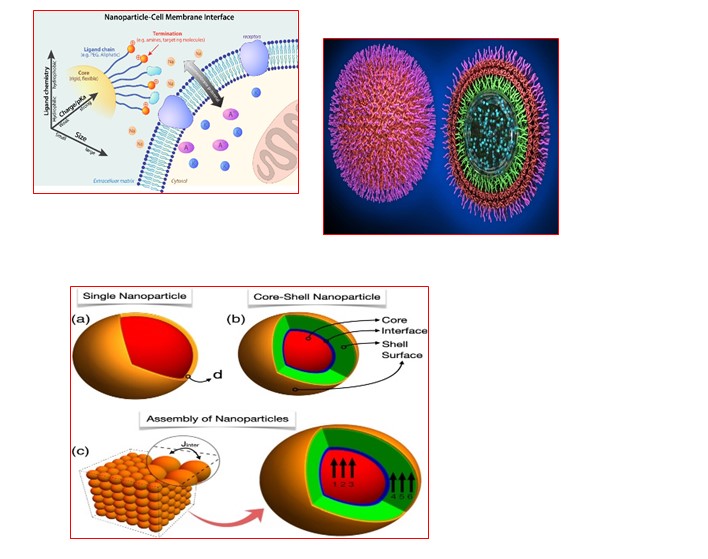
The Greek word nanos, which means "a dwarf," is the source of the prefix nano. The prefix nano was formally adopted in 1947 at the 14th International Union of Pure and Applied Chemistry (IUPAC) conference to denote the one-billionth part (10–9) of a unit. <br />The study of matter's characteristics at the nanoscale is known as nanoscience, and it primarily focuses on the special, size-dependent characteristics of solid-state materials.<br />The manipulation of matter with at least one dimension, ranging from 1 to 100 nanometers, was defined as nanotechnology. The fields of biological and medical research have employed nanomaterials' unique properties for a variety of purposes.<br />Nanoparticles are made up of three main layers: the Core, Surface, and Shell layers. They are not simple molecules.<br />When scientists discovered that a substance's size can alter its physiochemical properties, such as its optical qualities, they began to recognize the significance of these nanoparticles. <br />Special characteristics of nanoparticles include their larger surface area to volume ratio, size, and rod- or circular-like shape. Therefore, they can be applied in biological research, cancer cell diagnosis or monitoring, optoelectronics, display devices, catalysis, environmental toxin detection, biological sensor manufacturing, drug discovery, and therapeutic applications. Nanoparticles can be divided into a number of groups according to their composition, size, shape, and morphology. NPs are typically categorized into three groups according to their composition: organic, carbon-based, and inorganic.<br />The applications of nanotechnology, commonly incorporate industrial, medicinal, and energy uses.<br /> <br /><br /><br /><br /><br /><br /><br />