Teaching article in the Department of Chemical Engineering and Petroleum Industries by Russell Ahmed Hashem entitled “Well logging”
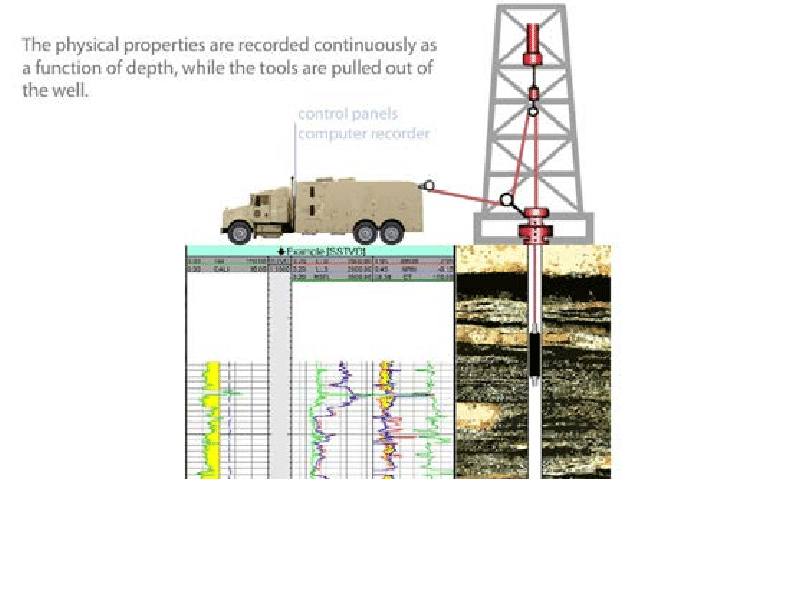
Introduction:<br /><br />Well logging is a fundamental technique in the oil and gas industry that plays a pivotal role in understanding the subsurface characteristics of geological formations. This process involves the systematic recording and analysis of data obtained from wells drilled into the Earth, providing valuable insights into the composition, structure, and potential resources within the subsurface layers.<br /><br />Key Components of Well Logging:<br /><br />Gamma Ray Logging:<br /><br />Measures natural gamma radiation emitted by the formation. Different rock types have distinctive gamma ray signatures, aiding in identifying lithology.<br /><br />Density Logging:<br />Determines the density of the formation by measuring the attenuation of gamma rays. This helps in assessing the porosity and mineral composition.<br /><br />Neutron Logging:<br />Utilizes neutron sources to measure the hydrogen content in the formation. This is crucial for evaluating porosity and identifying fluid types.<br /><br />Electrical Resistivity Logging:<br />Measures the formation's ability to conduct electricity. Different fluids and rocks exhibit varying resistivity, aiding in distinguishing between formations.<br /><br />Sonic Logging:<br />Records the travel time of sound waves through the formation. This provides information about the mechanical properties and helps in assessing porosity.<br /><br />Formation Pressure Testing:<br />Involves monitoring the pressure within the wellbore to determine the formation's pressure regime. This is crucial for well control and reservoir evaluation.<br /><br />Significance of Well Logging:<br /><br />Reservoir Evaluation:<br />Well logging helps assess the characteristics of reservoir rocks, including porosity, permeability, and fluid saturation, critical for estimating hydrocarbon reserves.<br /><br />Formation Identification:<br />Different geological formations exhibit unique well log responses, enabling geologists to identify lithological changes and stratigraphic variations.<br /><br />Drilling Optimization:<br />Real-time well log data aids in optimizing drilling operations by providing immediate feedback on subsurface conditions, allowing for adjustments to drilling parameters.<br /><br />Well Integrity Assessment:<br />Well logs assist in evaluating the integrity of the wellbore, identifying potential issues such as fractures, caving, or fluid influx.<br /><br />Environmental Monitoring:<br />Well logs contribute to monitoring environmental aspects, such as identifying fresh water zones to prevent cross-contamination with hydrocarbons.<br /><br />Challenges and Innovations:<br /><br />Complex Formations:<br />Some geological formations pose challenges in interpretation due to complexity. Advanced algorithms and machine learning are increasingly employed to enhance accuracy.<br /><br />Integration of Data:<br />Integrating diverse well log data sets requires sophisticated software tools to create comprehensive subsurface models.<br /><br />Conclusion:<br />Well logging serves as the eyes and ears of the oil and gas industry, unraveling the mysteries of the subsurface. With continuous advancements in technology and data interpretation techniques, well logging remains an indispensable tool for successful reservoir characterization and hydrocarbon exploration.