Iraqi water problems
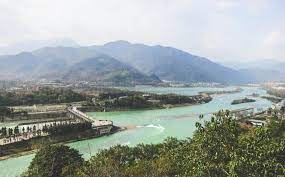
Assist. Lec. Alaa Hussein Abd Al-Ameer<br />1- International Iraqi Rivers<br />The largest of the Tigris and Euphrates feeding basins is located and some of the headwaters of the Tigris tributaries begin in the highlands of Iran. In Turkey and Iran, as well as in Syria, there is an active effort to build more dams and reservoirs on the rivers and their tributaries and to make the most of the water coming from them or passing through them. The amount of water imported into Iraq decreases every year. In Turkey, the Ataturk, Keban, and Karakaya projects were established. These are called Al-Ghab projects, and they are now capable of storing all the water imports of the Euphrates for three years. Because of it, the water coming into Iraq in the Euphrates River declined from (20) billion cubic meters to less than (9) billion cubic meters only, and below that over a number of years, and in the Tigris from (40) billion cubic meters to less than (19) billion cubic meters. cubic, this was reflected in the cultivated areas, especially in the Euphrates irrigation area in Iraq and even in Syria. It also forced the competent authorities to establish more storage, control and organization projects and allocate money and efforts for this purpose. Qatar also gradually transformed from a source of agricultural foodstuffs to an increasing importer of them, especially from Turkey, Syria, and Iran. One of the important reasons for this was the lack of water supplies coming into Iraq. Iraq has also already begun importing electricity produced in neighboring countries and on the shared rivers themselves. What complicates the problem is that these countries refuse to establish a joint agreement to divide the waters of the (shared) riparian rivers, and the upstream countries (Turkey and Iran) benefit from the political differences between Iraq and Syria in addition to the turbulent political conditions. In Iraq as a result of the previous siege on Iraq and its current occupation.<br />2- The lack of stability in the amounts of water supplied by rivers to Iraq from one year to another due to the fluctuation in the amount of rain falling on the recharge basins, and the different dates of its fall, early at times and late at other times. In rivers, the water fluctuations vary greatly. The waters of the Tigris may change 11 times during a flood, and the Diyala 12 times. Therefore, the variation poses risks to housing, agriculture, urbanization, and water loss. It also requires more investments to overcome the dangers.<br />3- Loss of a large percentage of water. This results from the high temperature in summer, low humidity in the air, and wind speed, especially during the summer months, which leads to a high rate of evaporation from plants, soil, water bodies, and waterways. As for traditional irrigation methods, such as irrigation with basins and irrigation with unlined channels, it leads to the leaching and loss of large amounts of water deep into the soil and high evaporation of some of it to the atmosphere. All of this has a negative impact on the amounts of water available for irrigation and other uses, especially during the summer, as agriculture in Iraq suffers from a scarcity of irrigation water in the summer and limits the amount of land that can be cultivated on it. Plants are also exposed to wilting and a decrease in their productivity due to the lack of water.<br />4- Surface water in Iraq is exposed to the dangers of pollution, to the point that the water of the Euphrates River has become unfit for human consumption when it reaches southern Iraq (Nasiriyah, for example, located on the Euphrates River, is a mill whose residents do not drink water from the Euphrates, but from the gharaf coming from the Tigris). Natural and human factors have combined to do this. Among the first factors is the length of the river courses and their crossing of lands where temperatures rise in summer with a sharp drop in relative humidity, resulting in high rates of evaporation and then high levels of salinity (especially the area where the Euphrates River flows). This is in addition to what It is caused by homes that throw polluted, high-salinity water into the rivers, and this is also the case with the waste of dozens of cities, villages, and factories located on the sides of the rivers, which throw more pollutants into the rivers.<br />5-- The surface water on the plateau suffers from problems represented by the type of rain falling in it, which is fast cyclonic rain, which causes severe erosion of the soil. More importantly, this already scarce rain is not being utilized properly because its rapid falling system fills the valleys (Hawaran, Al-Ghadaf, Al-Abyad, etc.) quickly as well, and then this water drains into the depressions at the edge of the plateau in the east without benefiting from it due to the lack of dams and reservoirs in these valleys.<br />6- Groundwater in the undulating region and the Western Plateau suffers from the problem of random and irrational investment that takes into account the amount of water reserves available for investment, which has led to a continuous decline in its levels. Meanwhile, the alluvial plain area suffers from a continuous rise in the level of underground water, which is characterized by its high salinity and its unsuitability for irrigation, which negatively affects the condition of the soil and then leads to a decrease in its productivity.<br /><br />Suggestions:<br />1- Improving water distribution processes and improving the efficiency of existing irrigation systems and modernizing them using modern irrigation techniques that utilize the available water with the least amount of waste and the highest degree of efficiency, such as drip irrigation and sprinkler irrigation, provided that this is based on scientific studies on the area of land to be cultivated, the type of crops and their characteristics. Soil, lining irrigation canals, and rationing the amounts of water entering irrigation schedules accordingly.<br />2- Establishing more irrigation networks to ensure the delivery of water to the lands in summer and winter. There is water that goes to waste towards the Arabian Gulf and agricultural lands that do not receive water, especially during the summer season. This requires covering the alluvial plain with an integrated network of irrigation channels so that all the arriving water is benefited from. To the diameter.<br />3- This must be completed by also covering the plain with a network of drains of various degrees, even field ones, to rid it of the problem of high salinity.<br />4- Establishing more water reservoirs and dams in the mountainous and undulating region to provide a greater amount of water for the summer drought season.<br />5- Cooperating with Syria in the field of water and unifying positions towards Turkey with the aim of concluding a permanent agreement to share water between these countries that guarantees Iraq’s access to a reasonable and continuous amount of water. It may be necessary to present the issue to international bodies to reach this goal.<br />6- Encouraging the construction of dams, reservoirs and settlement operations in the areas of the Western Plateau.<br />7- Covering the Western Plateau region with hydrological studies to identify the amounts and depths of groundwater, develop scientific plans for its investment, and determine its locations, amounts, and feasibility.<br />8- Conducting extensive and continuous studies on the state of water in Iraqi rivers with the aim of protecting them from the dangers of pollution and issuing the necessary legislation and directives in this regard, as well as continuous monitoring of it.<br />