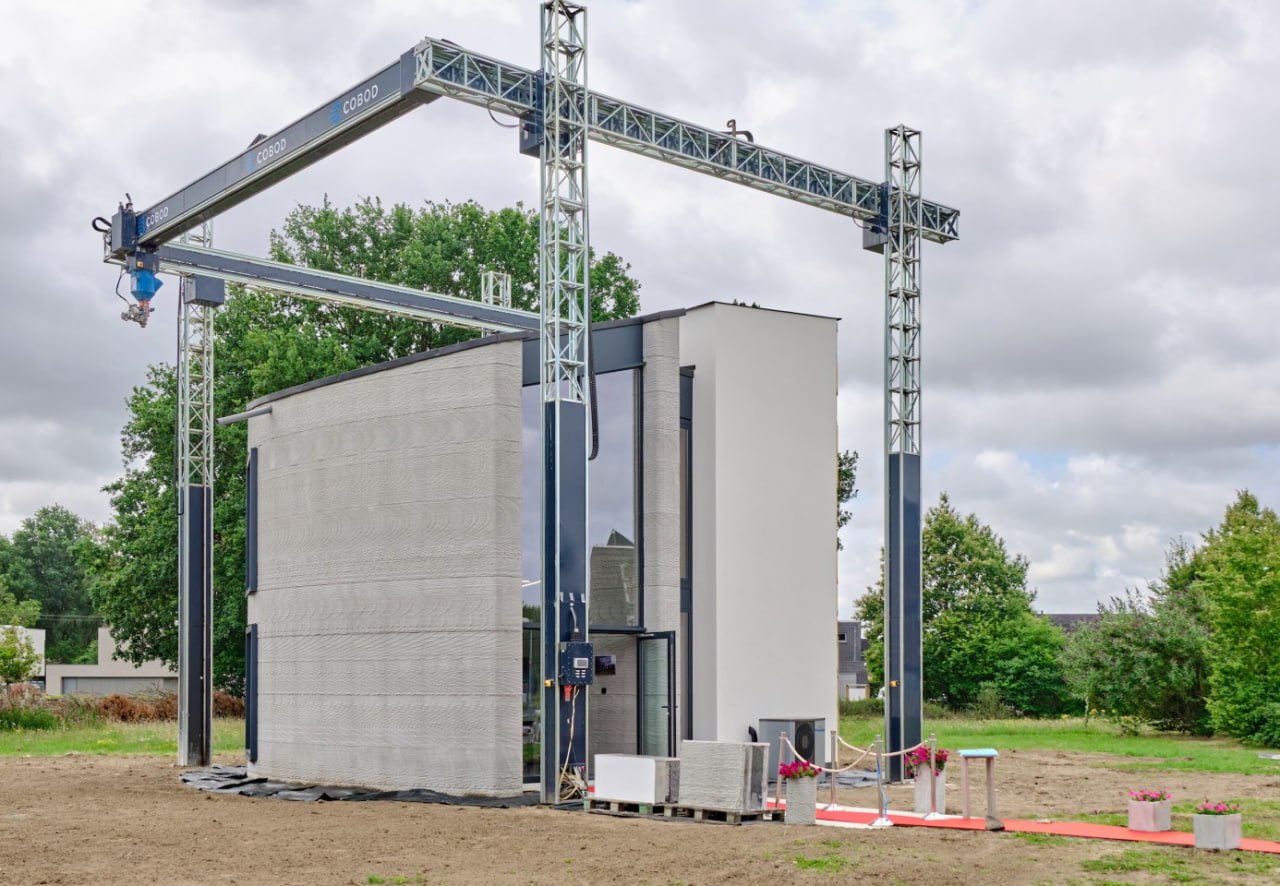
A scientific article by Iman Najeh Mohsen, a lecturer in the Department of Chemical Engineering and Petroleum Industries, entitled “3D Printing of Houses: A Revolutionary Transformation in the Construction Industry”
3D Printing of Homes: A Revolutionary Transformation in the Construction Industry<br /><br />3D printing of homes is considered one of the major advancements in the construction industry, opening doors to creativity and efficiency in housing construction. This technology combines advanced engineering with the use of modern technology to achieve cost-effective and environmentally friendly homes. In this article, we will take a look at the benefits of 3D printing of homes and its potential impact on the future of the construction industry.<br /><br />How Does 3D Printing of Homes Work?<br /><br />The process of 3D printing of homes relies on advanced 3D printing technology. Innovative building materials such as printed concrete or sustainable materials like recycled plastic are used. The digital design of the home is loaded into specialized printer software, and the house is then built layer by layer automatically and precisely.<br /><br />Benefits of 3D Printing of Homes:<br /><br />Cost-Effective:<br />One of the key advantages is cost savings, as it reduces labor and material costs. This allows developers to save significant amounts of money and provide homes at affordable prices.<br /><br />Rapid Construction:<br />Thanks to the automated printing process, 3D-printed homes can be built much faster compared to traditional methods. This translates to significant time savings in residential projects.<br /><br />Flexible Design:<br />Complex designs can be easily achieved, as the technology can create structures with intricate shapes and precise details. This enables engineers and architects to achieve unparalleled creativity.<br /><br />Environmental Sustainability:<br />Environmentally friendly building materials can be used, and the waste of materials can be minimized, contributing to a reduced environmental impact of construction.<br /><br />Site Flexibility:<br />3D printing of homes allows for the construction of houses in locations with constraints or challenges for traditional building methods.<br /><br />Potential Challenges:<br /><br />Despite the benefits, there are challenges to overcome, such as ensuring the quality of printed homes and addressing legal and regulatory challenges.<br /><br />Conclusion:<br /><br />3D printing of homes represents a groundbreaking development in the construction industry, offering immense possibilities to improve housing quality and provide cost-effective solutions. With further research and innovation, this technology could become an integral part of the future of home construction, contributing to a better quality of life for people.