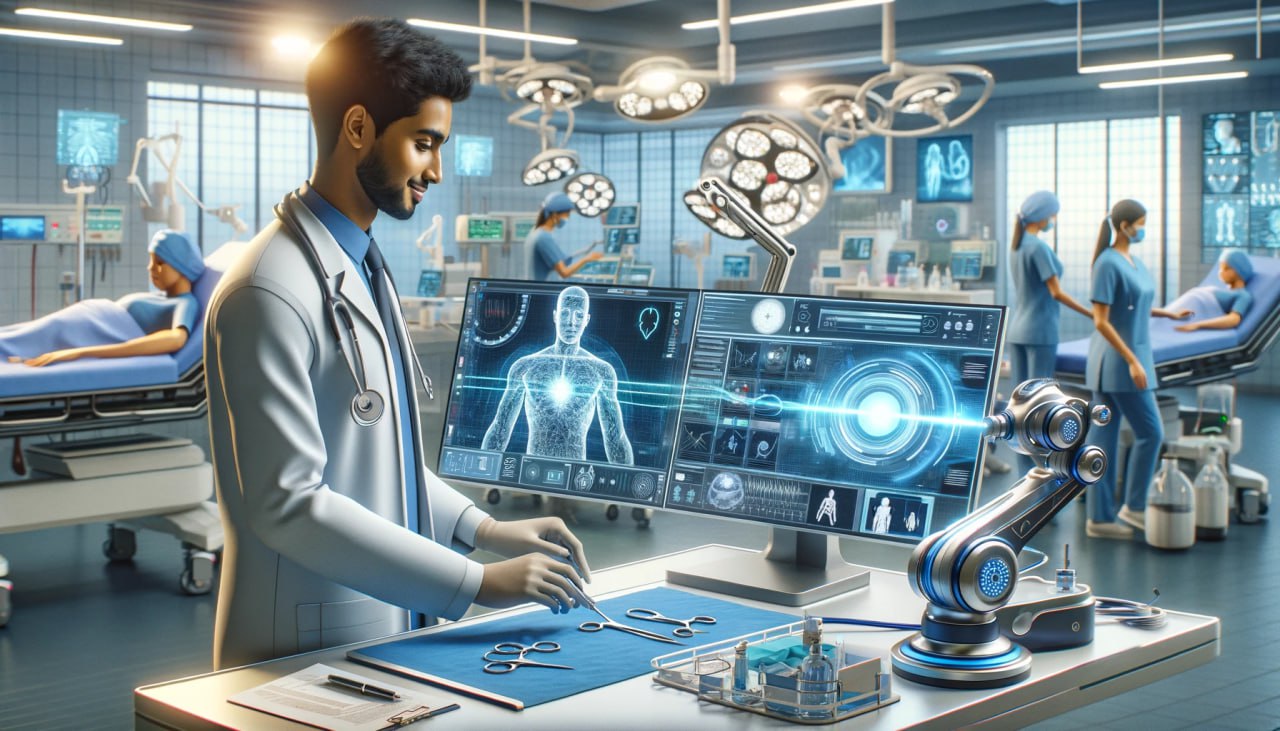
Scientific Article by Dr. Ahmed Almhanna entitled "The Significance of Programming and Artificial Intelligence in Hospitals"
Providing numerous benefits, programming and artificial intelligence (AI) play pivotal roles in enhancing hospital services and performance. Here are some key aspects in this context:<br /><br />Improving Information Management: Programming and AI can assist hospitals in effectively managing information, leading to better patient tracking, medical record management, and medical reporting.<br /><br />Enhancing Diagnostic Accuracy: AI techniques can aid physicians in improving diagnostic processes, whether through analyzing medical images such as X-rays and CT scans or assisting in clinical data analysis.<br /><br />Patient Management Enhancement: AI can be used to enhance patient navigation, appointment scheduling, and medical staff management to achieve a better patient experience.<br /><br />Personalized Healthcare Improvement: Programming and AI can provide personalized healthcare by effectively guiding patients on chronic diseases, prevention, and disease management.<br /><br />Operational Efficiency Enhancement: AI and programming can help improve hospital operations, leading to increased efficiency and reduced cost and time.<br /><br />Prediction and Prevention: Programming and AI can predict possible patient outcomes and help identify potential health risks, allowing for early preventive measures.<br /><br />Continuous AI Learning and Development: AI applications can continuously evolve through machine learning, improving algorithms and applications to provide better medical services.<br /><br />Overall, programming and AI enhance efficiency and quality in hospital services, contributing to providing better, more accurate, and effective healthcare for patients.<br />