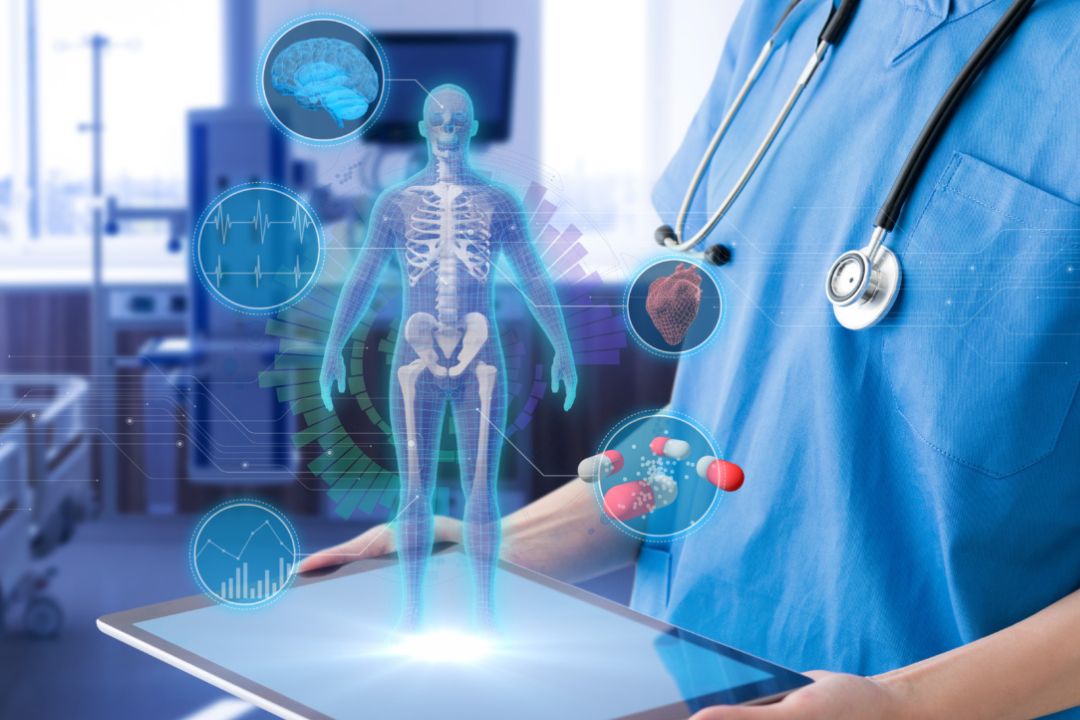
A scientific article by the lecturer Dr. Ahmed Adnan Hadi entitled "Enhancing Healthcare Centers Using Artificial Intelligence".
Developing healthcare systems using artificial intelligence can be an exciting field for innovation and advancement. Here are some ways in which AI can contribute to the development of such systems:<br /><br />Big Data Analysis: AI can analyze vast amounts of healthcare data to understand trends and patterns in diseases and treatments, thereby guiding clinical decisions more effectively.<br /><br />Disease Diagnosis: AI can be used to develop self-diagnosis systems for diseases, enabling individuals to identify symptoms and receive necessary guidance without the need for a doctor's visit every time.<br /><br />Patient Care Improvement: AI can be utilized to develop patient care systems that provide personalized guidance based on each patient's condition, thereby improving the quality of care and reducing medical errors.<br /><br />Customized Treatments: AI can analyze patient data and provide tailored treatment plans for each individual based on their unique needs and response to treatment.<br /><br />Nutrition and Fitness Guidance: AI can analyze personal health data and provide customized guidance for nutrition and physical fitness, helping to improve individuals' overall health.<br /><br />Emotional and Psychological Support: AI can develop systems for emotional and psychological support that offer assistance and counseling to individuals dealing with health or mental issues.<br /><br />In summary, artificial intelligence can significantly contribute to improving healthcare systems and developing healthcare centers by analyzing data, providing personal support, and enhancing treatment and diagnostic processes.