ICDS
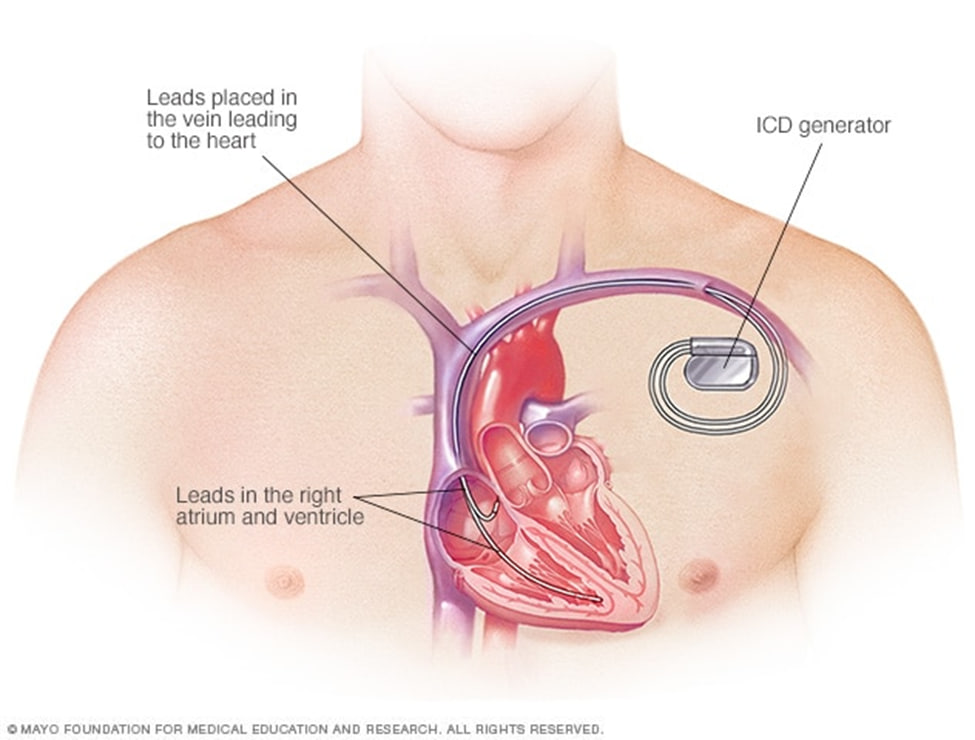
ICDS <br />An implantable cardioverter-defibrillator is a small, battery-powered device that is placed in the chest. The device detects abnormal heartbeats, also known as arrhythmias, and stops them. The implantable cardioverter-defibrillator also continuously monitors your heart rhythm. It delivers electrical shocks, when needed, to restore normal heart rhythm.<br />You may need an implantable cardioverter-defibrillator if you have a dangerously fast heartbeat, a condition known as ventricular tachycardia or ventricular fibrillation. An implantable cardioverter-defibrillator may also be recommended if you're at higher risk of developing an irregular heartbeat, usually due to weak heart muscle.<br />An ICD is different from a pacemaker. A pacemaker is a device used to prevent a dangerously slow heartbeat.<br />Species<br />An implantable cardioverter-defibrillator is a device used to treat the heart. There are two main types:<br />Conventional implantable cardioverter-defibrillator (ICD) implanted in the chest. It contains wires that connect to the heart.<br />A subcutaneous implantable cardioverter-defibrillator is implanted under the skin on the side of the chest below the armpit. It is connected to a sensor called an electrode. The sensor extends along the breastbone. A subcutaneous implantable cardioverter-defibrillator is larger than a traditional implantable cardioverter-defibrillator. But it does not connect to the heart.<br />