Orthogonal Frequency Division Multiple Access (OFDMA)
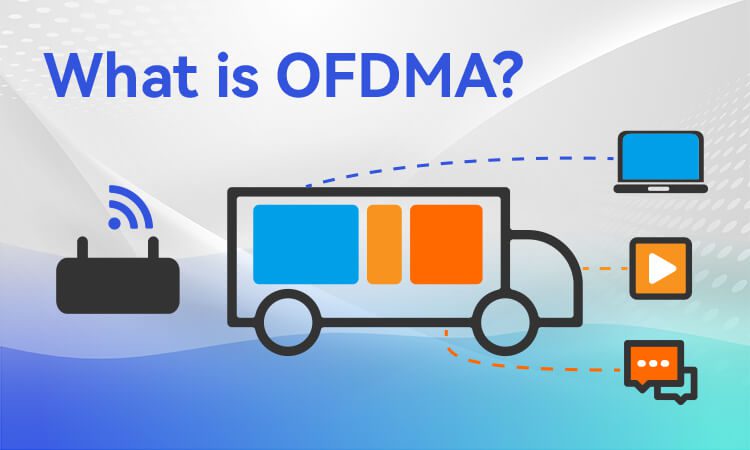
Orthogonal Frequency Division Multiple Access (OFDMA)<br /><br />Orthogonal Frequency Division Multiple Access (OFDMA) is a sophisticated technique used in wireless communication networks to enhance data transmission efficiency and reduce signal interference. This technology is an evolution of Orthogonal Frequency Division Multiplexing (OFDM), which divides the available frequency spectrum into numerous narrowband sub-channels called "subcarriers." These subcarriers are orthogonal to each other, minimizing the effects of interference and temporal dispersion.<br /><br /> How OFDMA Works<br /><br />OFDMA operates by dividing the available frequency spectrum into a large number of orthogonal subcarriers. Each subcarrier can be assigned to different users simultaneously, allowing multiple users to share the same frequency spectrum efficiently. This allocation can be dynamic and based on the users' demand and channel conditions. By doing so, OFDMA enhances spectrum efficiency and reduces inter-user interference.<br /><br /> Benefits of OFDMA<br /><br />1. Spectral Efficiency: OFDMA significantly improves spectral efficiency by enabling multiple users to access the spectrum concurrently. This efficient allocation of frequency resources maximizes the utilization of the available bandwidth.<br /><br />2. Interference Reduction: By employing orthogonal subcarriers, OFDMA minimizes inter-user interference. This orthogonality ensures that subcarriers assigned to different users do not interfere with each other, leading to a cleaner and more reliable transmission.<br /><br />3. Flexibility: OFDMA offers considerable flexibility in resource allocation. The frequency and time resources can be dynamically assigned based on user requirements and network conditions, ensuring optimal performance and fairness.<br /><br />4. Performance in Multipath Environments: OFDMA is highly effective in multipath environments, such as urban areas where signal reflections and scattering are prevalent. The use of multiple subcarriers allows the system to handle multipath propagation more efficiently, reducing errors and improving overall performance.<br /><br />Applications of OFDMA<br /><br />OFDMA is employed in various modern communication systems, including:<br /><br />- Cellular Networks: Technologies like LTE (Long Term Evolution) and WiMAX (Worldwide Interoperability for Microwave Access) use OFDMA to enhance data rates, improve spectral efficiency, and provide robust performance in diverse environments.<br /> <br />- Wi-Fi Networks: The IEEE 802.11ax standard, also known as Wi-Fi 6, incorporates OFDMA to improve network performance, especially in crowded environments with many devices. This allows for more efficient data transmission and better overall network utilization.<br /><br />- Radio Communications: Certain radio communication systems use OFDMA to enhance data transmission efficiency and reduce interference, making it suitable for a variety of applications, including military and public safety communications.<br /><br />Comparison Between OFDM and OFDMA<br /><br />While OFDM uses frequency division to improve data transmission by splitting the frequency spectrum into orthogonal subcarriers, OFDMA extends this concept by allocating these subcarriers to different users. This allows for multiple access, making OFDMA more effective in environments with multiple users requiring shared spectrum access. OFDMA's ability to dynamically allocate resources based on real-time demand and conditions offers significant advantages over traditional OFDM, particularly in multi-user scenarios.<br /><br />Technical Details<br /><br />- Subcarrier Allocation: In OFDMA, subcarriers are dynamically allocated to users based on their requirements and the overall network load. This allocation can vary in time and frequency, providing a highly flexible approach to resource management.<br /> <br />- Time-Frequency Resource Grid: OFDMA uses a two-dimensional grid of time and frequency resources. Each user is assigned a specific combination of time slots and frequency subcarriers, which can be dynamically adjusted to optimize performance.