
Desalination Methods.
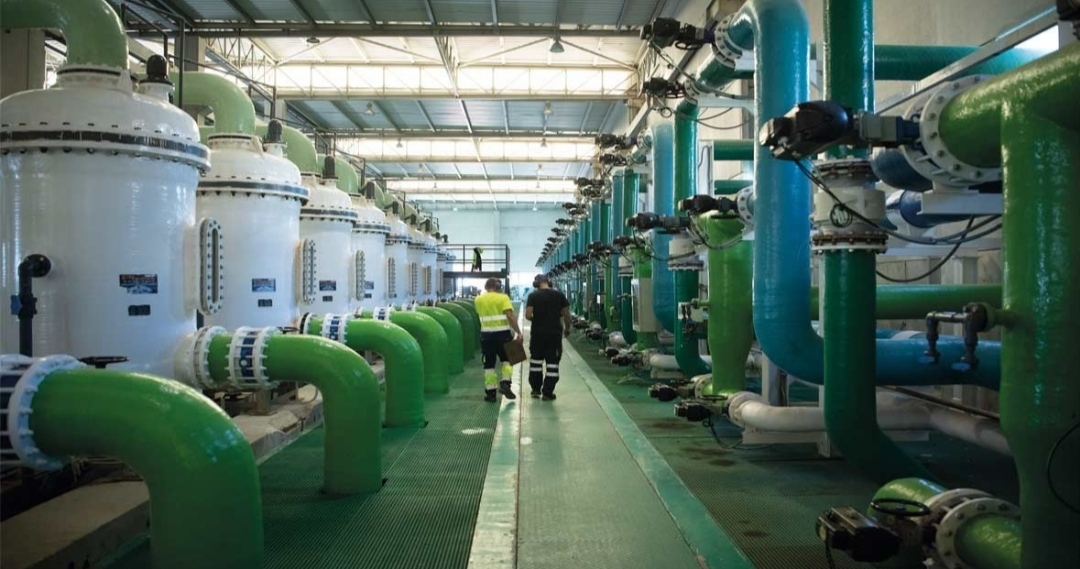
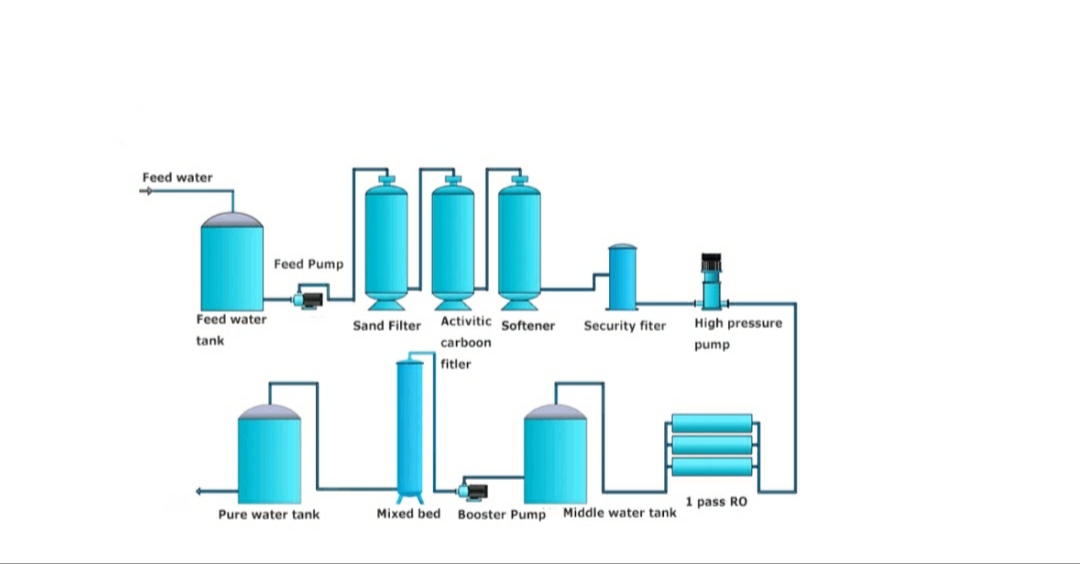
Malik Mustafa Mohammed, Head of the department.<br />Desalination Methods<br />Water desalination is a crucial solution to address freshwater scarcity in many regions worldwide. Several methods exist, each with its own advantages and drawbacks. Let's explore the most common ones:<br />Reverse Osmosis (RO):<br />The most widely used method.<br />Involves forcing saltwater through a semipermeable membrane, allowing pure water to pass while retaining salts and impurities.<br />Advantages: Highly efficient in removing various contaminants, relatively low energy requirements compared to some other methods.<br />Challenges: Requires regular membrane maintenance and significant energy for pressurizing the water.<br />Multi-Stage Flash Distillation (MSF):<br />Commonly used in large-scale desalination plants, especially in energy-rich regions.<br />Involves heating saltwater to create steam, which is then condensed to produce freshwater.<br />Advantages: High freshwater production capacity and quality.<br />Challenges: Requires substantial infrastructure investment and high energy consumption, making it less efficient in energy-scarce regions.<br />Multi-Effect Distillation (MED):<br />Similar to MSF but uses lower-grade heat, reducing energy consumption.<br />Primarily used in regions requiring large-scale desalination.<br />Advantages: More energy-efficient than MSF.<br />Challenges: Requires significant initial investment and regular maintenance.<br />Forward Osmosis (FO):<br />A newer technology that leverages osmotic pressure to draw freshwater from saltwater.<br />Advantages: Lower energy consumption compared to RO.<br />Challenges: Still under development for certain applications and requires additional treatment for the produced water.<br />Electrodialysis:<br />Primarily used for desalination of brackish water.<br />Involves passing an electric current through a membrane to separate positive and negative ions, concentrating the salts in one section and producing freshwater in another.<br />Advantages: Effective for low-salinity water, relatively low energy consumption.<br />Challenges: Requires pretreatment of the water and regular membrane maintenance.<br />Solar Desalination:<br />An environmentally friendly method that uses solar energy to evaporate saltwater and collect the condensed vapor.<br />Advantages: Low operational costs after the initial investment, environmentally friendly.<br />Challenges: Relies on weather conditions and may not be suitable for all regions.<br />Flash Freezing:<br />A less common method involving rapid freezing of saltwater to form ice crystals, which can be separated from the brine and melted to produce freshwater.<br />Advantages: Produces high-purity water.<br />Challenges: High energy consumption and complex technology.<br />Freeze Desalination:<br />Similar to flash freezing but less advanced. Used in specific applications.<br />Advantages: Produces high-quality freshwater.<br />Challenges: High operational costs and limited large-scale application.<br />Biological Desalination:<br />A developing technology that uses organisms like bacteria or algae to remove or convert salts.<br />Advantages: Environmentally friendly and potentially sustainable.<br />Challenges: Still in the research phase and not yet ready for widespread application.<br />Flash Distillation:<br />Used in specific cases, involving rapid heating of saltwater to induce rapid evaporation.<br />Advantages: Produces high-purity water.<br />Challenges: Requires significant energy and infrastructure.<br />Dhirar Salim Mohammed, chemical engineer.<br /><br /><br /><br />