
Biomass as a Source of Renewable Energy
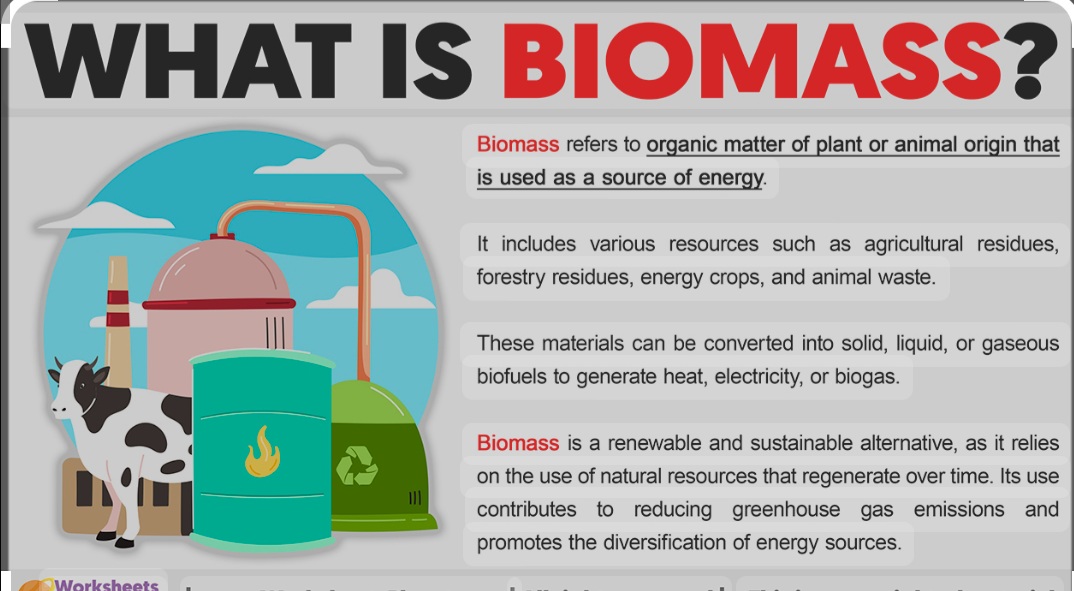
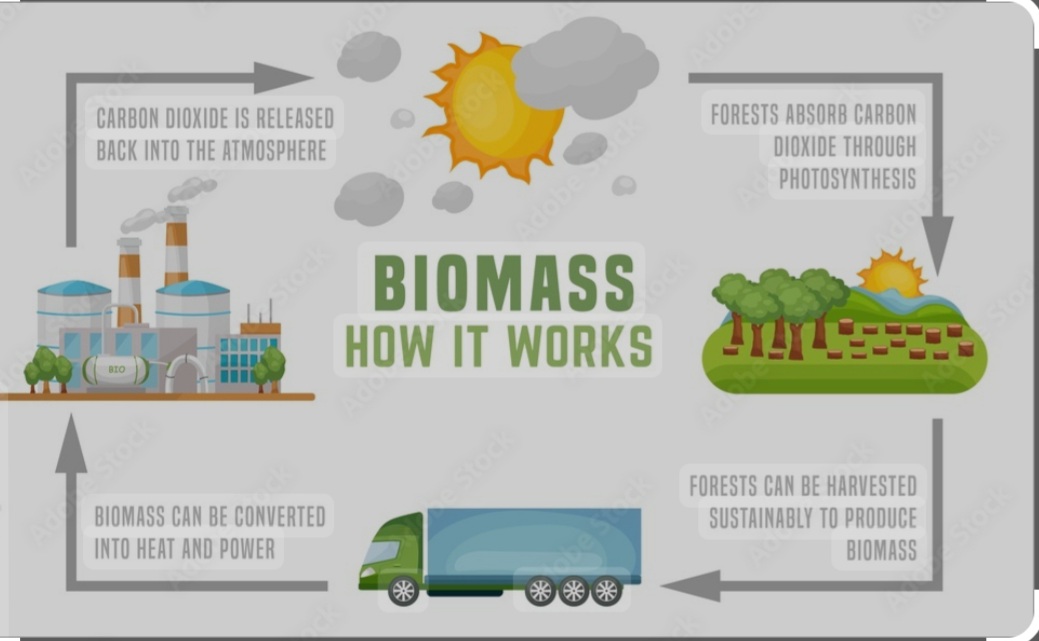
Bioenergy is a type of renewable energy that is derived from plants and animal waste.The biomass that is used as input materials consists of recently living (but now dead) organisms, mainly plants.Thus, fossil fuels are not regarded as biomass under this definition. Therefor biomass is considered as a renewable and clean energy. Sources of biomass commonly used for bioenergy include wood, food crops such as corn, energy crops and waste from forests, yards, or farms.<br /><br />Effects of biomass on Environment:<br /><br />Bioenergy can help with climate change mitigation but in some cases the required biomass production can increase greenhouse gas emissions or lead to local biodiversity loss. The environmental impacts of biomass production can be problematic, depending on how the biomass is produced and harvested.<br />The IEA's Net Zero by 2050 scenario calls for traditional bioenergy to be phased out by 2030, with modern bioenergy's share increasing from 6.6% in 2020 to 13.1% in 2030 and 18.7% in 2050.Bioenergy has a significant climate change mitigation potential if implemented correctly.Most of the recommended pathways to limit global warming include substantial contributions from bioenergy in 2050 (average at 200 EJ). <br /><br />Power generation from biomass:<br /><br />Biopower technologies convert renewable biomass fuels into heat and electricity using processes similar to those used with fossil fuels. There are three ways to release the energy stored in biomass to produce biopower: burning, bacterial decay, and conversion to gas/liquid fuel.<br />Burning:<br />Most electricity generated from biomass is produced by direct combustion. Biomass is burned in a boiler to produce high-pressure steam. This steam flows over a series of turbine blades, causing them to rotate. The rotation of the turbine drives a generator, producing electricity. Biomass can also serve as substitute for a portion of coal in an existing power plant furnace in a process called co-firing (combusting two different types of materials at the same time).<br /><br />Bacterial Decomposition:<br />Organic waste material, such as animal dung or human sewage, is collected in oxygen-free tanks called digesters. Here, the material is decomposed by anaerobic bacteria that produce methane and other byproducts to form a renewable natural gas, which can then be purified and used to generate electricity.<br /><br />Conversion to gas or liquid fuel:<br />Biomass can be converted to a gaseous or liquid fuel through gasification and pyrolysis. Gasification is a process that exposes solid biomass material to high temperatures with very little oxygen present, to produce synthesis gas (or syngas)—a mixture that consists mostly of carbon monoxide and hydrogen. The gas can then be burned in a conventional boiler to produce electricity. It can also be used to replace natural gas in a combined-cycle gas turbine.<br /><br />Pyrolysis uses a similar process to gasification but under different operating conditions. In this scenario, biomass is heated at a lower temperature range but in the complete absence of oxygen to produce a crude bio-oil. This bio-oil is then substituted for fuel oil or diesel in furnaces, turbines, and engines for electricity production.<br /><br />م.م ابرار عبد الكريم