
Scientific report by assistant lecturer Noora Amir Al-watifi Titled:-Polyhydroxyalkanoates (PHAs)
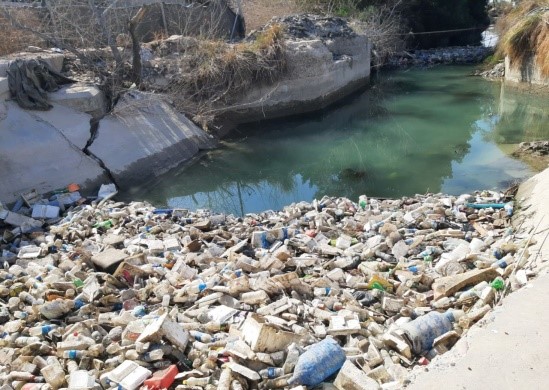
Polyhydroxyalkanoates (PHAs)<br />Assistant teacher:- Noora Amir Al-watifi <br /> Polyhydroxyalkanoates (PHAs) are microbial biopolymer, which serves as an alternative to petroleum-based plastics depended on eco-friendly manner. the polymer stored within cells as energy storage molecule by various microorganism (e.g. Pseudomonas sp, Bacillus megaterium, and Protomonas extorquens). As a response to unbalanced nutrimental conditions, such as media contain excess of carbon source and limitation in nitrogen and phosphorus the PHAs storage in bacterial cells.<br /> PHAs have become the substitute materials for conventional plastic in response to the harmful effect of the plastic waste problem. Interest in PHAs has been raised because they have properties similar to various thermoplastics and elastomers, PHAs can completely degrade upon disposal, nontoxic, biocompatible, and can be made from renewable resources an alternative cheaper carbon source to lower the total production price.<br /> The difference in their physical properties are due to the variation of their monomeric compositions, and thus, they serve for a wide range of applications. PHA is classified based on the length of the carbon chain of the PHA monomer: short chain length (scl) PHA consisting of 4 or 5 carbons atoms in length, medium chain length (mcl) PHA consisting of 6–14 carbons atoms in length and long chain length PHA(lcl-PHA) 15 or more of carbon atoms. <br /> The final properties of PHA, such as the degree of crystallinity, melting temperature (Tm), and glass transition temperature (Tg) are dependent on the monomer composition of the polymer, which is affected by the organism, the conditions of growth, and the method of polymer extraction. scl-PHA typically display properties closest to conventional plastics like polypropylene, while mclPHA displays more elastomeric properties. Poly-3-hydroxybutyrate (PHB) is the most widely studied PHA polymer and exhibits brittle and highly crystalline characteristics similar to those of polypropylene.<br /> <br /> figure.1. show pollution by petroleum –based plastic(Iraq, Babylon, Al-Hillah)<br /> There are many method to extraction of PHAs, the oldest method was solvent extraction by many chlorinated hydrocarbon solvent (e.g. chloroform), this method are recovery efficient, simplicity, and rapidity. Enzyme digestion method also used in polymer extraction, this method will not effects on polymer, while the Mechanical cell disruption is the favored due to economic advantageous and mild damage effects to products.<br /> Biodegradation of PHAs are a biological activity of living organisms by break down the polymer to nontoxic products, used of results products as an energy and nutrients. In biodegradation of PHAs it produce water and CO2 in aerobic biodegradation or water, CO2, and CH3 in anaerobic biodegradation that mean the PHAs will degradation after a short time when leave on Environment. The degradation of petroleum- based plastic take a long period to complete degradation and production toxic chemicals, such as polychlorinated biphenyls (PCBs). Millions of tons of these non-degradable plastics accumulate in the environment per year. So the discover of alternative material to produced biodegradable plastic is important to decrease the pollution by petroleum based plastic.<br /><br /><br />